9 Clear Signs Your Furnace Needs Replacement
TL;DR:
- A furnace with repeated failures usually needs replacement rather than repair.
- Common signs include aging beyond 15 years, rising energy bills, safety hazards, or frequent repairs.
A furnace that needs replacement is defined by a pattern of compounding failures, not a single bad day. Recognizing the signs furnace needs replacement early gives you time to plan, budget, and avoid a breakdown in the middle of a Colorado winter. The key indicators include age beyond 15 years, repair costs that rival a new unit, rising energy bills, and safety hazards like a cracked heat exchanger or carbon monoxide alarms. This guide walks through each warning sign clearly, so you can make a confident, informed decision rather than a rushed one.
1. Signs furnace needs replacement start with age
The average gas furnace lifespan is 15–20 years. Once your furnace crosses the 15-year mark, replacement planning becomes a practical priority rather than a distant concern.
Age matters because older furnaces were built to lower efficiency standards. A unit installed in the early 2000s or before simply cannot match the performance of modern equipment, regardless of how well it has been maintained. Wear accumulates in the heat exchanger, inducer motor, and blower components over time, and those parts become harder to source as the unit ages.
That said, age alone is not absolute. A well-maintained 17-year-old furnace with no repair history is in a different position than a 14-year-old unit that has needed three major fixes in two years. Age is the starting point for the conversation, not the final answer.
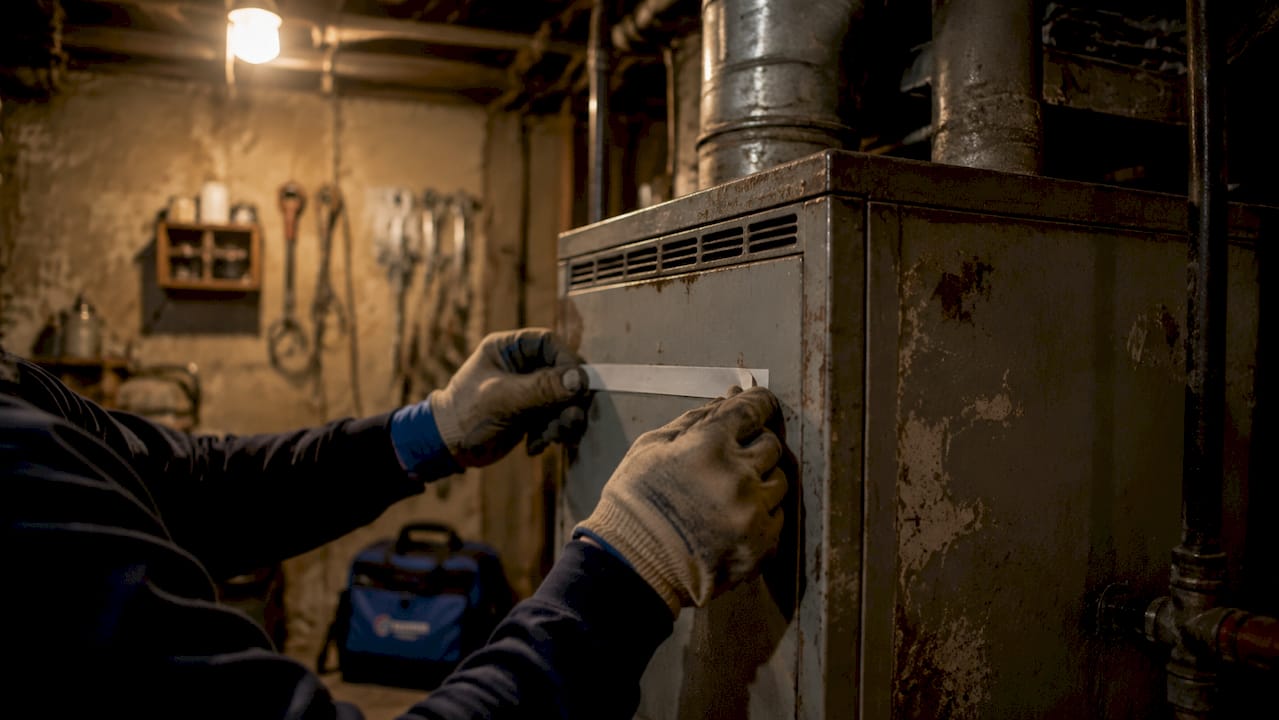
Pro Tip: Write the installation date on a piece of tape and stick it to the furnace cabinet. Many homeowners do not know how old their unit is, and that date changes every calculation in this article.
2. Frequent repairs signal a furnace in decline
A furnace that needs repairs once every few years is normal. A furnace that needs repairs every season is telling you something important.
The industry uses two practical rules to evaluate repair frequency and cost. The first is the 50% rule: if a single repair costs 50% or more of what a new furnace would cost, replacement is the more sensible financial choice. Spending $1,500 on a repair when a new unit costs $3,000 rarely makes long-term sense.
The second is the Rule of 5,000: multiply the repair cost by the furnace’s age in years. If that number exceeds 5,000, replacement is recommended. A $300 repair on a 10-year-old furnace gives you 3,000, which is below the threshold. A $400 repair on a 15-year-old furnace gives you 6,000, which clears it.
These rules exist because repair costs rarely stay isolated. When one component fails in an aging system, wear tends to spread. The inducer motor goes, then the igniter, then the control board. Each repair buys less time than the last.
Pro Tip: Keep a simple log of every furnace repair with the date and cost. After two or three entries, the pattern becomes obvious and the math is easy to run.
You can also review common furnace repair costs by problem type to get a clearer sense of where your situation falls before calling a technician.
3. Rising energy bills point to efficiency loss
A sustained, unexplained rise in your heating bills is one of the clearest furnace replacement indicators available to you. Heating bills that jump 30% or more without a change in usage or utility rates strongly suggest the furnace is losing efficiency.
The technical measure here is annual fuel utilization efficiency, or AFUE. This rating tells you what percentage of fuel your furnace converts into usable heat. A furnace with an AFUE of 80% turns 80 cents of every dollar of fuel into heat and loses the rest. Older units often operate well below 80% AFUE as they age and components degrade.
Modern high-efficiency furnaces carry AFUE ratings of 95% or higher. That gap in efficiency translates directly into monthly savings on your heating bill. Replacing an old, low-efficiency unit with a current model can meaningfully reduce what you spend each winter.
The table below shows how AFUE ratings affect fuel waste:
| AFUE Rating | Fuel Used as Heat | Fuel Wasted |
|---|---|---|
| 60% | 60% | 40% |
| 80% | 80% | 20% |
| 95% | 95% | 5% |
Higher utility bills also mean the furnace is working harder than it should to reach your thermostat setting. That extra workload accelerates wear on every moving part. Monitoring your heating costs over two or three winters gives you a reliable trend line that no single repair estimate can provide.
4. Safety hazards that require immediate action
Some furnace warning signs are not about comfort or cost. They are about safety, and they require you to stop using the furnace and call a professional right away.
A yellow or orange burner flame is one of the most serious signals. A properly functioning gas furnace burns with a steady blue flame. A yellow or orange flame indicates incomplete combustion, which produces carbon monoxide. Carbon monoxide is odorless, colorless, and potentially fatal.
Other urgent safety signals include:
A carbon monoxide detector alarm near the furnace or anywhere in the home requires immediate action. Shut the furnace off, open windows, leave the house, and call a professional before restarting the system.
Visible soot accumulation around the furnace burner or on nearby walls is another red flag. Soot means the furnace is not burning fuel cleanly, and that condition typically worsens over time.
A cracked heat exchanger is the most serious structural failure a furnace can have. Cracked heat exchangers cannot be safely repaired. The crack allows combustion gases, including carbon monoxide, to mix with the air circulating through your home. Replacement is the only safe resolution.
If your carbon monoxide detector activates or you see a yellow flame, do not attempt to diagnose the problem yourself. Shut the furnace off, leave the home, and contact a qualified HVAC technician immediately.
For a broader list of urgent situations, the HVAC emergency warning signs guide from Strongheatingandcooling covers what requires same-day attention.
5. Strange noises that reveal mechanical wear
A furnace in good working order runs with a consistent, low hum. Banging, rattling, squealing, or screeching are not normal operating sounds. Each type of noise points to a different kind of mechanical wear.
Banging at startup often means delayed ignition, where gas builds up before it lights. Rattling usually points to loose panels, a failing blower wheel, or a cracked heat exchanger. Squealing or screeching typically comes from a worn blower belt or a failing motor bearing. These are not sounds to ignore or get used to.
A single strange noise after years of quiet operation may be a minor fix. The same noise appearing repeatedly, or multiple different noises in the same season, suggests the system is deteriorating broadly. At that point, the noise is not the problem. It is a symptom of a furnace that is running out of reliable service life.
Pro Tip: Record the noise on your phone the next time it happens. A short audio clip gives your technician far more useful information than a verbal description and can speed up the diagnosis significantly.
6. Uneven heating and rooms that never warm up
Uneven heating across your home is a sign the furnace is no longer distributing air effectively. Uneven heating and a furnace that runs constantly both point to a system under stress, whether from a failing blower, clogged ductwork, or a unit that is simply undersized for the home’s current needs.
Cold spots in specific rooms, especially rooms farthest from the furnace, indicate the blower is not pushing enough air through the system. A furnace that runs for long stretches without reaching the thermostat setting is working at maximum effort just to maintain a temperature it used to reach easily.
Short cycling is the opposite problem and equally telling. A furnace that turns on, runs briefly, and shuts off before the home reaches temperature is often overheating internally and triggering a safety shutoff. Both constant running and short cycling place heavy stress on the system and accelerate the timeline toward failure.
7. Poor indoor air quality and excess dust
A furnace in decline often affects the air quality inside your home, not just the temperature. Homeowners sometimes notice more dust on surfaces, drier air than usual, or an increase in allergy symptoms during heating season.
These changes can trace back to a furnace that is no longer filtering or humidifying air properly. Aging heat exchangers and worn seals allow more particulates to circulate through the duct system. A furnace that has not been serviced in several years may also have a heavily loaded filter or a compromised blower that moves less air across the filter surface.
Dry air is a separate but related issue. Older furnaces tend to strip more moisture from indoor air as they cycle, which can cause dry skin, irritated sinuses, and static electricity. If your home feels noticeably drier than it did in previous winters with the same equipment, the furnace’s ability to condition air has likely declined.
8. The furnace has needed multiple repairs in one season
One repair in a season is a data point. Two or more repairs in the same heating season is a pattern that justifies a serious replacement conversation.
When a furnace requires multiple service calls within a few months, it signals that the system is failing broadly rather than experiencing isolated component issues. The first repair may address the igniter. The second may address the pressure switch. The third may address the blower motor. Each fix is technically separate, but together they describe a furnace that is past its reliable service window.
The financial logic is straightforward. Multiple repair bills add up quickly, and none of them extend the furnace’s life in any meaningful way. That money applied toward a new installation would deliver years of reliable, efficient heating rather than a series of temporary fixes on aging equipment.
9. You are planning a major home renovation or sale
A planned renovation or home sale is a practical trigger for evaluating whether your furnace should be replaced now rather than later. Buyers and home inspectors pay close attention to the age and condition of HVAC equipment.
A furnace that is 15 or more years old, or one with a documented repair history, can affect a home’s appraised value and give buyers negotiating leverage. Replacing the furnace before listing removes that variable and can be a straightforward selling point. For renovations, replacing the furnace while walls are open or ductwork is being modified is far less disruptive than doing it as a standalone project later.
Replacing a furnace proactively before winter also prevents emergency scheduling conflicts and cost spikes. Technicians are in highest demand during the coldest months, and equipment availability can be limited. Scheduling a replacement in late summer or early fall gives you better access to installation slots and, in many cases, better pricing.
Key takeaways
Recognizing furnace replacement indicators early protects your family’s safety, prevents emergency breakdowns, and gives you control over the timing and cost of a major home investment.
| Point | Details |
|---|---|
| Age is the starting signal | Furnaces over 15 years old warrant active replacement planning, especially with any repair history. |
| Use the Rule of 5,000 | Multiply repair cost by furnace age; a result over 5,000 favors replacement over repair. |
| Safety signs require immediate action | Yellow flame, CO alarms, and cracked heat exchangers are not repair situations. They require replacement. |
| Rising bills reveal efficiency loss | A 30% or more unexplained increase in heating costs points to a furnace losing efficiency. |
| Plan ahead, not in a crisis | Off-season replacement gives you better scheduling, better pricing, and no emergency pressure. |
What I have learned after years of furnace calls
After more than 40 years of combined experience in this industry, the pattern I see most often is not a furnace that failed suddenly. It is a homeowner who kept repairing a furnace that was clearly past its useful life, spending money season after season on a system that was never going to perform reliably again.
The misconception I hear most is this: “It’s still working, so I’ll wait.” A furnace that is technically running but cycling erratically, driving up your bills, and requiring annual repairs is not working well. It is costing you money and comfort every month while moving closer to a failure that will happen at the worst possible time.
The repair-versus-replacement decision is not purely financial, either. Safety has to come first. A cracked heat exchanger is not a repair conversation. It is a replacement conversation, full stop. No repair extends the life of a heat exchanger with a confirmed crack, and the carbon monoxide risk is not something to weigh against cost.
My honest advice is to schedule a professional inspection if your furnace is 15 or more years old, regardless of whether it seems to be running fine. A trained technician can identify heat exchanger cracks, measure combustion efficiency, and give you an honest picture of what you are working with. That inspection either gives you peace of mind or gives you the information you need to plan a replacement on your own terms.
Replacing in late summer or early fall is almost always the right move if you know replacement is coming. You avoid the winter rush, you have time to evaluate options, and you are not making a $3,000 to $6,000 decision under pressure at 10 p.m. on a January night. That kind of planning is what separates a stressful situation from a manageable one.
— Owner
Strongheatingandcooling is ready to help you decide
If any of the signs in this article sound familiar, the right next step is a professional evaluation, not another repair call made in hope.

Strongheatingandcooling serves Colorado Springs and surrounding communities with honest, experienced guidance on furnace repair versus replacement. With over 40 years of combined industry experience, the team provides straightforward assessments without pressure. Whether your furnace needs one more repair or a full replacement, you will get a clear recommendation backed by real expertise. For homeowners ready to move forward, Strongheatingandcooling offers professional heating installation and replacement in Colorado Springs, with options designed to fit different budgets and home sizes. Scheduling early in the season means better availability and no emergency pricing.
FAQ
How old does a furnace need to be before replacement?
The standard furnace lifespan is 15–20 years. Replacement planning is recommended once a furnace reaches 15 years, particularly if repairs have become more frequent.
What is the Rule of 5,000 for furnace replacement?
The Rule of 5,000 multiplies the repair cost by the furnace’s age in years. If the result exceeds 5,000, replacement is the more economical choice.
Is a yellow furnace flame dangerous?
Yes. A yellow or orange flame indicates incomplete combustion and a likely carbon monoxide risk. Shut the furnace off and contact a technician before using it again.
Can a cracked heat exchanger be repaired?
No. A cracked heat exchanger cannot be safely repaired and requires full furnace replacement. The crack allows combustion gases to enter your home’s air supply.
When is the best time of year to replace a furnace?
Late summer or early fall is the best time. Proactive off-season replacement avoids winter scheduling conflicts, reduces emergency pricing pressure, and gives you time to evaluate equipment options carefully.
Recommended
Need expert HVAC help?
Colorado Springs' trusted, veteran-owned heating & cooling team — emergency service.