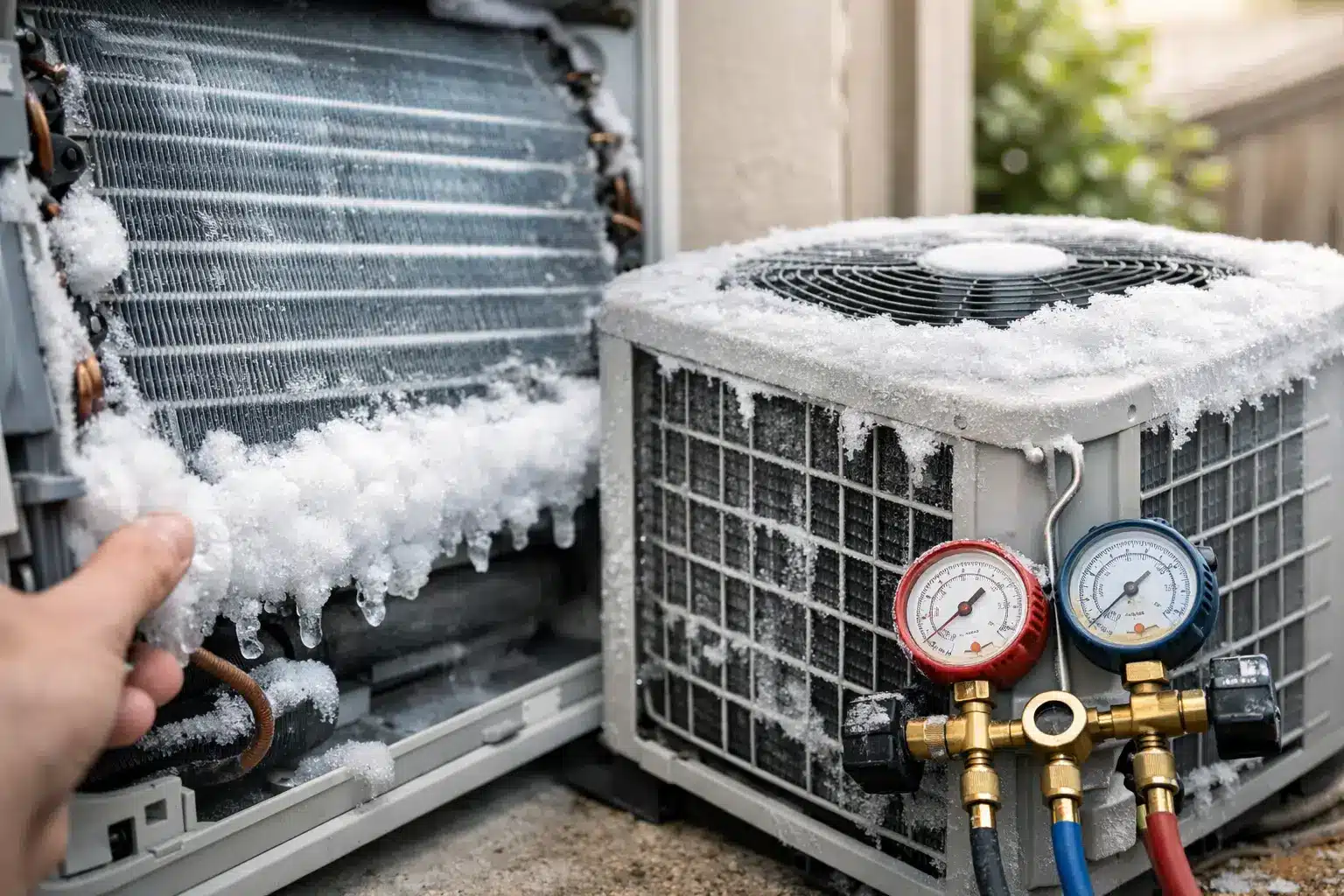
You set the thermostat lower, expecting cooler air, and instead your AC starts acting worse. Airflow drops off. The house feels muggy. You may even spot ice on the indoor coil or refrigerant line. If you are asking why is AC freezing up, the short answer is this: your system is not moving heat the way it should.
An air conditioner freezes when the evaporator coil gets too cold and moisture in the air turns to ice. That usually happens because of restricted airflow, low refrigerant, dirty components, or a mechanical issue that keeps the system from operating within normal range. The ice is a symptom, not the root problem. If it keeps happening, the system needs attention before it turns into a larger repair.
Why Is AC Freezing Up in the First Place?
Your AC does not create cold the way many people think it does. It absorbs heat from indoor air and moves that heat outside. For that process to work, warm air has to pass over the evaporator coil inside your home. If not enough air moves across the coil, the coil temperature can drop below freezing.
Once that happens, condensation on the coil starts to freeze. Then the ice blocks airflow even more, which makes the problem worse. It becomes a cycle. The longer the unit runs in that condition, the more strain it puts on the system.
In Colorado homes and commercial spaces, this can show up during hot summer stretches when the AC is working hard, but it can also happen in milder weather if airflow or refrigerant levels are off. A freezing AC is not always a sign of an old unit. Sometimes the cause is simple. Other times it points to a repair that should not wait.
The Most Common Reasons an AC Freezes Up
Dirty air filter
This is the first place to look because it is also the most common. A clogged air filter restricts airflow, which means less warm air reaches the evaporator coil. Without enough heat coming across it, the coil gets too cold and starts icing over.
If your filter looks gray, packed with dust, or has not been changed in a while, replace it before doing anything else. This is especially important during heavy cooling months or if you have pets, renovation dust, or higher-than-average system use.
Blocked or closed vents
Supply and return vents matter more than many people realize. If too many vents are closed, furniture is blocking air movement, or returns are covered, your system can struggle to circulate enough air. That reduced airflow can create the same freezing conditions as a dirty filter.
It is fine to adjust comfort room by room within reason, but closing multiple vents to force more air elsewhere can backfire. HVAC systems are designed to move a certain volume of air.
Dirty evaporator coil
Even with a clean filter, the indoor coil can still collect dirt over time. Dust buildup acts like insulation on the coil surface, which interferes with heat transfer. The system then runs longer, the coil temperature drops, and ice can form.
This is not usually a DIY cleaning job unless access is easy and the buildup is light. Many coils are tucked inside cabinets where cleaning should be handled carefully to avoid damage.
Low refrigerant
Low refrigerant is a common cause of AC freeze-ups and one that should be taken seriously. Refrigerant does not get used up like fuel. If levels are low, there is usually a leak somewhere in the system.
When refrigerant is low, pressure in the evaporator coil drops. Lower pressure can cause the coil temperature to fall below freezing. You may notice weak cooling, longer run times, hissing, bubbling, or ice on the refrigerant line.
This is not something to top off and ignore. If there is a leak, it needs to be found and repaired. Otherwise the problem comes back, and the system keeps operating under stress.
Blower problems
Your blower motor is responsible for moving air through the ductwork and across the coil. If it is failing, running at the wrong speed, or struggling because of an electrical issue, airflow can drop enough to freeze the coil.
In some cases the blower still runs, just not as strongly as it should. That can make the issue harder to catch early. If your vents are barely pushing air and the thermostat is calling for cooling, the blower could be part of the problem.
Clogged condensate line or drainage issues
A clogged drain line does not always cause freezing by itself, but it can contribute to moisture-related problems around the coil and affect system performance. If your system has multiple maintenance issues at once, drainage may be one piece of the larger picture.
Running the AC when it is too cool outside
Air conditioners are designed to operate within certain outdoor temperature ranges. If you run central AC during cool evenings or mild weather, especially for extended periods, pressure and temperature conditions inside the system can shift enough to encourage icing.
This does not apply in every case, and some systems are better equipped for lower ambient conditions than others. But if the unit tends to freeze during cooler nights, that pattern is worth mentioning when you schedule service.
What You Can Check Safely Before Calling
If your AC is frozen, turn the system off at the thermostat and switch the fan to the ON setting if the blower is still working. That can help thaw the coil faster. Do not keep running the cooling cycle while ice is present. That only adds stress to the compressor and can increase the repair cost.
Then check the air filter and replace it if it is dirty. Make sure supply and return vents are open and not blocked by rugs, furniture, or stored items. Look for obvious airflow issues, but avoid opening sealed equipment panels or handling refrigerant components.
Once the ice has melted completely, you can try running the system again. If it cools normally and airflow improves, the issue may have been a severe airflow restriction. If it freezes again, there is likely a deeper problem that needs professional diagnosis.
When Frozen AC Becomes a Repair Call
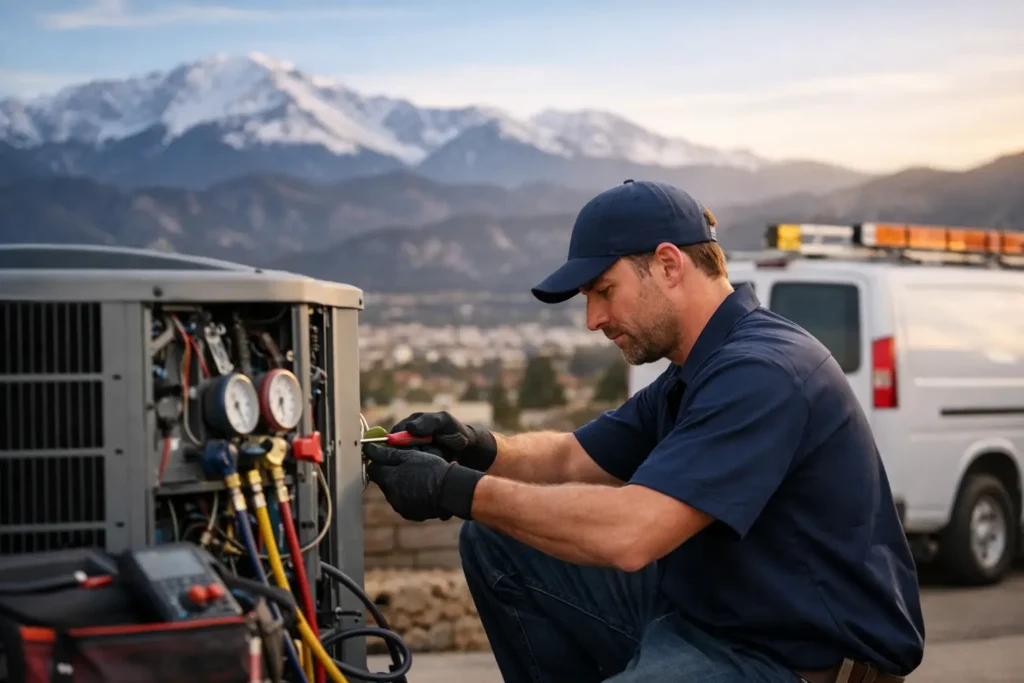
If the unit ices up more than once, if airflow stays weak after changing the filter, or if you hear unusual noises, it is time to have it inspected. The same goes for any sign of refrigerant trouble, electrical issues, or water around the indoor unit.
A freezing evaporator coil can point to simple maintenance needs, but it can also signal a refrigerant leak, blower failure, or control issue. Those problems do not improve on their own. Waiting often means more wear on expensive components, especially the compressor.
For homes and businesses in El Paso County, fast diagnosis matters during peak cooling season. Comfort drops quickly when airflow is already compromised, and commercial spaces can feel the impact even faster if customers, staff, or equipment depend on stable indoor temperatures.
How to Prevent AC Freeze-Ups
The best prevention is routine maintenance. Change filters on schedule, keep vents open, and have the system inspected before cooling season gets busy. A professional tune-up can catch low refrigerant, dirty coils, blower issues, and drainage problems before they lead to ice on the system.
It also helps to pay attention to early warning signs. If the AC starts taking longer to cool, if certain rooms lose airflow, or if energy bills rise without a clear reason, those are worth checking before a full freeze-up happens.
Older systems may need more frequent attention, but newer equipment is not immune. Installation quality, duct design, filter maintenance, and daily usage all play a role. That is why the right fix depends on the actual cause, not just the presence of ice.
If you are wondering why is AC freezing up, the safest answer is not to force the system through another hot day and hope it clears itself. Ice means something in the cooling cycle is off. The sooner that issue is identified, the better your chances of avoiding a bigger repair and getting your comfort back on track.