You usually notice a water heater is the wrong size at the worst possible time – halfway through a shower, during back-to-back laundry loads, or when the dishwasher starts right as someone turns on a faucet. If you are asking what size water heater needed for your home, the real answer comes down to two things: how much hot water your household uses, and when you use it.
A unit that is too small leaves you waiting for hot water to recover. A unit that is too large can cost more to buy and more to run than necessary. The best fit is not just about square footage or the number of bathrooms. It is about daily habits, family size, appliance demand, and whether you are choosing a traditional tank or a tankless system.
What size water heater needed depends on type
Before sizing anything, you need to know which kind of system you are considering. Tank water heaters and tankless water heaters are sized differently.
A standard tank water heater stores a set number of gallons and keeps that water heated until you need it. Sizing is mostly based on tank capacity and first-hour rating, which is how much hot water the unit can deliver in a busy hour.
A tankless water heater does not store hot water. It heats water as it moves through the unit. Sizing is based on flow rate, measured in gallons per minute, along with the temperature rise needed to deliver hot water at the tap.
That distinction matters because a 50-gallon tank and a tankless unit serving 5 gallons per minute are not interchangeable measurements. They solve the same problem in different ways.
How to size a tank water heater
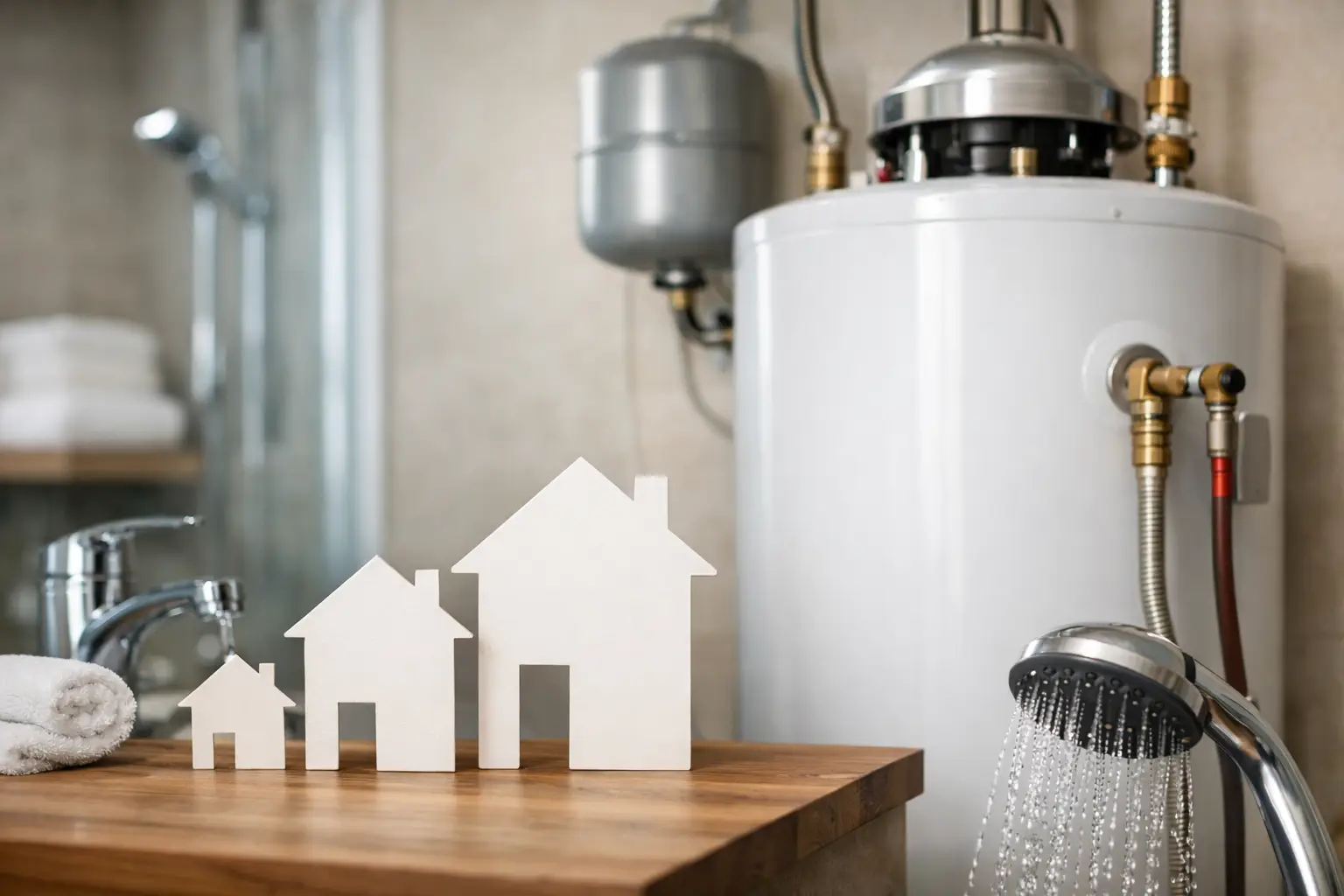
For most homes, tank sizing starts with the number of people in the household. A common rule of thumb is that 1 to 2 people often do well with a 30 to 40 gallon tank, 2 to 3 people usually need 40 to 50 gallons, 3 to 4 people often fit into the 50 to 60 gallon range, and larger households may need 60 to 80 gallons.
That gives you a starting point, not a final answer. Two adults who stagger showers and run laundry on weekends may be fine with a smaller tank. A family of four with teenagers, a soaking tub, and heavy evening water use may need more capacity than the usual estimate suggests.
The more useful number is first-hour rating. This tells you how many gallons of hot water the heater can provide during the busiest hour of the day. If your home commonly has two showers going while the dishwasher runs, first-hour demand matters more than the tank label alone.
Peak hour demand matters more than all-day use
Most households do not use hot water evenly throughout the day. There is usually a morning rush or an evening rush. That is when undersized systems show their limits.
As a rough guide, a shower may use around 10 gallons during a short session, a dishwasher can use several gallons, a clothes washer can use even more depending on the setting and machine type, and a large bathtub can demand a substantial amount all at once. If multiple fixtures or appliances overlap, your water heater has to keep up at that moment, not just over the full day.
If your household regularly stacks hot water usage into a short window, sizing up can be the smarter choice. It often costs less than dealing with constant complaints about running out of hot water.
What size water heater needed for tankless systems
Tankless sizing works differently. Instead of stored gallons, you are matching the unit to the maximum hot water flow your home needs at one time.
For example, if one shower uses about 2 gallons per minute and a bathroom faucet adds another 0.5 to 1 gallon per minute, a tankless unit serving both at once needs to support that combined flow. If you want to run two showers and a dishwasher at the same time, the required flow rate increases quickly.
The other part of the equation is temperature rise. In colder climates, incoming groundwater starts colder, so the unit has to work harder to raise it to a comfortable temperature. That can reduce the effective gallons per minute a tankless heater can deliver. In Colorado Springs and surrounding areas, that colder incoming water can be a real sizing factor, especially in winter.
Why climate changes the answer
This is one reason online water heater calculators can miss the mark. They may assume a milder climate or ideal operating conditions. In reality, a tankless unit that looks large enough on paper might struggle if several fixtures are calling for hot water during a cold snap.
That does not mean tankless is a bad choice. It means proper sizing matters. When tankless systems are matched correctly, they can provide excellent efficiency and consistent hot water. When they are undersized, the frustration shows up fast.
Household factors that change sizing
There is no perfect one-size-fits-all formula because usage patterns vary more than people expect. A few details can move you toward a larger or smaller recommendation.
A home with low-flow fixtures, newer appliances, and spread-out hot water usage may not need as much capacity. A household with frequent guests, large tubs, multiple bathrooms in regular use, or high-demand commercial kitchen or laundry needs will usually need more.
Age and condition matter too. If your current water heater seems too small, it may actually be performing below its original capacity because of sediment buildup, aging heating elements, burner issues, or general wear. In that case, replacing like-for-like may still solve the problem if the old unit had simply lost efficiency over time.
Do number of bathrooms decide the size?
Not by themselves. Bathrooms tell part of the story, but they do not reveal how many people are using hot water at the same time.
A three-bathroom home with two occupants may use less hot water during peak periods than a two-bathroom home with five people on similar schedules. Bathroom count helps estimate possible demand, but actual usage is what determines proper sizing.
When bigger is not better
Some homeowners assume the safest move is to install the biggest unit that fits. That can backfire.
With tank systems, oversizing can mean higher upfront cost, more standby heat loss, and wasted energy keeping extra water hot that you rarely use. With tankless systems, oversized equipment can lead to unnecessary installation expense and may not deliver any real benefit if your plumbing demand is modest.
Good sizing is about balance. You want enough hot water for normal peak use without paying for capacity your home will not use.
Signs your current water heater is the wrong size
If hot water runs out quickly during normal use, your system may be too small or losing performance. If recovery takes too long between showers, that points to limited capacity or an aging unit. If your utility bills feel high for the amount of hot water you actually use, an oversized or inefficient system may be part of the issue.
There are also cases where a home addition, bathroom remodel, or growing household changes the demand after the original installation. A water heater that was sized correctly years ago may no longer match the way the property is used now.
Residential and light commercial needs are different
For homes, sizing usually centers on family routines and appliance overlap. For small businesses or mixed-use properties, the pattern can be very different. A salon, restaurant, office break room, or multi-tenant property may have short bursts of heavy demand or need reliable hot water throughout the day.
That is where standard residential rules stop being useful. Commercial and light commercial systems need a closer look at fixture count, operating hours, recovery expectations, and code requirements. If the property supports customers, tenants, or staff, hot water reliability affects more than comfort. It affects operations.
The safest way to choose the right size
A quick estimate can get you close, but the best answer comes from looking at real usage. That means counting occupants, identifying when hot water is used most, considering the number of simultaneous fixtures, and factoring in the type of system you want.
If you are replacing an existing unit, it also helps to answer two simple questions. Did you ever run out of hot water with the old system when it was working properly? And has anything about your household or property use changed since it was installed?
Those answers usually point the decision in the right direction. A trained technician can then confirm whether a tank or tankless system makes more sense, whether the current gas or electrical setup supports the equipment, and whether a higher-efficiency option is worth the added cost.
Strong Heating and Cooling works with homeowners and property owners who want that decision made clearly, without guesswork or pressure. The right size water heater should fit your building, your usage, and your budget.
If you are unsure what size water heater you need, treat it like a comfort issue rather than a math problem. The goal is simple: enough hot water when you need it, at a cost that makes sense long after installation day.