Hot water problems rarely start all at once. More often, your water heater gives you small warnings first – slower recovery, popping sounds from the tank, rusty water, or a utility bill that climbs for no clear reason. A good water heater maintenance guide helps you catch those signs early, protect the system you already have, and avoid the kind of failure that turns into an urgent call.
For homeowners and property managers, maintenance is not about doing every task yourself. It is about knowing what to watch, what simple care actually helps, and when professional service is the smarter move. That matters even more in places like Colorado Springs, where hard water and seasonal demand can put extra stress on a tank or tankless unit.
Why a water heater maintenance guide matters
Water heaters work quietly in the background, so it is easy to forget about them until they stop. The problem is that neglect tends to shorten equipment life in expensive ways. Sediment builds up inside a tank, parts wear down, pressure problems develop, and efficiency drops little by little.
Routine maintenance helps in three areas at once. First, it supports performance, which means more consistent hot water and fewer surprise outages. Second, it protects efficiency, because a clean and properly adjusted unit does not have to work as hard. Third, it improves safety by making sure pressure relief components, venting, gas connections, and electrical elements are operating the way they should.
That said, maintenance is not one-size-fits-all. A newer electric tank in a single-family home will not have the same needs as an older gas unit in a commercial setting. Tankless systems also require different care than standard storage tanks. The right schedule depends on the equipment type, water quality, age of the system, and how much hot water the building uses.
The basic water heater maintenance schedule
For most standard tank water heaters, an annual inspection is a solid baseline. If your water is hard or the system sees heavy use, some tasks may need attention more often. Tankless units often benefit from yearly descaling, and in tougher water conditions, twice a year may be more realistic.
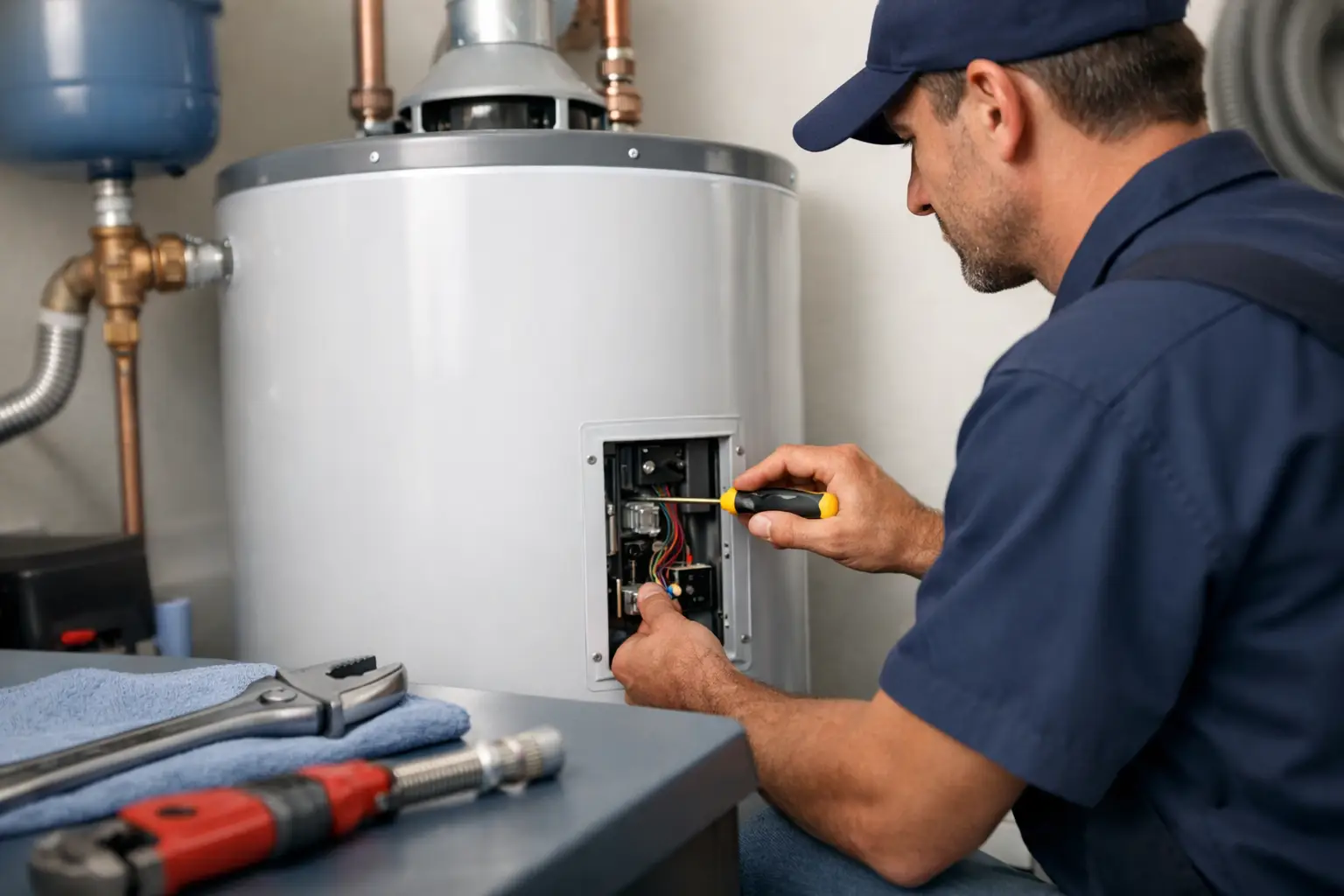
A practical maintenance schedule usually includes checking for leaks around fittings and valves, testing the temperature and pressure relief valve, inspecting the anode rod, flushing sediment from the tank, and confirming the thermostat is set to a reasonable temperature. For gas units, the burner and venting should also be inspected. For electric units, technicians typically check the heating elements and electrical connections.
If the system is older, maintenance becomes less about maximizing lifespan and more about managing risk. Past a certain point, even a well-maintained heater may be more likely to leak or fail. In those cases, regular inspections help you plan replacement before you are stuck without hot water.
What homeowners can safely check
Some maintenance steps are simple visual checks. Start by looking around the base of the unit. Moisture, staining, corrosion, or small puddles can point to a problem that is still minor now but may not stay that way for long.
Listen to the heater while it runs. Rumbling, banging, or popping often signals sediment buildup inside the tank. That layer of mineral deposit makes the burner or elements work harder and can overheat the tank bottom over time.
You should also pay attention to water quality at the tap. If hot water looks rusty, smells odd, or seems less consistent than usual, the issue may be inside the heater. Sometimes it is the anode rod breaking down. Other times it can point to corrosion, bacterial growth, or mineral accumulation.
Temperature matters too. Many households do well with a setting around 120 degrees. Higher temperatures can increase scald risk and waste energy, though some buildings with specific sanitation needs may require a different approach. If you are unsure, it is worth asking a technician rather than guessing.
Tank water heater maintenance tasks that make the biggest difference
Flushing the tank is one of the most important maintenance steps for a standard water heater. Over time, minerals settle at the bottom and create a barrier between the burner or heating elements and the water itself. That reduces efficiency and can cause overheating noises.
In theory, draining and flushing sounds simple. In practice, older drain valves can stick, sediment can clog the opening, and improper handling can create a mess or expose you to very hot water. If the unit has not been serviced in years, flushing it aggressively can also stir up issues that were sitting undisturbed. This is one reason many owners prefer to have it done during a professional tune-up.
Another major item is the anode rod. This part is designed to corrode first so the tank lining does not. When the rod is depleted, the tank itself becomes more vulnerable. Replacing a worn anode rod at the right time can add years to a heater’s life, but many people never check it because it is out of sight.
The temperature and pressure relief valve is another part that should never be ignored. It is a safety device meant to release excess pressure if the tank gets too hot or over-pressurized. If it fails, the risk is not just a broken heater. It is a serious safety concern.
Tankless water heater care is different
Tankless units do not store hot water, but that does not mean they are maintenance-free. In fact, they can be more sensitive to scale buildup, especially in areas with mineral-heavy water. Scale collects inside the heat exchanger and reduces performance, forcing the unit to work harder to deliver the same hot water.
A tankless system usually needs periodic descaling with the right solution and procedure. Filters should be checked, air intake and exhaust pathways inspected, and ignition and burner components reviewed. When this maintenance is skipped, common complaints include reduced flow, temperature swings, and error codes.
The trade-off with tankless equipment is straightforward. These systems can be efficient and compact, and they often provide excellent service life when maintained properly. But if regular descaling is ignored, performance can drop fast.
Signs your water heater needs professional service
Some symptoms call for more than routine upkeep. If you notice water around the tank, fluctuating temperatures, low hot water volume, discolored water, pilot light problems, tripped breakers, or unusual noises that keep getting worse, it is time for service.
Age also matters. A tank water heater that is around 8 to 12 years old deserves closer attention, especially if maintenance has been inconsistent. Tankless systems can last longer, but they are not immune to wear. Parts such as sensors, igniters, gas valves, and control boards can still fail.
For commercial properties, downtime has a bigger ripple effect. A restaurant, salon, office building, or multi-unit property may not be able to wait through an avoidable hot water outage. Preventive maintenance is usually far less disruptive than emergency replacement.
When DIY makes sense and when it does not
A careful visual check, thermostat review, and watching for changes in performance are reasonable for most property owners. Beyond that, the line gets blurry. Gas connections, venting, pressure relief components, electrical work, and full tank flushing all carry real safety and damage risks if handled incorrectly.
The smarter approach is usually simple: monitor the system yourself and schedule professional maintenance for the technical work. That gives you the benefit of early detection without turning routine care into a bigger problem.
A qualified technician can also spot issues that are easy to miss, like vent deterioration, burner irregularities, element wear, pressure concerns, or early tank corrosion. Those findings can help you decide whether repair is still worthwhile or if replacement is the better investment.
Getting more life from your water heater
If you want your water heater to last, consistency matters more than perfection. Annual service is usually enough to prevent the most common maintenance-related problems. In homes or buildings with hard water, adding water treatment or increasing flushing frequency may pay off. If the unit is nearing the end of its expected life, maintenance still helps, but planning ahead becomes just as important.
Strong Heating and Cooling works with homeowners and commercial clients who want practical answers, not guesswork. If your water heater is making noise, running inefficiently, or simply overdue for service, getting it checked now is usually easier than dealing with a failure later.
The best time to pay attention to a water heater is before it gives you a reason to.