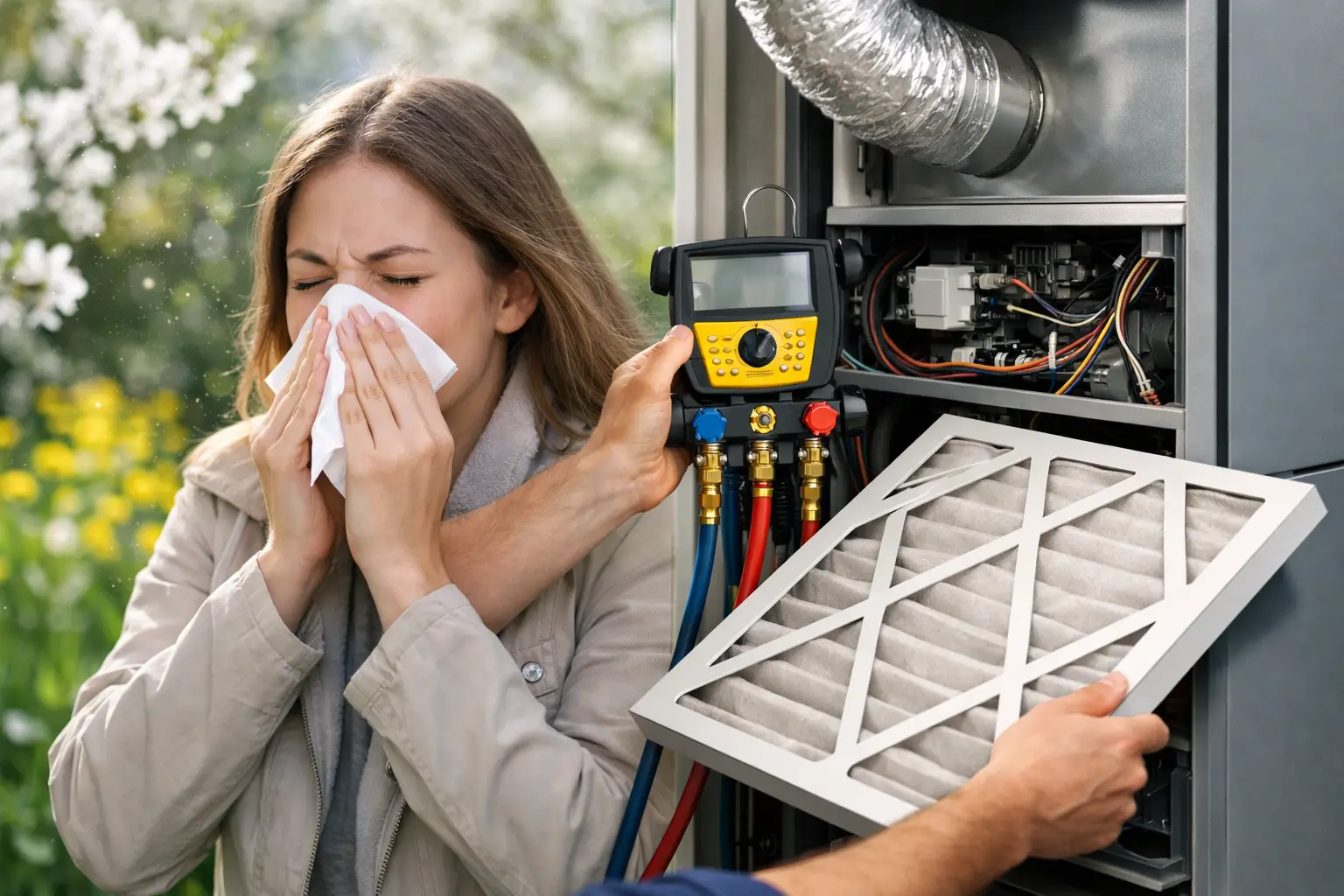
Windows are open, cottonwood is drifting through the neighborhood, and somebody in the house is sneezing before breakfast. That is usually when spring allergy and HVAC start to matter in a very real way. If your heating and cooling system is moving air through the home all day, it can either help limit indoor allergens or keep circulating them from room to room.
A lot of homeowners assume spring allergies are only an outdoor problem. In practice, pollen, dust, pet dander, and mold spores often end up inside and stay there longer than expected. Once those particles get into return vents, ductwork, filters, and damp areas around the system, your HVAC setup can either reduce exposure or make the problem harder to control.
Why spring allergy and HVAC are closely connected
Your HVAC system does more than heat or cool the house. It handles airflow, filtration, and in some cases humidity control. During spring, that matters because allergens do not stop at the front door. They come in on shoes, clothing, pets, open windows, and even small air leaks around doors and attic spaces.
When the system is running with a clean filter and balanced airflow, it can capture a meaningful share of airborne particles before they settle. When maintenance has been ignored, the opposite can happen. Dirty filters, clogged coils, leaky ducts, and poor ventilation can leave allergens suspended in the air or spread them through the home more efficiently.
This is also why some people say their allergies feel worse indoors than outside. Outdoors, pollen is diluted by open air. Indoors, it can build up in carpets, furniture, vents, and filters if the home is not being managed properly.
The filter matters more than most people think
If there is one HVAC component that most directly affects allergy control, it is the air filter. A basic filter helps protect the equipment, but not every filter is designed to catch smaller particles that bother allergy sufferers.
A higher-efficiency pleated filter can often do a better job trapping pollen, dust, and other airborne debris. Still, there is a trade-off. If you choose a filter that is too restrictive for your particular system, airflow can suffer. That can reduce comfort, strain the blower, and in some cases lead to performance issues. Better filtration is not just about buying the highest-rated filter on the shelf. It has to match the equipment.
This is where professional guidance helps. A technician can recommend a filter rating your system can handle without sacrificing airflow. For many homes, that balance is what makes the biggest difference – cleaner air without putting unnecessary stress on the equipment.
You also need to replace filters on schedule. Even a good filter stops helping when it is loaded with debris. In spring, that replacement cycle may need to happen sooner than homeowners expect, especially if you have pets, nearby construction, or a lot of wind-driven dust in the area.
Airflow problems can keep allergens circulating
Filtration gets most of the attention, but airflow deserves just as much. If air is not moving properly through the home, certain rooms may stay stuffy, dusty, or humid. That can leave allergens hanging around longer and create comfort issues at the same time.
Common problems include blocked return vents, dirty blower components, closed supply registers, and duct leaks. A leaking duct system is especially frustrating because it can pull in dust from attics, crawl spaces, or wall cavities and then deliver it into living areas. In homes with older ductwork, that issue is more common than many people realize.
Balanced airflow also helps your filter work as intended. If the system is struggling to move air, particles may settle before they ever reach the filter. Rooms that feel stagnant or develop dust quickly may be pointing to an HVAC issue, not just a housekeeping problem.
Humidity control plays a bigger role than pollen alone
Spring allergies are often associated with pollen, but humidity can make indoor air worse in a different way. When moisture levels climb, mold growth becomes more likely, especially around coils, drain lines, basements, and poorly ventilated areas. That introduces another trigger that many people do not immediately connect to their HVAC system.
Air conditioning naturally removes some moisture, but not every home gets the same result. Oversized equipment, short cycling, clogged condensate drains, or poor ventilation can all interfere with humidity control. If the house feels cool but still damp, the system may not be managing moisture effectively.
On the other side, extremely dry indoor air can irritate the nose and throat, which sometimes gets mistaken for allergy symptoms. That is why indoor comfort is rarely about temperature alone. A properly functioning HVAC system should help keep humidity in a healthier range, not just blow cold or warm air.
Maintenance can reduce a lot of hidden allergy issues
Routine maintenance is not just about preventing a breakdown in July. It is also one of the simplest ways to improve indoor air quality during allergy season.
A spring service visit can uncover dirty evaporator coils, microbial growth near condensate components, blower buildup, weak airflow, or filter issues that have been quietly affecting the home for months. Those are the kinds of problems homeowners may not notice until symptoms get worse or rooms start feeling uncomfortable.
For commercial spaces, the same principle applies. Offices, retail spaces, and small facilities often deal with heavy foot traffic and more frequent door opening, which means more allergens enter the building. If rooftop units or packaged systems are overdue for service, indoor air complaints can increase fast. Employees and customers may describe it as stuffy air, but the underlying issue may be filtration, ventilation, or deferred maintenance.
What homeowners can do right away
You do not always need major equipment changes to get better results. Often, a few practical steps make a noticeable difference.
Start by checking the filter and replacing it if there is any doubt. Keep supply and return vents clear of furniture and rugs. Vacuum with a quality machine, especially near vents and baseboards. If outdoor pollen counts are high, avoid leaving windows open for long stretches, even when the weather feels great.
It also helps to watch for warning signs that point back to the HVAC system. More dust than usual, musty smells, uneven room comfort, rising energy bills, or persistent sneezing indoors may all suggest the system needs attention. Those issues do not always mean a major repair is needed, but they usually mean the home could benefit from inspection and adjustment.
When upgrades make sense
Some homes need more than a filter change. If allergy symptoms are ongoing every spring, it may be worth looking at indoor air quality upgrades. Depending on the system and the home, that might include improved filtration, duct sealing, air purification options, or humidity control equipment.
Not every upgrade is necessary in every house. It depends on the age of the system, the layout of the home, existing duct conditions, and how severe the indoor air concerns are. A newer system with poor duct sealing may benefit from a different solution than an older system that struggles with airflow and filtration.
That is why a practical, inspection-first approach works best. The goal is not to add equipment for the sake of it. The goal is to solve the actual source of the problem in a way that supports comfort, air quality, and system performance.
A better HVAC setup can support comfort all season
Spring should not mean choosing between fresh air and feeling miserable inside your own home. When spring allergy and HVAC concerns are addressed together, the home usually feels better in more than one way. Air gets cleaner, rooms feel more even, and the system does its job with less strain.
For homeowners and property managers, the biggest win is often clarity. Instead of guessing whether the issue is pollen, dust, humidity, or airflow, you get a clearer picture of what the system is doing and what needs to improve. In a place like Colorado, where spring weather can shift fast, that kind of dependability matters.
If your indoor air feels harder to manage every spring, it is worth treating the HVAC system as part of the solution. A well-maintained system cannot stop allergy season, but it can make your home a much better place to get through it.