A commercial HVAC system usually gets attention only when tenants complain, energy bills jump, or a unit fails on a hot afternoon. That is why the best commercial HVAC upgrades are rarely about chasing trends. They are about fixing costly weak points, improving day-to-day comfort, and getting more reliable performance from your building.
For business owners and facility managers, the right upgrade depends on the age of the system, how the space is used, and how often comfort complaints come up. A retail storefront, office building, warehouse, and restaurant will not all benefit from the same solution. The goal is not to replace everything at once. It is to invest where you will see the clearest return.
How to think about the best commercial HVAC upgrades
The smartest place to start is with the problems you already have. If some rooms are too hot while others are too cold, airflow and controls may be the issue. If utility costs keep rising, equipment efficiency or scheduling may be the bigger concern. If you are dealing with repeated repairs, replacement of major components may make more sense than another short-term fix.
Good upgrades solve a business problem, not just an equipment problem. They can reduce downtime, improve indoor comfort for employees and customers, support better air quality, and help avoid emergency service calls during peak seasons.
1. Smart thermostats and better system controls
One of the most practical upgrades is improving how the system is controlled. Many commercial buildings still rely on outdated thermostats, limited scheduling, or controls that do not reflect actual occupancy patterns. That often leads to wasted energy during unoccupied hours and uneven comfort during business hours.
Modern commercial controls allow more precise scheduling, temperature setbacks, and better zoning adjustments. In some properties, they also make it easier to monitor system performance and spot issues before they turn into service calls. If your building has changing occupancy, extended hours, or sections that are used differently throughout the day, control upgrades can have a strong payoff without the cost of replacing all major equipment.
That said, controls are only as effective as the system they manage. If dampers are failing, sensors are off, or the equipment itself is at the end of its service life, a new thermostat alone will not solve bigger comfort problems.
2. Variable speed motors and drives
If your HVAC system runs at full output most of the time, even when the building does not need it, you are likely paying for more energy than necessary. Variable speed technology allows motors and fans to adjust output based on actual demand instead of operating in a simple on-or-off cycle.
This upgrade can improve efficiency, reduce wear on components, and help maintain more consistent indoor temperatures. It is especially useful in buildings with fluctuating occupancy or changing load conditions throughout the day. Offices, medical spaces, and mixed-use properties often benefit from the better control variable speed systems provide.
The trade-off is upfront cost. Not every older system is a strong candidate for retrofitting variable frequency drives or variable speed components. In some cases, the money is better spent on partial or full equipment replacement, especially if several major parts are already aging out.
3. High-efficiency rooftop unit replacement
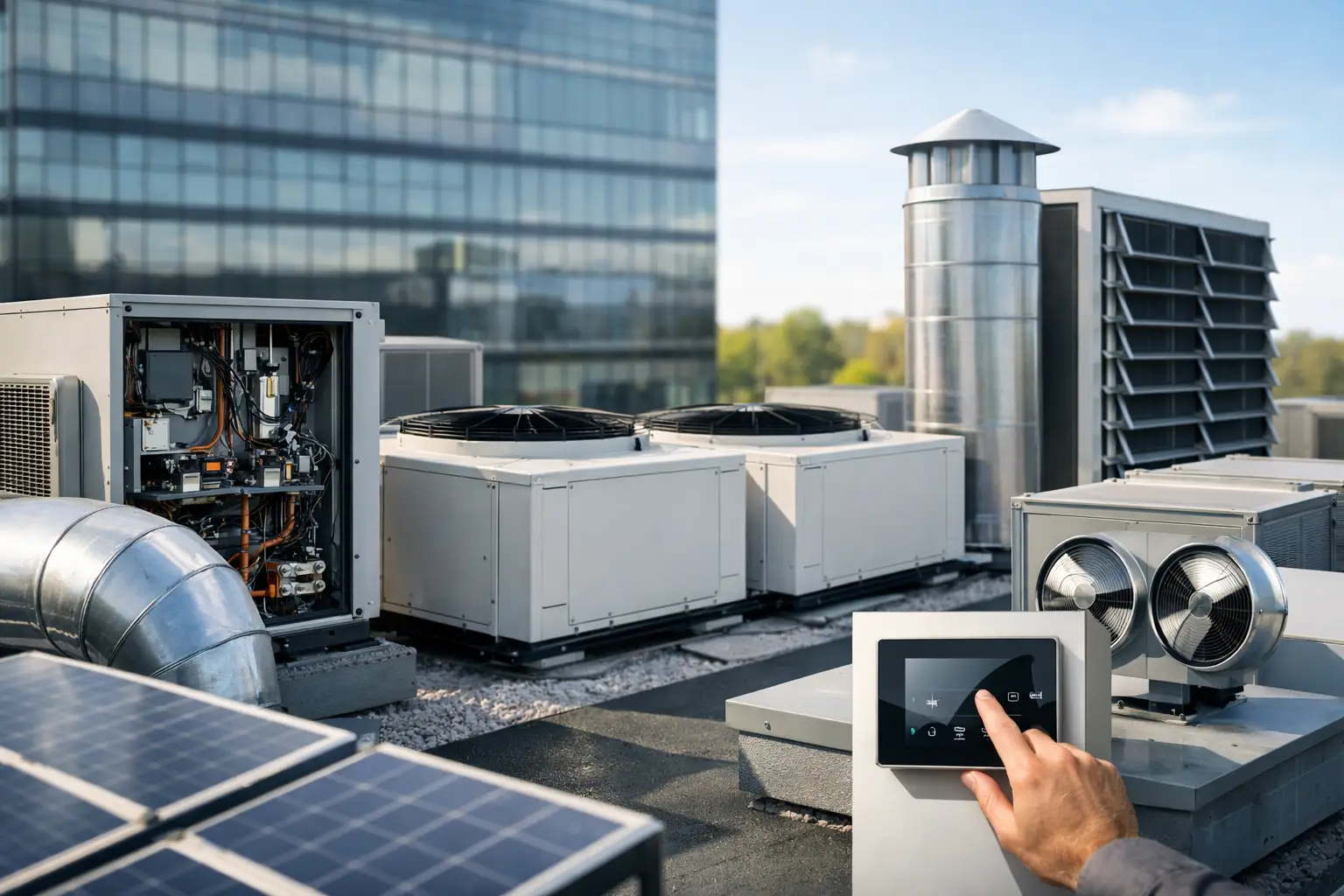
For many commercial properties, rooftop units are the backbone of heating and cooling. When these units age, they tend to lose efficiency, struggle with airflow, and require more frequent repairs. If your rooftop unit is well past its prime, replacing it with a high-efficiency model may be one of the best commercial HVAC upgrades available.
Newer rooftop units can offer better energy performance, improved humidity control, stronger diagnostics, and quieter operation. They may also integrate more effectively with modern controls, which helps you get better value from both upgrades.
Replacement is not always the first step, though. If the unit is still structurally sound and repair history is light, strategic repairs or component updates may extend its life. But if you are facing repeated breakdowns, rising repair costs, or customer complaints about comfort, replacement often becomes the more economical long-term move.
4. Demand-controlled ventilation
Ventilation matters for comfort, indoor air quality, and code compliance, but over-ventilating a space can drive up heating and cooling costs. Demand-controlled ventilation adjusts outside air intake based on occupancy levels, usually with carbon dioxide sensors or other building data.
This is a strong upgrade for buildings where occupancy changes throughout the day, such as conference areas, schools, worship spaces, and some retail locations. Instead of bringing in the same volume of outdoor air at all times, the system responds to actual usage. That can reduce unnecessary conditioning of outside air while still supporting a healthier indoor environment.
In a climate like Colorado, where temperatures can swing sharply between seasons, ventilation strategy affects both comfort and utility bills. The key is proper design and calibration. If sensors are poorly placed or settings are wrong, the system may not deliver the intended savings or air quality benefits.
5. Zoning improvements for uneven comfort
If one side of the building is always warmer than the other, or if upper floors never seem comfortable, zoning may be the issue. Many commercial buildings have areas with very different heating and cooling demands but are served as if they all behave the same way.
Zoning upgrades can include dampers, separate controls, sensor improvements, or modifications to how air is distributed. These changes help target conditioned air where it is actually needed rather than flooding every zone equally. For facilities managers, this can mean fewer comfort complaints and less pressure on equipment.
Zoning is especially valuable in buildings with sun exposure differences, mixed occupancy schedules, server rooms, kitchens, or tenant spaces with different uses. Still, zoning is not a cure-all. If ductwork is undersized, the unit is improperly matched, or insulation issues are driving the problem, zoning needs to be part of a broader solution.
6. Better filtration and indoor air quality add-ons
Commercial clients are paying more attention to indoor air quality than they did a few years ago, and for good reason. Air quality affects employee comfort, perceived cleanliness, and in some settings, customer confidence. Upgrades in this area can include higher-efficiency filtration, air purification accessories, and ventilation adjustments.
The best option depends on the building. A medical office has different air quality priorities than a warehouse or a small retail shop. In some cases, upgrading filtration is simple and cost-effective. In others, stronger filtration can restrict airflow if the system is not designed for it. That is why it is important to match the filtration strategy to the equipment rather than choosing the highest-rated filter and hoping for the best.
This category is less about flashy equipment and more about practical balance. Good indoor air quality should support comfort and cleanliness without creating airflow problems or excessive operating cost.
7. Building automation and monitoring tools
For larger commercial spaces or multi-site properties, building automation can make HVAC performance easier to manage. These systems help track temperatures, schedules, runtime, alarms, and equipment trends from a central interface. That gives property operators more visibility into how the system is performing and where money may be leaking out.
The biggest benefit is often speed. When a system starts behaving abnormally, monitoring tools can help your team or service provider catch the issue before it becomes a major failure. That matters for businesses where downtime affects operations, tenant satisfaction, or inventory protection.
Not every property needs a full automation platform. Smaller buildings may get plenty of value from simpler control upgrades and regular maintenance. But for facilities with multiple zones, long operating hours, or several pieces of commercial equipment, monitoring can improve decision-making and reduce reactive service.
When an upgrade beats another repair
A lot of commercial HVAC decisions come down to timing. If a repair is affordable and the system still has solid years left, repair may be the right call. If you are stacking one repair on top of another, losing efficiency, and dealing with recurring comfort problems, an upgrade usually starts to look better.
A useful way to judge the situation is to look beyond the invoice for the latest fix. Consider how often the system needs service, how much energy it is using, and whether it is still supporting the comfort your building needs. A cheaper repair today can become the more expensive choice over the next two summers.
For commercial properties, it also helps to think about disruption. Planned upgrades are usually easier to schedule than emergency replacements. You have more control over budget, equipment selection, and timing, which tends to lead to better results.
Choosing upgrades that fit your building
The best commercial HVAC upgrades are the ones that address your building’s actual pain points. For some properties, that means a new rooftop unit. For others, it means smarter controls, better zoning, or improved ventilation. There is no single answer that fits every business.
What matters is getting a clear picture of system condition, performance issues, and operating costs before making a decision. A dependable commercial HVAC contractor can help identify where an upgrade will make a real difference and where your money is better saved for a larger replacement plan.
If your building is showing signs of strain, comfort issues, or rising utility costs, now is a good time to evaluate what the system is telling you. The right upgrade can do more than improve airflow. It can make the whole property easier to run.