

TL;DR:
- HVAC repair fraud involves deceptive tactics such as pressure sales, fake emergency diagnoses, and unnecessary refrigerant overcharging. Verifying contractor credentials, obtaining detailed written estimates, and refusing immediate signatures help protect homeowners from scams. Disputing fraudulent work is easiest using credit cards, documented reports, and timely reporting to licensing boards and consumer agencies.
HVAC repair fraud is defined as any deceptive practice by a contractor designed to extract payment for unnecessary, overpriced, or fabricated heating and cooling work. Avoiding HVAC repair scams requires knowing the tactics scammers use and verifying every contractor before they touch your system. Consumer protection agencies like the Federal Trade Commission, the Better Business Bureau, and state contractor licensing boards all document these schemes, and the FTC Cooling-Off Rule gives you a legal window to cancel rushed contracts. This guide covers the most common scam tactics, how to confirm a contractor’s legitimacy, what written documentation to demand, and what to do if you suspect you have already been targeted.
What are the most common HVAC repair scams?
Pressure sales are the most widespread HVAC scam tactic, and they almost always follow the same script. A technician arrives, inspects your system briefly, and then tells you the unit is on the verge of total failure. The urgency is manufactured. The goal is to get you to sign a contract before you have time to think, call a second opinion, or verify any of the claims being made.
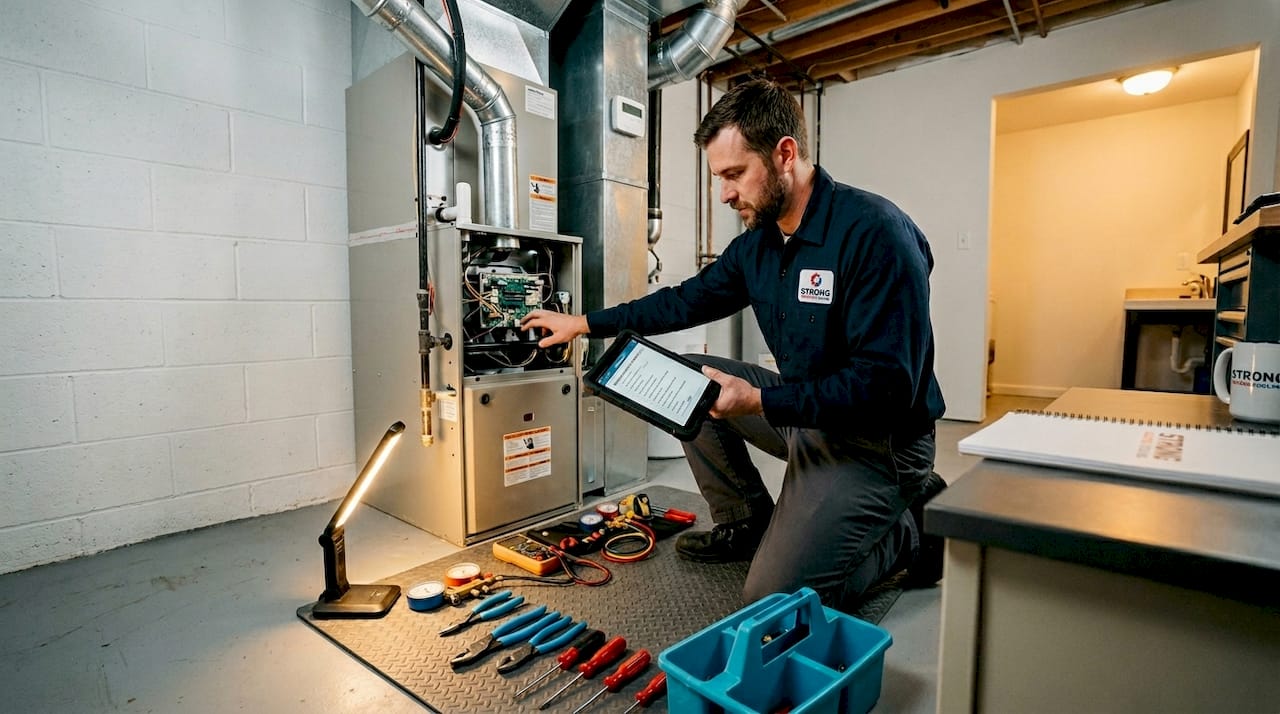
Fake emergency diagnoses are closely related. A technician might claim your heat exchanger is cracked, which is a genuinely serious safety issue involving carbon monoxide risk. Because homeowners cannot easily see inside a furnace, this claim is difficult to dispute on the spot. Reputable technicians provide inspection reports with photos and test results tied to your unit’s serial number before recommending any major replacement. A verbal warning with no documentation is a red flag, not a diagnosis.
Refrigerant overcharging is another common scheme. A technician adds refrigerant your system does not need, charges you for a full recharge, and may even claim your system uses a refrigerant type that requires expensive special handling. Unnecessary refrigerant work is difficult to detect without your own gauge readings, which is exactly why scammers favor it.
Other tactics include upfront payment demands for parts that never arrive, vague line items on invoices that obscure what you actually paid for, and fake zero-interest financing that hides fees triggered after an introductory period. HVAC loan and lease contracts often include deferred interest clauses that can significantly increase the total cost of a repair or replacement if you do not pay the balance in full before the promotional period ends.
Watch for these warning signs before you allow any work to begin:
- The technician refuses to provide a written diagnostic report
- You are told the repair must happen today or the system will fail completely
- The quote is verbal only, with no itemized breakdown
- The contractor cannot name the specific component that failed or show you physical evidence
- You are asked to sign a contract with blank spaces or missing cost totals
- The technician claims to be from your utility company but cannot provide verifiable identification
Pro Tip: Ask every technician to tie their diagnosis to your unit’s serial number and provide photos or test readings as evidence. A legitimate contractor will have no problem doing this. One who refuses or deflects is telling you something important.
How do you verify an HVAC contractor’s legitimacy?
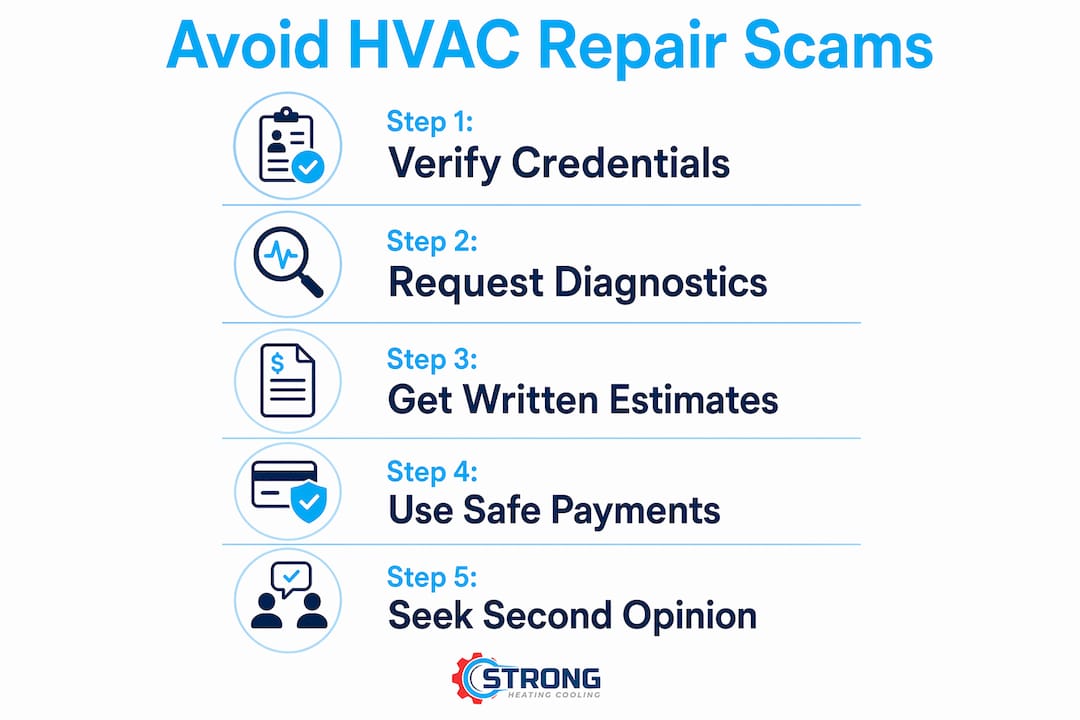
Checking a contractor’s credentials before the first visit is the single most effective step in HVAC repair fraud prevention. Colorado and most other states require HVAC technicians to hold active licenses, and those licenses are searchable through state contractor licensing boards. A contractor who cannot provide a license number or whose number does not match state records should not be allowed on your property.
Follow these steps to confirm a contractor is legitimate before scheduling any work:
- Ask for the contractor’s full business name, license number, and insurance certificate before scheduling. Legitimate companies provide this without hesitation.
- Search the license number through your state’s contractor licensing board website to confirm it is active and in good standing.
- Look up the company on the Better Business Bureau website to check for unresolved complaints or a pattern of negative reviews.
- Search the company name on Google, Yelp, and Nextdoor to read recent customer experiences. Pay attention to reviews that mention pressure tactics or unexpected charges.
- Confirm the contractor carries both general liability insurance and workers’ compensation coverage. If a technician is injured on your property and the contractor lacks coverage, you may be held liable.
Verifying the identity of anyone claiming to be a utility contractor deserves special attention. Never allow access to a technician claiming to represent your utility company without calling the utility directly using the number printed on your bill. Scammers use this approach to gain entry to homes under false pretenses. A real utility contractor will wait while you make that call.
Reading about licensed HVAC contractor benefits can help you understand exactly what protections a properly credentialed contractor provides, including liability coverage and workmanship guarantees that unlicensed operators simply cannot offer.
Pro Tip: Do not rely solely on a contractor’s website or a business card for verification. State licensing board searches take under two minutes and confirm what the contractor is legally authorized to do in your state.
Why do written estimates and documentation protect you from fraud?
Written documentation is the most reliable defense against HVAC repair scams, and the absence of it is the clearest sign that something is wrong. Comparing at least three written proposals significantly helps detect inflated or unnecessary work by revealing price differences that can exceed $1,500 on larger jobs. That gap is not always explained by quality differences. Sometimes it reflects one contractor padding the quote with work you do not need.
Each written proposal should include the equipment model number and SEER rating for new installations, the specific components being replaced or repaired, the total cost broken down by labor and parts, the estimated timeline, and any warranty terms covering both parts and workmanship. A proposal that lists only a lump sum with no line-item detail gives you nothing to compare and nothing to dispute if the work falls short.
For major repairs, insist on a written diagnostic report before authorizing any work. This report should include the specific component that failed, the test method used to confirm the failure, and photos tied to your unit’s serial number. Written evidence is essential for high-value or safety-related repairs. A verbal claim of urgency with no supporting documentation is not a diagnosis. It is a sales tactic.
The table below shows the key differences between documentation from a legitimate contractor and what you typically receive from a fraudulent one.
| Documentation element | Legitimate contractor | Scam contractor |
|---|---|---|
| Written proposal | Itemized by labor, parts, model numbers, and warranty | Verbal quote or vague lump sum only |
| Diagnostic report | Photos, test readings, serial number references | Verbal claim with no supporting evidence |
| Contract terms | Full scope, timeline, cancellation rights, total cost | Blank spaces, missing totals, or rushed signature request |
| Financing disclosure | Full APR, repayment schedule, and fee timing | “Zero interest” with deferred charges buried in fine print |
| Warranty documentation | Written, specifying parts and labor coverage periods | Verbal promise with no written confirmation |
Understanding the terms in any service agreement is equally important. The types of HVAC service contracts available to homeowners vary significantly in what they cover and what they exclude, and reading that detail before signing prevents surprises later.
What payment methods and contract terms reduce your financial risk?
Paying with a credit card is the most protective payment method for HVAC repairs and installations. Credit card payments provide a dispute mechanism if work is unsatisfactory, and disputes require keeping your original quotes and diagnostic documentation as evidence. Cash and wire transfers offer no equivalent recourse once the money leaves your account.
Contract terms deserve the same scrutiny as the technical work itself. The FTC Cooling-Off Rule gives consumers approximately three business days to rescind in-home sale contracts, which applies to many HVAC agreements signed at your home. If a contractor pressures you to sign immediately and waive that window, treat it as a serious warning sign. Legitimate contractors do not need you to surrender your cancellation rights.
Before signing any HVAC contract, review it for the following:
- No blank spaces in any field, including cost totals, equipment model numbers, and installation dates
- A clear cancellation policy that references your legal rescission rights
- Full financing disclosure including APR, total repayment amount, and the exact date any promotional rate expires
- A written warranty covering both parts and labor, with specific durations stated
- A payment schedule that does not require more than a modest deposit before work begins
Large upfront deposits are a consistent feature of contractor fraud. A reasonable deposit for a major installation might cover the cost of ordered equipment, but paying 50% or more before a technician arrives gives you very little leverage if the work is never completed or is done poorly. Reviewing HVAC financing options from a reputable provider before signing any loan or lease agreement helps you recognize when terms are fair and when they are not.
What should you do if you suspect HVAC repair fraud?
Stop payment immediately if you financed the work and are still within the contract’s cancellation window. The FTC Cooling-Off Rule’s three-business-day rescission period is your first line of defense after signing a contract you now question. Contact your financing company or credit card issuer the same day you decide to dispute the charge, and reference the cancellation clause in your contract.
Gather every piece of documentation you have. This includes the original written quote, any diagnostic reports, photos of the work performed or not performed, email and text exchanges with the contractor, and the signed contract. Consumer-watchdog guidance confirms that documentation and multiple bids are the primary tools for resolving disputes in your favor. Without records, your complaint has limited traction.
Report the contractor to your state’s contractor licensing board, your state attorney general’s consumer protection office, and the Better Business Bureau. These agencies track complaint patterns, and a single report from you may be the one that triggers a formal investigation. Small claims court is a practical option for disputes under your state’s filing threshold, typically between $5,000 and $10,000 depending on the state.
Disaster-related contractor fraud surges significantly in the aftermath of severe weather events. According to the Triple-I and the National Insurance Crime Bureau, homeowners face a 38% increase in contractor fraud risk following disasters. Fraudulent contractors often work in coordinated networks, inflating claims and pressuring homeowners who are already stressed and vulnerable. Heightened verification standards apply any time your area has recently experienced a major storm, flood, or extreme temperature event.
Getting a second opinion from a licensed contractor is also worth doing before authorizing any repair that costs more than a few hundred dollars. A second technician who cannot reproduce the first contractor’s diagnosis is strong evidence that the original claim was fabricated.
Key takeaways
Protecting yourself from HVAC repair fraud requires written documentation, verified contractor credentials, and the discipline to pause before signing any contract under pressure.
| Point | Details |
|---|---|
| Demand written diagnostics | Require photos and test results tied to your unit’s serial number before approving major repairs. |
| Verify credentials independently | Search contractor license numbers through your state licensing board before scheduling any work. |
| Get three written proposals | Comparing at least three itemized bids reveals inflated pricing and unnecessary work recommendations. |
| Use credit cards for payment | Credit card payments allow you to dispute unsatisfactory work; cash and wire transfers do not. |
| Know your cancellation rights | The FTC Cooling-Off Rule gives you roughly three business days to rescind most in-home contracts. |
What experience with HVAC scams has taught us
After more than 40 years of combined experience in this industry, the pattern we see most often is not the dramatic fraud case. It is the homeowner who felt uncomfortable but signed anyway because the technician seemed confident and the pressure was high. That discomfort is worth listening to.
The single most effective habit a homeowner can develop is separating the diagnostic visit from the authorization visit. When a technician diagnoses a problem and asks you to approve the repair in the same conversation, you are making a financial decision under conditions designed to limit your thinking. Schedule the diagnosis, take the written report, and then decide. Any contractor who tells you that waiting even 24 hours will cause irreparable damage is almost certainly overstating the risk.
We have also seen how disaster seasons change the contractor pool in ways that are not always visible to homeowners. After a hard Colorado winter or a stretch of extreme heat, contractors appear who were not operating in the area the week before. Some are legitimate out-of-area companies filling real demand. Others are taking advantage of the moment. The verification steps that feel optional in normal conditions become genuinely necessary when your system fails during a weather emergency and you need help fast.
Written evidence separates a legitimate diagnosis from a manufactured one. A technician who can show you a photo of the cracked component, reference the serial number on your unit, and explain the test result in plain language is doing their job. One who describes the problem in general terms and asks you to trust them is asking for more than your trust. They are asking you to skip the only step that protects you.
Treat over-aggressive contractors with skepticism, not embarrassment. Asking for documentation is not an insult to a professional. It is the standard that every honest contractor should expect and welcome.
— Owner
Trusted HVAC service with transparent pricing in Colorado Springs
Strong Heating & Cooling provides every customer with a written diagnostic report and a fully itemized estimate before any work begins. There are no verbal-only quotes, no blank contract spaces, and no pressure to sign on the same visit as the diagnosis.

Strongheatingandcooling serves Colorado Springs and surrounding communities with licensed technicians, clear financing terms, and payment options that include credit cards for your protection. Whether you need heating repair or installation or a full cooling system replacement, every job comes with honest pricing and documentation you can keep. Call Strong Heating & Cooling to schedule a diagnostic visit with no pressure and no surprises.
FAQ
What are the most common signs of an HVAC scam?
The clearest signs include verbal-only diagnoses with no written report, same-day contract pressure, requests for large upfront cash payments, and claims of urgent failure that cannot be supported with photos or test results. Any technician who refuses to provide documentation tied to your specific unit’s serial number warrants serious skepticism.
How do I verify an HVAC contractor before hiring?
Search the contractor’s license number through your state’s contractor licensing board website and confirm it is active. Also check the Better Business Bureau for complaint history and ask for proof of liability insurance and workers’ compensation coverage before scheduling any work.
Can I cancel an HVAC contract after signing it?
The FTC Cooling-Off Rule typically allows consumers about three business days to rescind contracts signed in their home. Review your contract for the cancellation clause immediately after signing, and contact your payment provider the same day if you decide to dispute the agreement.
Why should I get multiple written estimates for HVAC work?
Comparing at least three written proposals helps identify inflated pricing and unnecessary work recommendations, with price differences on large jobs sometimes exceeding $1,500. Itemized bids also give you a clear record to reference if a dispute arises later.
Is paying cash for HVAC repairs ever a good idea?
Cash payments offer no dispute mechanism if the work is faulty or incomplete. Paying with a credit card is the safer choice because it allows you to file a chargeback with your card issuer if the contractor fails to deliver what was agreed in writing.


