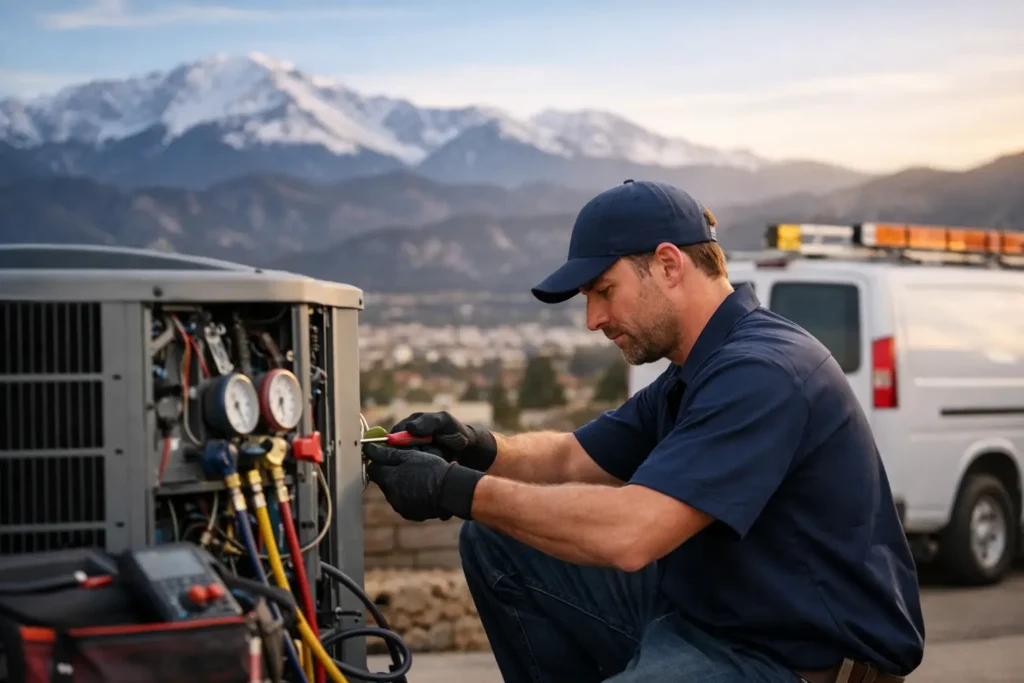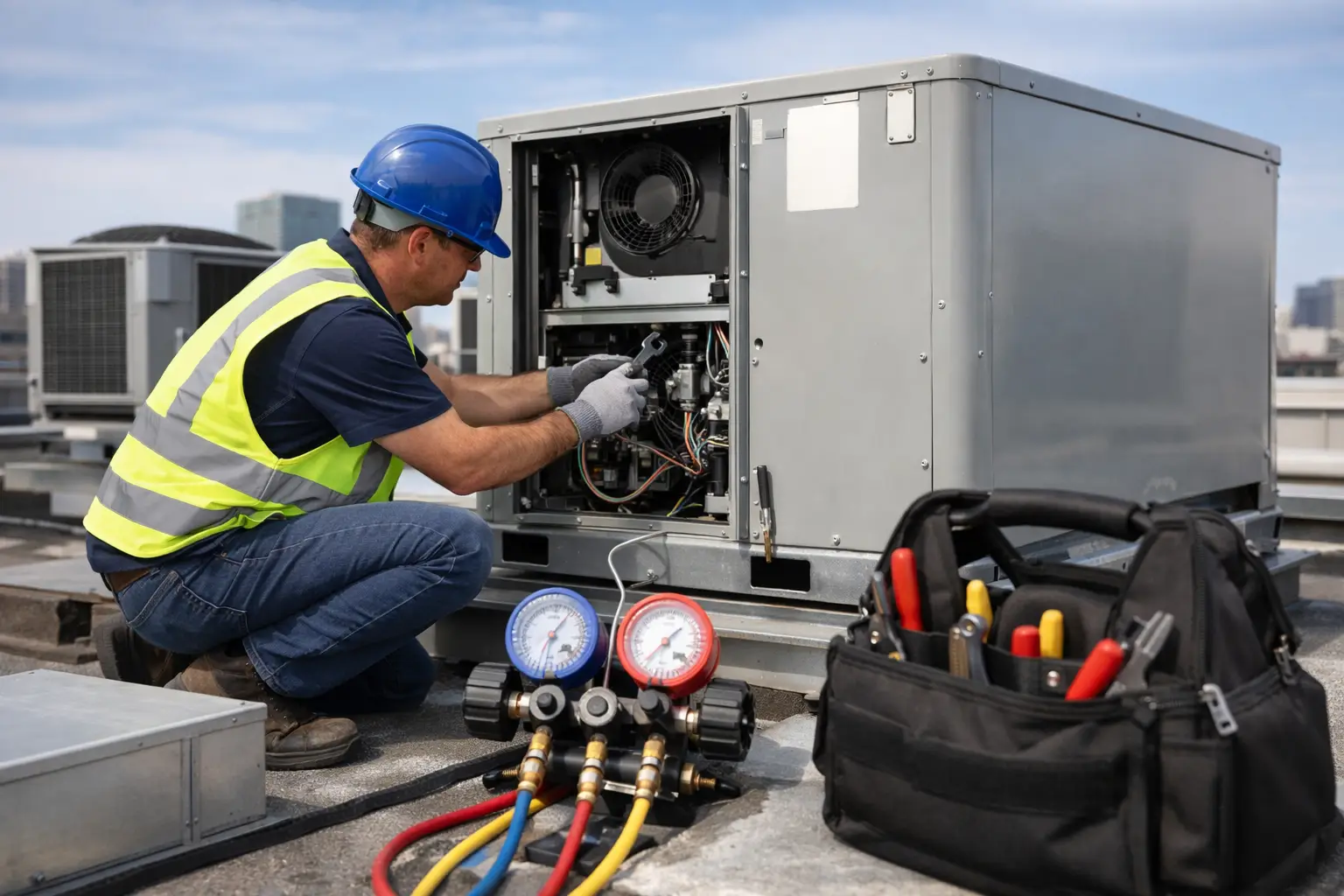
A rooftop unit rarely fails at a convenient time. It quits during a lunch rush, on the hottest afternoon of the week, or right before tenants start calling. That is why commercial rooftop unit repair is not just about getting air moving again. It is about protecting business operations, customer comfort, indoor air quality, and your budget.
For property owners and facility managers, the real problem is usually not a single broken part. It is lost time, rising utility costs, and the risk of turning a manageable repair into an expensive replacement. A good repair process addresses the immediate issue, but it also looks at why the failure happened and what can be done to keep it from happening again.
What commercial rooftop unit repair usually involves
RTUs are built to handle a lot, but they work hard year-round. In one package, you have cooling components, heating components, electrical controls, motors, fans, filters, and safety devices. When one part starts slipping, it can affect the whole system.
Commercial rooftop unit repair often starts with a full system diagnosis rather than a quick part swap. A technician may need to check refrigerant charge, compressor operation, blower performance, belts, contactors, capacitors, heat exchangers, ignition components, economizers, thermostats, and control boards. Airflow also matters. A unit can appear to have a cooling problem when the real issue is a clogged filter, collapsed duct section, failed blower motor, or dirty coil.
That is one reason commercial systems need technicians who are comfortable with more than basic troubleshooting. The goal is to restore operation without missing the underlying cause.
Signs your rooftop unit needs repair now
Some failures are obvious. The space is hot, cold, stuffy, or the system will not start. Others build slowly and cost you money before they create a full shutdown.
If your utility bills are climbing without a clear reason, your RTU may be running longer than it should because of airflow restrictions, control issues, or declining component performance. Uneven temperatures between suites or rooms can point to duct issues, damper problems, sensor faults, or weak blower output. Short cycling is another warning sign. When a unit turns on and off too often, it puts extra stress on motors, compressors, and electrical parts.
Noise matters too. Grinding, rattling, buzzing, or hard starts usually mean something mechanical or electrical is wearing out. Water around the unit or signs of moisture intrusion can indicate condensate drain issues, rooftop penetration problems, or cabinet damage. If the system is tripping breakers or causing repeated thermostat complaints, it is time to schedule service before the problem spreads.
Common rooftop unit problems and what they can mean
Electrical failures are one of the most common repair calls. A failed capacitor, worn contactor, damaged wiring connection, or control board issue can stop the unit or make it run erratically. These parts are small compared to the entire system, but they affect whether the unit starts, stops, and responds correctly.
Airflow problems are just as common. Dirty evaporator and condenser coils reduce efficiency and force the system to work harder. Worn belts, failing fan motors, plugged filters, and damaged dampers can reduce conditioned air to the building even when the unit appears to be running.
Refrigeration issues tend to be more serious. Low refrigerant can signal a leak, and that leak should be located and repaired instead of simply topping off the system. Compressor problems can range from electrical failure to internal wear. Sometimes repair makes sense. Sometimes the age and condition of the unit make replacement the better financial decision.
On gas heat sections, ignition failures, dirty burners, cracked heat exchangers, and safety control issues need prompt attention. These are comfort and safety concerns, not just performance issues.
Why fast repair matters for business operations
A struggling rooftop unit does more than affect temperature. It can change how customers experience your business and how employees work through the day. In retail, dining, medical offices, warehouses, churches, and multi-tenant spaces, comfort problems can quickly become reputation problems.
There is also the cost side. An inefficient RTU often runs longer, uses more power, and wears down major components faster. Delaying a repair can turn a moderate service call into a compressor failure or a premature replacement project. That is why a prompt, accurate diagnosis usually saves money, even when the first symptom seems minor.
In a climate like Colorado, the weather can also push equipment harder than building owners expect. Hot summer conditions, cold snaps, wind, hail exposure, and dust all add stress to rooftop equipment. That makes timely service even more valuable.
Commercial rooftop unit repair or replacement?
This is where it depends. Not every major repair means the unit should be replaced, and not every running unit is worth saving.
If the rooftop unit is relatively new, the cabinet is in good shape, and the repair is limited to a specific component, repair is often the smart move. If the unit has a history of repeated breakdowns, poor efficiency, obsolete parts, or significant corrosion, replacement may offer better long-term value.
The repair-versus-replace decision usually comes down to five things: age, repair cost, availability of parts, energy performance, and how critical the unit is to your operation. A low-cost repair on a ten-year-old unit can still make sense. A high-cost repair on a system near the end of its service life may only delay a larger problem.
What most businesses want is clear advice, not pressure. A reliable contractor should explain the condition of the unit, outline the options, and be honest about expected remaining life.
What a good repair visit should look like
The best service calls are organized, practical, and transparent. That starts with listening to the symptoms you have noticed, then testing the unit instead of guessing. Once the issue is confirmed, you should get a clear explanation of what failed, what caused it, and what the repair involves.
For commercial clients, communication matters almost as much as the repair itself. You need to know whether the system can be restored the same day, whether parts must be ordered, and whether temporary measures are possible to keep the space usable. If the problem affects multiple zones or tenants, the repair plan should account for that.
Pricing should be straightforward. No one likes vague language when a business is trying to make a maintenance or capital decision. Clear estimates, realistic timelines, and honest recommendations are part of quality workmanship.
How maintenance reduces emergency repairs
Most emergency calls start as preventable issues. Filters get missed, belts wear down, coils stay dirty, drains clog, and small electrical issues go unnoticed until the system stops. Routine maintenance catches those problems early and helps rooftop units run more efficiently through peak demand.
That does not mean maintenance prevents every failure. Age, weather, and heavy usage still matter. But regular inspections lower the odds of surprise breakdowns and give you a better sense of when parts are nearing the end of their useful life.
For many businesses, the real value of maintenance is predictability. It is easier to plan for a repair or replacement when you are not reacting to a complete loss of heating or cooling.
Choosing the right contractor for rooftop unit service
Commercial HVAC is not the same as residential HVAC at a larger size. Rooftop systems involve different access challenges, control setups, scheduling demands, and business impacts. You want a contractor that can diagnose commercial equipment accurately, communicate clearly, and respond quickly when downtime affects your operation.
Look for a team that offers trained technicians, transparent pricing, and a practical service mindset. Emergency availability matters, especially if your business cannot afford after-hours outages. It also helps to work with a local company that understands the demands buildings face in this area and can support both repair needs and long-term equipment planning.
For businesses in El Paso County, working with a contractor like Strong Heating and Cooling means having one point of contact for urgent rooftop unit repairs, ongoing maintenance, and replacement recommendations when the time is right.
When to call for commercial rooftop unit repair
If your system is struggling to hold temperature, making unusual noise, short cycling, leaking, or driving up energy costs, it is time to have it checked. Waiting rarely improves the outcome. Early repairs are usually simpler, less disruptive, and easier on the budget than emergency failures.
A dependable rooftop unit keeps your building functional and your people comfortable. When something changes, the best next step is a professional diagnosis from a team that knows how commercial systems work in the real world. A quick call today can prevent a much bigger problem next week.