A neglected air conditioner usually gives warning signs before it fails. Higher utility bills, uneven cooling, weak airflow, and longer run times often point to one issue: poor AC upkeep. If you stay ahead of the small maintenance tasks, you can reduce repair costs, improve comfort, and give your system a better chance of making it through peak summer demand.
For homeowners and property managers, upkeep is not about doing everything yourself. It is about knowing what should be checked, what you can handle safely, and when professional service makes more sense. A well-maintained system runs more efficiently, holds temperature better, and puts less strain on expensive components like the compressor and blower motor.
Why AC upkeep matters more than most people think
Many cooling problems do not start as dramatic failures. They start with dirt, restricted airflow, loose electrical connections, low refrigerant from a leak, or worn parts that have been under stress for months. The longer those issues go unnoticed, the more likely they are to lead to a breakdown on the hottest day of the year.
Regular upkeep also affects operating cost. When a filter is clogged or the outdoor coil is packed with debris, the system has to work harder to move heat. That extra effort shows up on your power bill. In some cases, poor maintenance can shorten the life of the equipment enough that replacement becomes necessary years earlier than expected.
There is also a comfort factor that people notice right away. A system that is clean and properly adjusted cools more evenly, controls humidity better, and cycles the way it should. That means fewer hot spots, less frustration, and fewer emergency calls.
The most important parts of basic AC upkeep
Some maintenance tasks are simple and worth keeping up with during the cooling season. Others should be left to trained technicians because they involve electrical components, refrigerant, or detailed system diagnostics.
The air filter is the easiest place to start. A dirty filter can choke airflow, reduce efficiency, and create pressure problems that affect the evaporator coil. In a home with pets, heavy dust, remodeling activity, or frequent AC use, filters may need attention more often than the standard monthly check. If the filter looks loaded with dust, replace it.
The outdoor condenser also needs space to breathe. Leaves, weeds, grass clippings, and windblown debris can collect around the unit and reduce airflow through the coil. Keeping the area clear helps the system reject heat the way it was designed to. It is a simple step, but it makes a difference.
Your thermostat deserves attention too. If cooling feels inconsistent, the thermostat may be set incorrectly, located in a poor spot, or due for calibration or replacement. Sometimes the AC is doing its job, but the control strategy is causing discomfort or wasted energy.
Drainage is another overlooked issue. Air conditioners remove moisture from indoor air, and that condensation has to go somewhere. If the condensate drain line clogs, you can end up with water damage, musty odors, or system shutdowns on units with safety switches.
What professional AC upkeep should include
A professional maintenance visit goes further than a quick visual check. It should include inspection, testing, cleaning, and adjustments that support performance and safety.
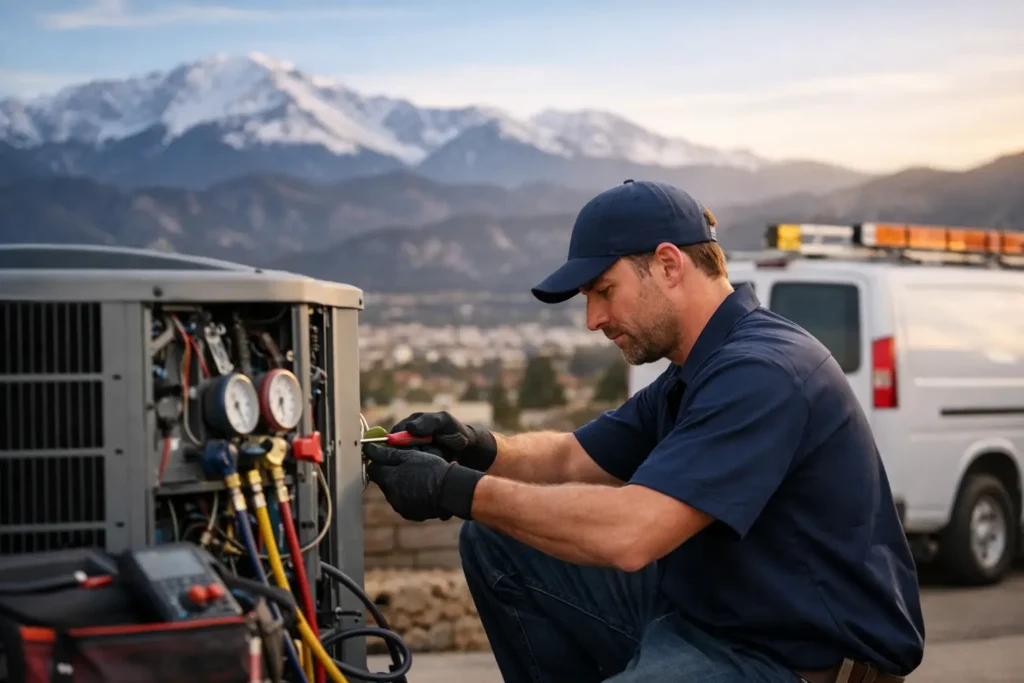
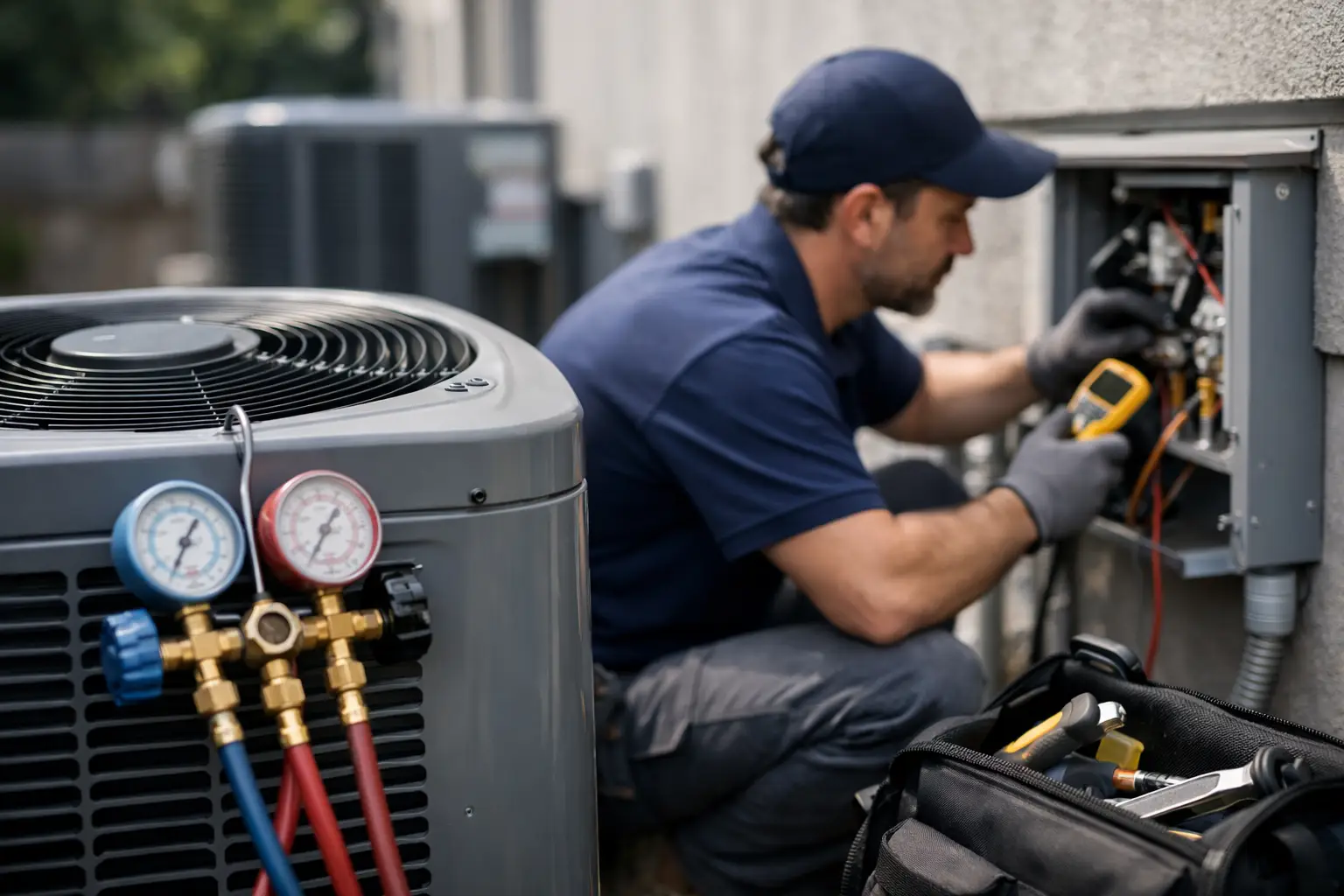
A technician will typically inspect electrical connections, test capacitors and contactors, verify blower operation, check the condenser and evaporator coils, evaluate refrigerant performance, inspect the drain system, and confirm that the thermostat and controls are working properly. They should also look for signs of wear that could turn into a bigger repair later.
This matters because some problems are easy to miss from the outside. A capacitor can be weakening before it fails. A contactor can show pitting that affects startup. A coil can be dirty enough to hurt performance without being obviously blocked to the untrained eye. Refrigerant issues are another good example. Low refrigerant is not a normal maintenance item – it usually means there is a leak that needs to be addressed, not just topped off.
For older systems, regular service becomes even more valuable. As parts age, tolerances tighten and minor issues can have a bigger impact on reliability. If your unit is struggling repeatedly, it may be worth comparing ongoing repair costs with replacement. If you are already considering that step, our guide on AC Install: What to Expect and What Matters can help you understand the bigger picture.
Signs your system needs more than routine upkeep
Maintenance helps prevent problems, but it does not solve every issue. Some symptoms point to repair needs that should not wait.
If your AC is blowing warm air, short cycling, making grinding or buzzing noises, tripping breakers, leaking water indoors, or running constantly without reaching the set temperature, that goes beyond standard upkeep. The same is true if airflow has dropped sharply in part of the building or if your energy bill rises without a clear reason.
Commercial clients should pay close attention to occupancy comfort, equipment noise, and temperature consistency across zones. Small issues in a business setting can affect staff productivity, customer experience, and equipment protection. For buildings that rely on packaged rooftop equipment, maintenance and repairs have their own set of demands. Our Commercial Rooftop Unit Repair Guide covers some of the issues owners and facility teams should watch for.
When the system stops cooling during extreme heat, waiting usually makes things worse. Fast diagnosis matters because continued operation under the wrong conditions can damage major components. If the issue is urgent, emergency service may be the right move instead of hoping it clears up on its own.
DIY AC upkeep: what is safe and what is not
Homeowners can handle a few routine tasks safely. Replacing filters, clearing debris from around the condenser, checking thermostat settings, and making sure supply and return vents are not blocked are all reasonable steps. Keeping the area around indoor equipment clean and dry is helpful too.
Beyond that, caution matters. Opening electrical panels, testing capacitors, disassembling equipment, or handling refrigerant is not a DIY job. Even coil cleaning can go wrong if the wrong products or too much water are used, especially around sensitive components.
There is also the issue of diagnosis. A system that seems dirty may actually have a failing motor. Weak airflow may come from a blower problem, a duct restriction, a frozen coil, or a thermostat issue. Replacing parts without proper testing can waste money and leave the real problem untouched.
Seasonal timing makes a difference
The best time for AC upkeep is before heavy summer use begins. Spring service gives you a chance to catch wear, airflow issues, and control problems before your system is under peak strain. It also gives you more flexibility to schedule service before the busiest part of the season.
That said, maintenance is still worthwhile if summer is already underway. A mid-season visit can improve efficiency and reduce the chance of a breakdown during a heat wave. For properties in Colorado’s dry, dusty conditions, coil cleanliness and filter condition can become an issue faster than many owners expect.
Fall is also a good time to think bigger-picture about year-round HVAC planning. If your air conditioner and furnace are both aging, it may make sense to review long-term replacement priorities rather than waiting for two separate failures.
How upkeep affects repair vs. replacement decisions
Good maintenance does not guarantee that an older AC will last forever, but it does give you clearer information. If a technician sees a clean, properly maintained system with one isolated failed part, repair may be the smart choice. If the equipment has chronic performance issues, deferred maintenance, coil problems, refrigerant leaks, or expensive component failures, replacement may be more practical.
This is where honest evaluation matters. The cheapest immediate option is not always the lowest total cost. A repair on a failing system may buy very little time. On the other hand, replacing a unit too early without confirming the real cause of poor performance can be just as frustrating.
If replacement becomes the better path, installation quality matters as much as equipment choice. Proper sizing, airflow setup, refrigerant charging, and commissioning have a direct effect on comfort and reliability. For local homeowners comparing options, Air Conditioner Installation Colorado Springs offers a helpful starting point.
AC upkeep for homes and commercial properties
The basics are similar, but the stakes can be different. In a home, poor upkeep usually leads to comfort complaints, higher bills, and inconvenient repairs. In a commercial building, it can affect tenants, staff, customers, operating hours, and temperature-sensitive areas.
Commercial systems also tend to have more complex controls, heavier run schedules, and broader service demands. That means maintenance needs to be more deliberate. A neglected rooftop unit serving a business is not just an equipment problem. It can quickly become an operational problem.
For both homes and businesses, the best upkeep plan is one that fits the equipment, usage pattern, and age of the system. Newer systems may need less corrective work but still benefit from annual inspections. Older systems often need closer monitoring to stay dependable.
The goal of AC upkeep is simple: fewer surprises, better comfort, and smarter decisions about your equipment. If your system is overdue for service, acting early is usually the least expensive move. A clean, tested, properly adjusted AC has a much better chance of keeping up when you need it most.