A furnace that promises lower utility bills can look like an easy yes – right up until you see the installation quote. That is usually where a real high efficiency furnace review starts: not with marketing claims, but with the practical question of whether the added cost pays off in comfort, reliability, and long-term savings.
For many homeowners, the answer is yes, but not automatically. A high efficiency furnace can be an excellent fit in colder climates, larger homes, and households that plan to stay put for years. In other cases, a standard-efficiency model or even a heat pump pairing may make more sense. The right choice depends on the house, the ductwork, the fuel costs, and how the system is installed.
What a high efficiency furnace review should actually measure
A useful review goes beyond AFUE ratings on a brochure. High efficiency furnaces are usually rated at 90% AFUE or higher, with many modern units landing between 95% and 98%. AFUE stands for Annual Fuel Utilization Efficiency, and it tells you how much of the fuel consumed is converted into usable heat over a heating season.
That sounds simple, but efficiency on paper is only part of the story. Homeowners care about monthly bills, steady room temperatures, noise, air movement, repair risk, and lifespan. A furnace can have an impressive efficiency rating and still disappoint if it is oversized, poorly vented, or connected to leaky ductwork.
That is why a real-world review should weigh three things at once: equipment quality, installation quality, and home compatibility. If one of those is off, the system may never perform the way the label suggests.
Efficiency ratings matter, but so does the way the furnace heats
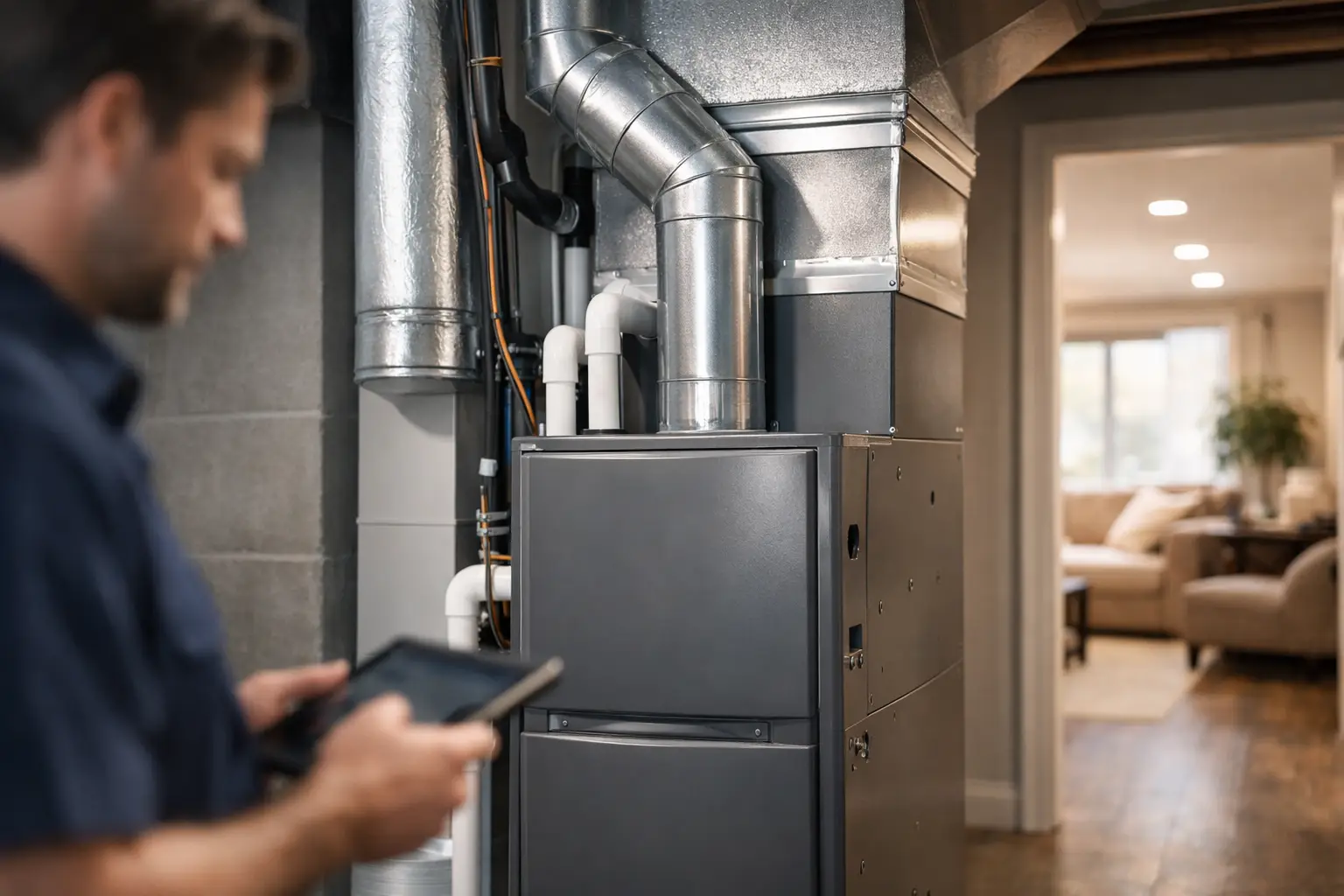
Most high efficiency furnaces use sealed combustion and a secondary heat exchanger to pull more heat from exhaust gases before they leave the home. That is what allows them to reach 90%+ efficiency. In practical terms, less heat is wasted through the vent, and more stays inside where you want it.
Many of these systems also come with two-stage or modulating burners and variable-speed blowers. That matters because comfort is not just about getting hot air. It is about how steadily the system runs and how evenly it distributes heat.
A single-stage furnace is either on or off at full output. A two-stage furnace can run at a lower setting most of the time, then step up during colder weather. A modulating furnace adjusts in much smaller increments. The result is usually quieter operation, fewer temperature swings, and better humidity control during heating season.
If your current furnace blasts hot air for short cycles and leaves certain rooms colder than others, a high efficiency upgrade may improve comfort as much as it improves fuel use.
The biggest advantage: lower operating costs over time
The strongest case for a high efficiency furnace is long-term energy savings. If you are replacing an older furnace in the 70% to 80% AFUE range, the drop in fuel waste can be significant.
For example, moving from an 80% furnace to a 96% furnace means much more of the gas you pay for is actually heating your home. In colder regions where furnaces work hard for extended winters, that difference tends to show up more clearly on utility bills.
Still, savings are not identical from one property to another. A smaller, well-insulated home may see modest gains. A drafty home with high heating demand may show larger bill reductions, but it may also need insulation or air sealing work to get the full benefit. If the home leaks heat badly, even the best furnace is partly compensating for building problems.
Upfront cost is the main drawback
A fair high efficiency furnace review has to be honest about price. These systems cost more to buy and more to install than standard-efficiency models. Part of that comes from the equipment itself. Part comes from venting changes, condensate drainage, control upgrades, or airflow adjustments that may be needed.
For some homeowners, the payback period works out well. For others, especially if they may move in a few years, the math is less compelling. That does not mean high efficiency is a bad choice. It means the decision should be based on actual expected use, not just a general assumption that higher efficiency is always best.
This is also where transparent quoting matters. A proper proposal should explain what is included, whether duct modifications are needed, what efficiency level you are paying for, and whether the home can support the equipment as designed.
Installation quality can make or break the result
This is the part many reviews miss. A high efficiency furnace is less forgiving of poor installation than some older, simpler systems. Venting has to be correct. Drainage for condensation has to be properly managed. Gas pressure, combustion setup, thermostat compatibility, and airflow all need to be dialed in.
If sizing is wrong, the system may short cycle, wear faster, and never hit its comfort potential. If airflow is off, the heat exchanger can be stressed and efficiency can drop. If duct leakage is significant, you may pay for high performance that never reaches the living space.
In other words, brand matters, but installation matters more. A mid-tier furnace installed correctly will often outperform a premium furnace installed poorly.
Noise, comfort, and day-to-day livability
One of the most noticeable upgrades for homeowners is not the utility bill. It is how the house feels. High efficiency furnaces with variable-speed technology usually run longer and gentler instead of kicking on with a loud burst. Rooms can stay more consistent, and airflow often feels less harsh.
That can be especially helpful in multi-story homes or homes with rooms that have always been difficult to heat. It does not solve every comfort issue, especially if the duct design is poor, but it often improves the overall feel of the home.
Noise levels are also typically better, though this depends on installation details. A high-end furnace can still sound disruptive if the return air is undersized or the duct transitions are poorly built.
Maintenance and repair considerations
High efficiency furnaces are more advanced systems, and that comes with a trade-off. They are generally efficient and comfortable, but they also have more components that need proper service. Pressure switches, condensate systems, control boards, sensors, and inducer assemblies all need to work together.
That does not mean they are unreliable. It means maintenance matters. Annual service helps keep combustion safe, drains clear, filters appropriate, and performance on track. Skipping maintenance on a condensing furnace can lead to issues that are preventable with routine care.
Repair costs can also be higher than on basic entry-level equipment, especially as systems age. That is one reason it helps to choose a properly matched system from the start rather than just buying the highest efficiency available without looking at the whole setup.
When a high efficiency furnace is worth it
In most cases, a high efficiency furnace is worth serious consideration if your winters are cold, your gas bills are high, your current system is aging, or comfort has been inconsistent. It also makes sense for homeowners planning to stay in the home long enough to benefit from lower operating costs.
It may be a particularly strong fit if you want quieter performance and more even heating, not just energy savings. Those comfort gains are real, and many homeowners notice them right away.
On the other hand, if the home has major envelope issues, poor ducts, or a short ownership horizon, the smartest investment may not be the highest AFUE unit on the market. It might be a balanced upgrade that includes duct improvements, insulation work, or a different heating strategy altogether.
Final take on this high efficiency furnace review
A high efficiency furnace is not just a better version of an old furnace. It is a more refined heating system that can lower fuel waste, improve comfort, and run more quietly when it is properly selected and installed. The catch is that the extra performance only shows up when the house, duct system, and installation all support it.
That is why the best buying decision usually comes from a home-specific evaluation, not a generic ranking list. If you are comparing furnace options and want clear, practical guidance, a qualified local contractor can help you weigh efficiency, comfort, venting needs, and long-term value without overselling features you may not need. Strong Heating and Cooling approaches that conversation the same way most customers prefer it – with straightforward recommendations, honest pricing, and a focus on what will actually work in your space.
A good furnace should do more than hit a spec sheet. It should keep the building comfortable, control operating costs, and give you fewer worries when temperatures drop.