A furnace usually does not pick a convenient time to fail. It quits on the first freezing night, starts making a new noise before guests arrive, or runs nonstop when utility bills are already high. That is why homeowners often ask, how often should furnace be serviced? In most cases, the right answer is once a year, ideally before the heating season starts.
That simple rule covers a lot of situations, but not all of them. The age of the system, how heavily it runs, the type of equipment you have, and the condition of your home all affect how often service makes sense. If you want steady heat, fewer surprise repairs, and a better chance of catching safety issues early, regular maintenance is one of the smartest HVAC decisions you can make.
How often should furnace be serviced for most homes?
For most households, annual furnace service is the standard. A professional tune-up once every year gives a technician a chance to inspect the system, clean key components, test safe operation, and catch wear before it turns into a midseason repair call.
The best timing is usually early fall. That gives you time to address any problems before colder weather arrives and heating demand goes up. Waiting until winter is not always a disaster, but by then your furnace may already be working under strain, and service schedules tend to fill up when temperatures drop.
If your furnace is newer and has been reliable, you may wonder whether skipping a year is fine. Sometimes the unit will still run without obvious trouble, but that is not the same as running efficiently or safely. Small issues such as a dirty flame sensor, loose electrical connection, clogged drain line on a high-efficiency unit, or a worn belt can build quietly until they affect performance.
Why yearly furnace service matters
Annual service is not just about preventing breakdowns. It also protects comfort, energy use, and equipment life. A furnace that has not been checked in a while may still heat the house, but it can do so less efficiently, with more wear on parts and more stress on the system.
A proper maintenance visit helps identify dirty burners, airflow restrictions, ignition issues, thermostat problems, and signs of heat exchanger trouble. Those are not minor details. Some affect your monthly operating cost, and others affect safety.
For gas furnaces especially, professional inspection matters because combustion systems need to be checked carefully. A trained technician can test operation, look for venting concerns, and make sure the unit is burning fuel as it should. Homeowners can handle basic upkeep like changing the filter, but a full service visit goes much further.
Cases where a furnace may need service more often
Once a year is the baseline, but some furnaces should be checked more often. Older systems often benefit from closer attention because parts wear out, dust buildup is more likely to affect performance, and efficiency tends to decline over time. If your furnace is 10 to 15 years old or older, yearly service becomes even more valuable.
Heavy use is another factor. In colder climates or homes where the system runs for long stretches, the furnace may accumulate more wear in a single season than a lightly used system elsewhere. In parts of Colorado, winter demand can be significant, and that makes pre-season maintenance a practical step rather than an optional one.
Homes with pets, renovation dust, or ongoing indoor air quality issues may also need more attention. Extra debris in the system can affect filters, blowers, and airflow. In those cases, the furnace may not need two full tune-ups every year, but it may need more frequent filter changes and a closer look if performance starts slipping.
Commercial properties are a different category. A furnace or heating system serving an office, retail space, or other business often operates under different loads and occupancy patterns. Those systems may need a more structured maintenance plan based on usage, equipment type, and the consequences of downtime.
Signs your furnace should be serviced sooner
Even if you had maintenance done recently, certain symptoms mean it is worth scheduling service right away. A furnace should not be ignored if it starts making banging, rattling, screeching, or rumbling noises. Those sounds can point to loose components, ignition problems, blower issues, or other mechanical faults.
Uneven heating is another common warning sign. If some rooms stay cold while others heat normally, the problem may involve airflow, ductwork, thermostat performance, or the furnace itself. Short cycling, where the system turns on and off too often, also deserves prompt attention because it can increase wear and waste energy.
A sudden increase in heating bills without a clear weather-related reason is another clue. When a furnace struggles to run efficiently, it often has to work harder to deliver the same level of comfort. That can mean dirty components, restricted airflow, or failing parts.
You should also pay attention to anything that suggests a safety issue, such as unusual smells that do not go away, signs of soot, pilot or burner irregularities, or a carbon monoxide detector alert. In those cases, shut the system down if needed and call a qualified HVAC professional right away.
What happens during a furnace maintenance visit?
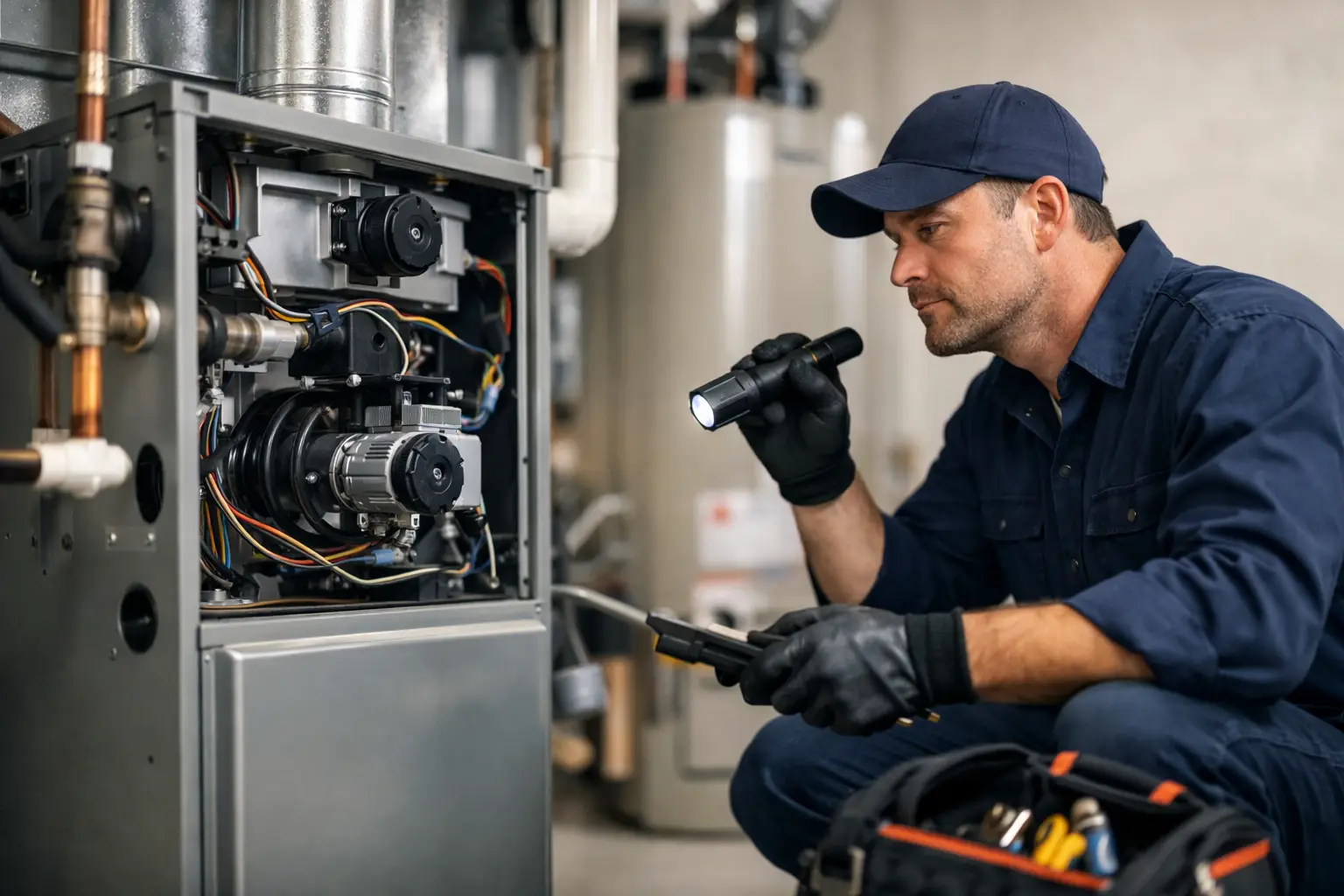
A service appointment is more than a quick look at the thermostat. A technician typically inspects the furnace, checks electrical components, evaluates ignition and burner operation, tests airflow, examines the blower assembly, and looks for wear on moving parts. Filters, drain systems on condensing furnaces, venting, and safety controls may also be checked depending on the equipment.
Cleaning is part of the value. Dust and debris can affect sensors, burners, and airflow over time. Even a well-built furnace can lose performance if key components are dirty or slightly out of adjustment.
A good maintenance visit should also include clear communication. If something is wearing out, you should know whether it is a monitor-it issue or a repair-it-now issue. That kind of honesty helps homeowners and property managers plan instead of reacting under pressure.
Can you maintain a furnace yourself?
You can handle a few important basics, but not full furnace service. The biggest homeowner task is changing the air filter on schedule. Depending on the filter type, home conditions, and system use, that may mean every 1 to 3 months. A clogged filter can reduce airflow, strain the blower, and make the furnace work harder than it should.
You can also keep the area around the furnace clear, make sure supply and return vents are not blocked, and pay attention to changes in sound or performance. Those habits help, but they do not replace professional inspection of combustion, controls, electrical systems, and internal components.
Think of it this way: changing the filter is routine care. Annual service is preventive maintenance. You need both.
How often should furnace be serviced if it is brand new?
A new furnace still needs annual service. In fact, keeping up with maintenance early helps establish a service history and may support warranty requirements. Skipping maintenance because the unit is new can backfire if a small installation-related issue or early wear goes unnoticed.
Newer equipment is often more efficient and more advanced, but that does not mean maintenance-free. High-efficiency furnaces, variable-speed components, and modern controls still need regular inspection to perform the way they were designed to.
The cost of waiting too long
Many people put off furnace service because the system seems to be working fine. That is understandable, but it can get expensive. Deferred maintenance often shows up later as emergency repairs, higher energy bills, shorter equipment life, or heating problems at the worst possible time.
There is also the comfort factor. A furnace does not have to fail completely to create problems. Reduced airflow, weaker heat, constant cycling, and poor temperature control can make a home uncomfortable long before the unit stops running.
For property owners and business operators, the risk is even broader. Heating issues can affect tenants, staff, customers, and daily operations. Routine service is usually far easier to manage than an urgent outage.
When to schedule service
If you cannot remember the last time your furnace was checked, schedule service now. If it has been close to a year, aim for a tune-up before the coldest part of the season. And if your system is showing any warning signs, do not wait for it to sort itself out.
For homeowners and businesses that want dependable heat without pricing surprises, working with a trusted local HVAC contractor makes the process simpler. If you need service in El Paso County, Strong Heating and Cooling can help you stay ahead of furnace problems before they turn into breakdowns.
A well-maintained furnace does not just run better. It gives you one less thing to worry about when the temperature drops.