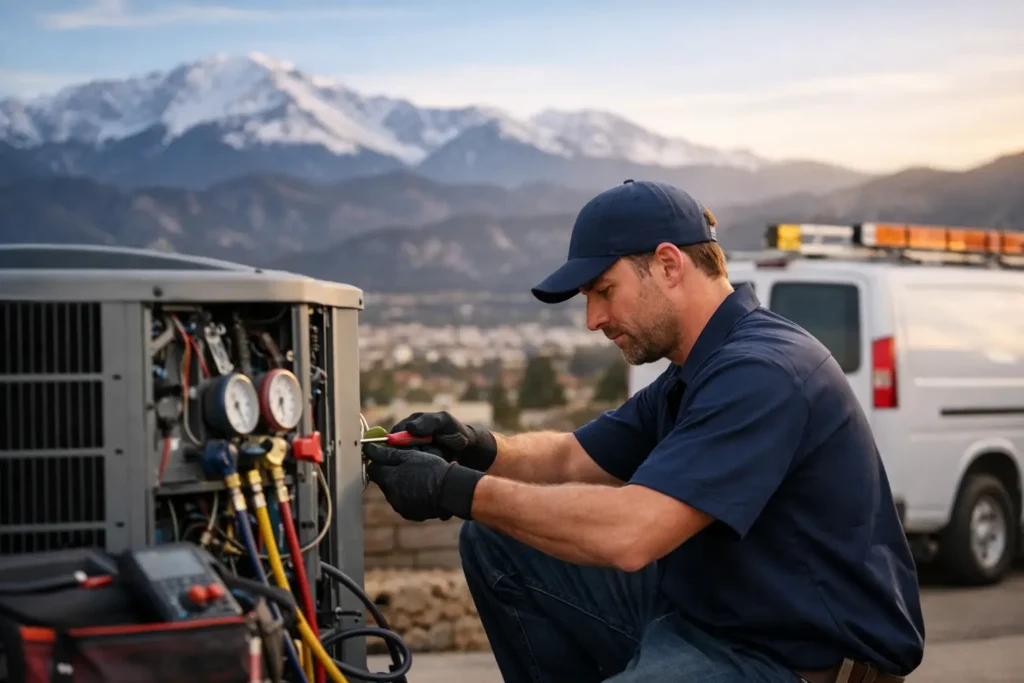
You set your thermostat to heat, hear the system kick on, and then feel cold air pouring from the vents. Frustrating doesn’t cover it. Understanding what causes HVAC to blow cold air is the first step to fixing it, and the answer isn’t always a broken system. Sometimes it’s a dead battery in your thermostat. Other times it’s a refrigerant leak that needs immediate professional attention. This guide walks you through every major cause, from the easiest fixes you can handle yourself to the warning signs that mean you need to call a technician today.
Table of Contents
- Key takeaways
- What causes HVAC to blow cold air: thermostat and settings
- Mechanical issues that cause cold air
- Ductwork and airflow problems
- Environmental and operational factors
- Practical troubleshooting steps
- My honest take after years in HVAC
- Get your HVAC heating right with Strongheatingcooling
- FAQ
Key takeaways
| Point | Details |
|---|---|
| Thermostat settings first | Check mode and fan settings before assuming a mechanical failure. |
| Refrigerant leaks are urgent | Leaking refrigerant causes health risks and requires immediate professional repair. |
| Dirty filters cause frozen coils | Replacing filters every three months prevents airflow blockages that lead to cold air. |
| Duct leaks waste conditioned air | Gaps and holes in ductwork let heated air escape before it reaches your rooms. |
| Age and sizing matter | Older or undersized systems often can’t produce enough heat, mimicking a cold air problem. |
What causes HVAC to blow cold air: thermostat and settings
The most common HVAC cold air issues have nothing to do with the mechanical system at all. Your thermostat controls everything, and a single wrong setting can send unheated air through every vent in your home.
Here are the thermostat-related causes to check first:
- Fan set to “ON” instead of “AUTO.” When the fan runs continuously, it pushes air through the ducts even when the heating cycle isn’t active. That air feels cold because it hasn’t passed through the heat exchanger.
- Mode set to “COOL” instead of “HEAT.” This happens more often than you’d expect, especially after seasonal switches or power outages that reset the thermostat.
- Dead or low batteries. A thermostat with weak batteries can misread temperatures, send incorrect signals, or stop communicating with the system entirely.
- Faulty wiring or a failing thermostat sensor. If the sensor reads the room temperature incorrectly, the system may shut off the heating cycle too early and leave you with cold air.
Thermostat mode errors, including fan-only settings and incorrect heat or cool mode selection, are among the most frequently overlooked causes of unexpected cold air in homes.
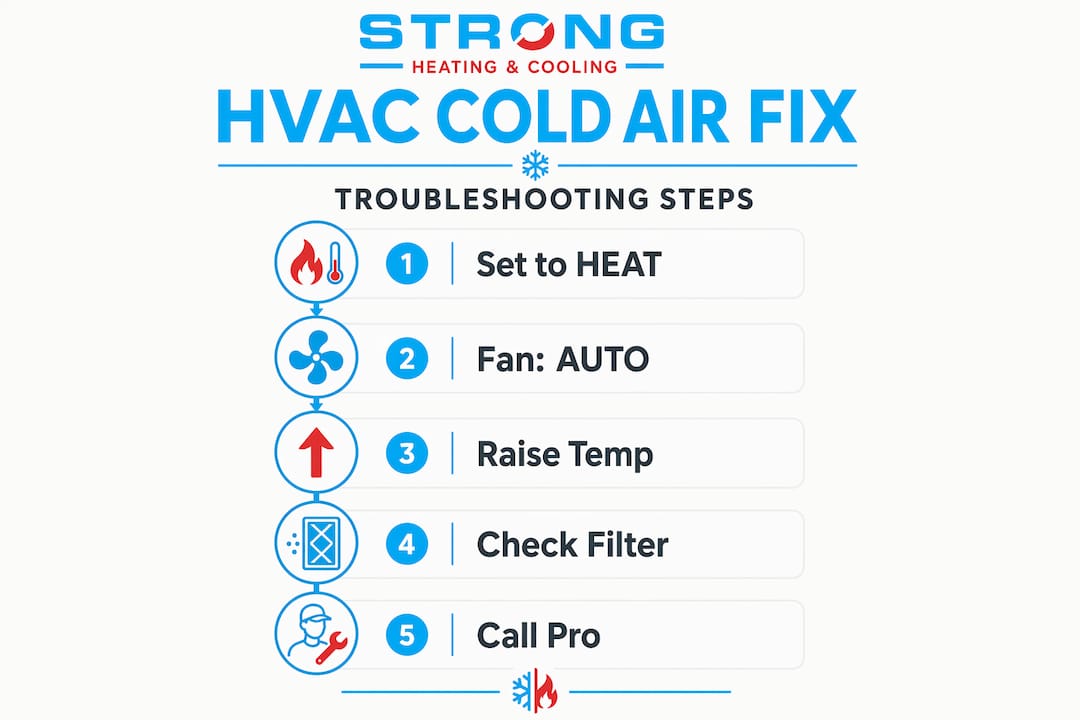
To verify your settings, set the mode to “HEAT,” set the fan to “AUTO,” and raise the target temperature at least five degrees above the current room reading. Wait five to ten minutes. If warm air doesn’t follow, the problem is mechanical.
Pro Tip: Replace thermostat batteries every fall before heating season starts. It takes two minutes and eliminates one of the most common service calls of the year.
Mechanical issues that cause cold air
When the thermostat checks out fine, the problem is inside the system itself. These causes range from manageable to serious, and some require professional repair immediately.
Refrigerant leaks
Your HVAC system doesn’t “create” cold or warm air from scratch. It moves heat. Air conditioners remove heat from indoors and transfer it outside, a process that depends entirely on refrigerant circulating through the system. When refrigerant leaks, that heat transfer breaks down. The system runs but can’t do its job, so you feel cold or lukewarm air instead.
Beyond poor heating, leaking refrigerant can cause headaches, nausea, and dizziness in people exposed to it indoors. This is not a wait-and-see situation. If you notice a sweet or chemical odor near your vents or unit, call a technician the same day.
Frozen evaporator coils
Frozen evaporator coils block heat exchange entirely and often produce musty odors along with reduced or cold airflow. Coils freeze when airflow is restricted, usually from a dirty filter, or when refrigerant levels drop too low. The ice acts as a barrier, preventing the system from transferring heat into your home.
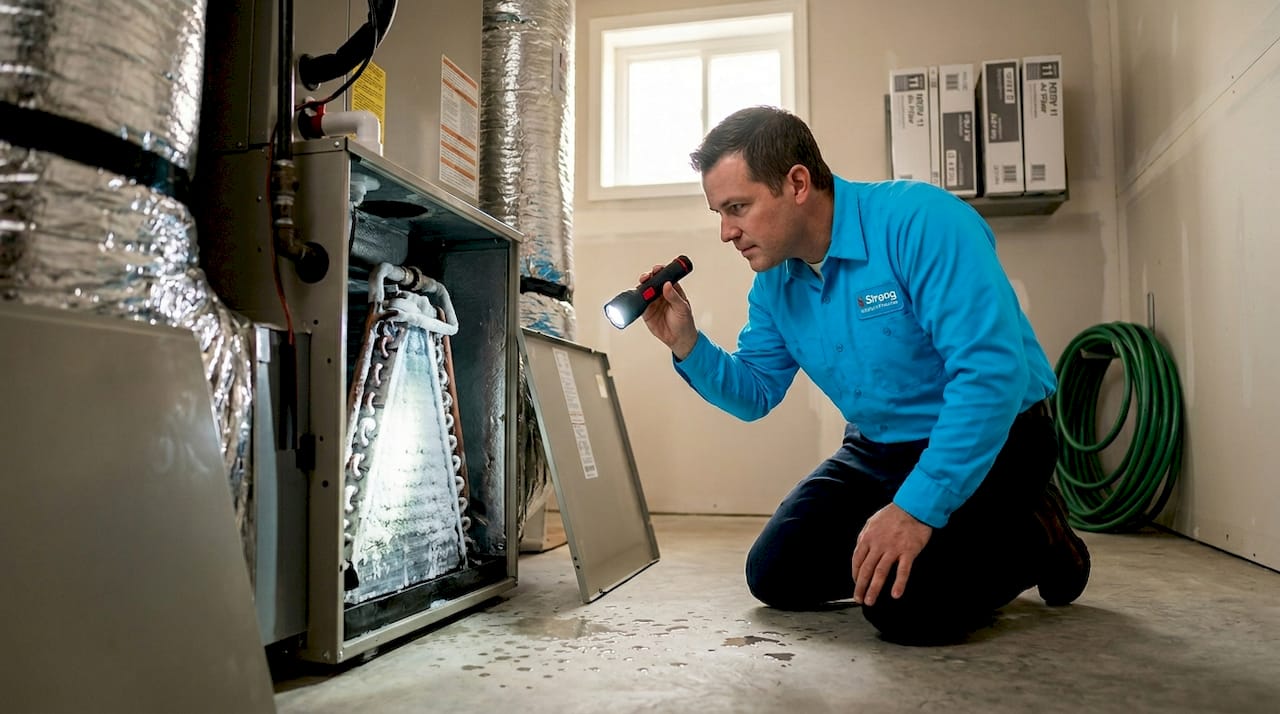
You can sometimes see frost on the indoor unit or refrigerant lines when this is happening. Turn the system off and let it thaw before running it again. If it refreezes, the underlying cause hasn’t been fixed.
Compressor and fan motor failures
The compressor is the heart of your HVAC system. If it fails, heat transfer stops completely. Fan motor problems prevent air from moving across the heat exchanger properly, which means even a functioning heating element can’t warm the air reaching your vents.
Watch for these warning signs of mechanical failure:
- Loud grinding, banging, or clicking sounds when the system starts
- Visible frost or ice on the outdoor unit or refrigerant lines
- Unusually high energy bills without a change in usage
- Short cycling, meaning the system turns on and off rapidly without completing a full heating cycle
Warning: Never ignore frost on your outdoor unit during heating season. It can signal refrigerant problems or compressor stress that will worsen quickly and cost significantly more to repair if left alone.
Pro Tip: If your system is making new noises, record a short video on your phone before calling a technician. It helps the technician diagnose the problem faster and often reduces diagnostic time.
Ductwork and airflow problems
Your HVAC system can work perfectly and still blow cold air into your rooms if the ductwork carrying that warm air is compromised. This is one of the most underdiagnosed HVAC cold air troubleshooting areas because the ducts are hidden inside walls, ceilings, and attics.
Here’s how to think about the most common duct-related causes:
| Problem | What happens | What you notice |
|---|---|---|
| Duct leaks and holes | Warm air escapes into unconditioned spaces | Rooms feel cold despite system running |
| Blocked or closed vents | Air pressure builds, reducing flow | Uneven heating across rooms |
| Poor duct insulation | Air cools before reaching rooms | Cold air from vents even when system heats |
| Separated duct joints | Airflow bypasses rooms entirely | Some rooms significantly colder than others |
Leaky ductwork is one of the most frequent causes of homes that feel cold even when the HVAC system is actively running. Ducts can rust, separate at joints, or develop holes over time, letting conditioned air escape into your attic or wall cavities before it ever reaches a vent.
Closed or blocked vents create a different problem. When vents are shut, the blower works harder against increased pressure, which reduces efficiency and can cause the system to push cooler air through the remaining open vents.
Here’s a basic inspection you can do yourself:
- Walk through every room and confirm all supply vents are open and unobstructed by furniture or rugs.
- Hold your hand near duct connections in your basement or attic (if accessible) and feel for air escaping at joints.
- Check for visible gaps, rust spots, or separated sections in any exposed ductwork.
- Note which rooms feel coldest and whether they share a duct run. This pattern helps a technician pinpoint the leak location.
If you find obvious gaps, HVAC-rated foil tape can seal minor separations temporarily. For extensive duct damage, professional duct sealing or replacement is the right call.
Environmental and operational factors
Sometimes the system and the ducts are both fine. The problem is external conditions or long-term wear that reduces how much heat your HVAC can actually deliver.
Outdoor unit placement in direct sunlight creates thermal overload during warmer months, stressing the system and limiting its ability to manage temperature effectively. In Colorado Springs, where temperature swings between seasons can be dramatic, outdoor unit exposure matters more than most homeowners realize.
Older or undersized systems simply may not have the heating capacity to keep up with demand. A system that was correctly sized ten years ago may now be undersized if you’ve added living space or if the system’s efficiency has declined with age. The result feels like cold air, but it’s really just insufficient heat output.
Dirty air filters are the most preventable cause on this entire list. Filters clogged with dust and debris restrict airflow, which reduces heating efficiency and can trigger frozen coils. Replacing your filter every three months is the single easiest maintenance step that prevents multiple HVAC cold air issues simultaneously.
Key operational factors to monitor regularly:
- Filter condition: Check monthly, replace every 60 to 90 days depending on household dust and pet hair levels.
- Outdoor unit clearance: Keep at least two feet of clearance around the unit and remove debris after storms.
- Annual tune-ups: A professional inspection each fall catches refrigerant levels, coil condition, and electrical issues before they cause failures.
- Thermostat calibration: If your thermostat reads temperatures inaccurately, the system cycles off before your home reaches the set temperature.
Practical troubleshooting steps
When your HVAC is blowing cold air, work through this sequence before calling for service. You may solve the problem in ten minutes.
- Check thermostat settings. Confirm the mode is set to “HEAT,” the fan is on “AUTO,” and the target temperature is above the current room reading by at least five degrees.
- Replace the thermostat batteries. Even if the display looks fine, weak batteries cause communication errors with the system.
- Inspect and replace the air filter. Pull the filter out and hold it up to a light source. If you can’t see light through it, replace it immediately.
- Check all vents. Open every supply and return vent in the home. Move any furniture blocking airflow.
- Look at the outdoor unit. Check for ice buildup, debris blocking the unit, or any visible damage to the casing or refrigerant lines.
- Reset the system. Turn the thermostat off, wait five minutes, and turn it back on. Some minor control errors clear with a reset.
If you’ve completed these steps and still have cold air, the problem is mechanical or involves ductwork. That’s when professional diagnosis is the right move.
Pro Tip: Before calling for service, write down what the system is doing: what sounds it makes, how long it runs before shutting off, and which rooms feel coldest. This information cuts diagnostic time significantly and can lower your service bill.
Signs that require urgent professional help include refrigerant odors, visible ice on the system, loud mechanical noises, or a complete loss of heating during extreme cold. Emergency repair demand spikes during temperature extremes, so having a trusted HVAC provider’s number ready before you need it saves time when it matters most.
My honest take after years in HVAC
I’ve seen hundreds of service calls that started with “my heat is blowing cold air,” and I’ll tell you what I’ve learned. The majority of them came down to a thermostat setting or a filter that hadn’t been changed in over a year. Not a broken compressor. Not a refrigerant leak. A filter.
That said, the calls I take most seriously are the ones involving refrigerant. Homeowners often treat a refrigerant leak as a minor inconvenience, something to get to eventually. It isn’t. Beyond the heating failure, the health exposure is real and the compressor damage that follows an extended low-refrigerant condition is expensive. I’ve seen systems that needed full replacement because a slow leak was ignored for one season too long.
My practical advice: do the thermostat and filter checks yourself every season. Schedule a professional tune-up every fall. And if you smell anything chemical or sweet near your vents, treat it like the emergency it is. The homeowners who avoid the big repair bills are almost always the ones who stayed consistent with the small maintenance habits.
— Strong
Get your HVAC heating right with Strongheatingcooling
If you’ve worked through the troubleshooting steps and your system is still blowing cold air, it’s time to bring in a certified technician. Strongheatingcooling serves homeowners and businesses across Colorado Springs with 24/7 emergency HVAC repair so you’re never left without heat when temperatures drop.

The Strongheatingcooling team handles everything from refrigerant leak diagnosis and frozen coil repair to full system replacements, with transparent pricing and no surprise fees. Whether you need heat pump service or a full air conditioner inspection, the technicians arrive prepared to diagnose and fix the problem the same day. Professional HVAC technicians see demand surge during extreme weather, which is exactly why Strongheatingcooling keeps experienced staff available around the clock. Don’t wait until a minor issue becomes a full system failure. Call Strongheatingcooling today and get your home back to the temperature it should be.
FAQ
Why is my HVAC blowing cold air in heat mode?
The most common reasons are a thermostat set to fan-only mode, a dirty air filter causing frozen coils, or a refrigerant leak preventing proper heat transfer. Check your thermostat settings and filter condition before calling for service.
Can a dirty filter cause my HVAC to blow cold air?
Yes. A clogged filter restricts airflow, which can cause evaporator coils to freeze and block heat exchange entirely, resulting in cold or barely warm air from your vents.
How do I know if my HVAC has a refrigerant leak?
Signs include a sweet or chemical odor near vents, visible frost on refrigerant lines or the indoor unit, and a system that runs constantly without warming your home. Refrigerant leaks also pose health risks and require immediate professional repair.
Can duct leaks cause cold air even when the system works fine?
Absolutely. Leaky ducts allow heated air to escape into attics and wall cavities before it reaches your rooms, making the system feel like it’s blowing cold air when it’s actually heating correctly at the source.
When should I replace my HVAC instead of repairing it?
If your system is more than 15 years old, requires frequent repairs, or is undersized for your home, replacement often costs less over time than continued repairs. A licensed technician can assess whether repair or replacement makes more financial sense for your specific situation.