

The wrong HVAC maintenance provider doesn’t just cost you money on repairs. It costs you in lost productivity, tenant complaints, and system failures that happen at the worst possible time. Selecting a commercial HVAC maintenance provider is one of the more consequential operational decisions a business owner or property manager makes, yet most people approach it the same way they’d pick a plumber off a flyer. This guide gives you a practical framework for evaluating qualifications, contracts, costs, and red flags so you can make a decision you won’t regret six months from now.
Table of Contents
- Key takeaways
- Selecting a commercial HVAC maintenance provider: qualifications that matter
- Evaluating experience and reputation
- Understanding and comparing service contracts
- Cost considerations and budgeting
- Red flags to avoid when choosing a provider
- My honest take after years in the field
- How Strongheatingcooling supports your commercial HVAC needs
- FAQ
Key takeaways
| Point | Details |
|---|---|
| Verify certifications first | Look for NATE certification and OSHA compliance before evaluating anything else. |
| Experience with your system type matters | A provider who knows your specific equipment delivers faster, more accurate service. |
| Read contracts line by line | Scope of services, response times, and hidden fees live in the fine print. |
| Cost alone is a poor filter | Choosing the cheapest option often leads to higher long-term repair bills. |
| Local knowledge has real value | Regional climate expertise and faster emergency response give local providers a practical edge. |
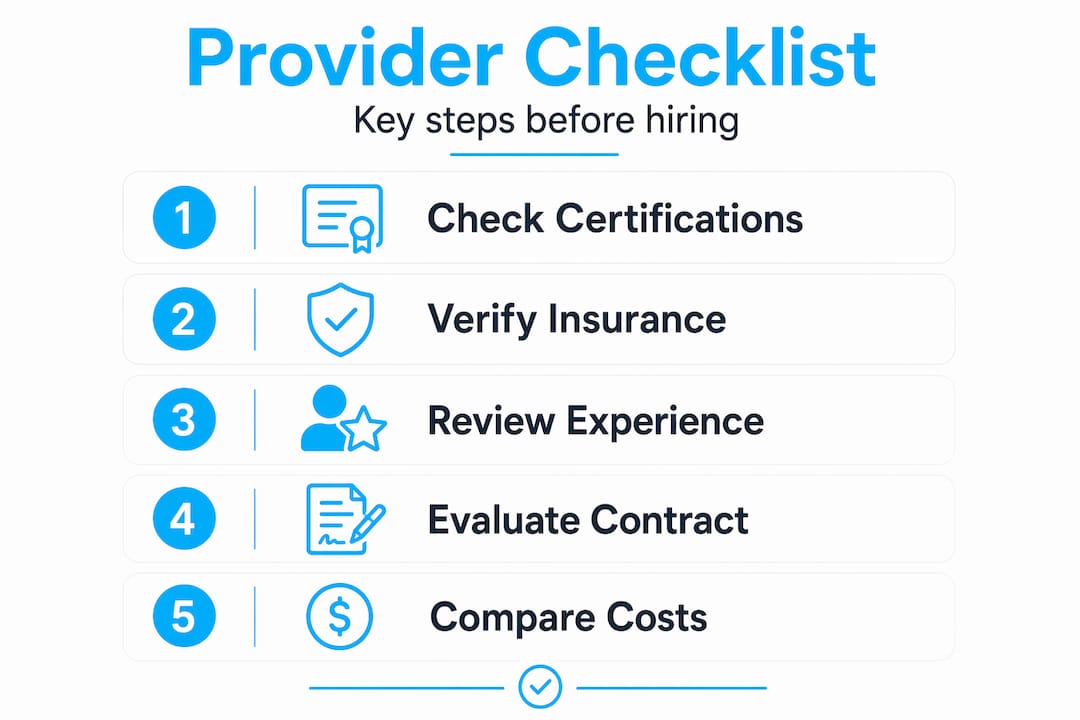
Selecting a commercial HVAC maintenance provider: qualifications that matter
Before you evaluate price or availability, you need to know whether a provider’s technicians are actually qualified to work on commercial systems. Commercial HVAC equipment is more complex than residential units. It involves rooftop package units, chillers, variable air volume systems, and building automation integrations that require specific technical knowledge to service correctly.
The two credentials worth prioritizing are NATE certification and OSHA compliance. NATE-certified technicians are better equipped to service complex commercial HVAC systems with a commitment to safety and quality. NATE (North American Technician Excellence) is the industry’s most recognized certification because it tests real-world knowledge, not just classroom theory. OSHA compliance matters because it tells you the company takes jobsite safety seriously, which protects your property and your liability.
Beyond certifications, ask these specific questions before signing anything:
- Does the company hold a valid state contractor’s license for Colorado (or your state)?
- Are their technicians trained on the specific brands and system types in your building?
- Does the company invest in ongoing training as HVAC technology evolves?
- Are they fully insured, including general liability and workers’ compensation?
Failing to verify licensing and insurance can lead to unqualified service and real legal liability for your business. This is not a formality. It’s protection.
Pro Tip: Ask for copies of technician certifications and the company’s contractor license before the first service visit. A reputable provider will hand these over without hesitation.
Evaluating experience and reputation
Credentials tell you what a provider knows. Experience tells you what they’ve actually done. For commercial HVAC service selection, these are two different conversations.
Here’s how to assess a provider’s track record systematically:
- Ask for commercial references specifically. A company that mostly services residential homes may not have the depth of experience your facility needs. Request references from businesses or properties with systems similar to yours in size and type.
- Look at their case studies or project history. Experienced commercial HVAC providers customize maintenance plans to fit the unique needs of each facility, improving energy efficiency and system reliability. Ask how they’ve done this for past clients.
- Check online reviews across multiple platforms. Google, the Better Business Bureau, and industry-specific directories all give you different angles on a company’s reputation. Look for patterns in complaints, not isolated one-star reviews.
- Prioritize local experience. Local HVAC providers with knowledge of regional climate and codes can better tailor maintenance programs and respond faster to emergencies. In Colorado Springs, for example, altitude and temperature swings create specific demands on HVAC equipment that a provider from out of the region may not anticipate.
- Ask about staff turnover. High technician turnover is a signal of poor company culture and means the person who learned your system last year may not be the one showing up this year.
Reputation research takes maybe two hours. That two hours can save you from a year of frustration with a provider who looked good on paper.
Understanding and comparing service contracts
This is where most property managers make their biggest mistakes. They skim the contract, focus on the monthly price, and miss the details that determine whether the agreement actually protects them.
Commercial HVAC maintenance contracts generally fall into three categories:
| Contract Type | What’s Included | Best For |
|---|---|---|
| Full preventive maintenance | Scheduled inspections, filter changes, tune-ups, minor adjustments | Buildings with older or high-use systems |
| Reactive maintenance only | Service calls when something breaks, no scheduled visits | Low-use facilities with newer equipment |
| Tailored/hybrid plan | Custom mix of preventive visits and on-call response | Most commercial properties |
Commercial HVAC systems should be serviced at least twice a year to maintain optimal performance, though high-use buildings or older systems may need quarterly visits. Make sure your contract reflects your actual usage, not a generic schedule.
When evaluating hvac maintenance service contracts, focus on these specific components:
- Scope of services: What exactly is included in each visit? Filter replacements, coil cleaning, refrigerant checks, and belt inspections should all be spelled out.
- Response time guarantees: What is the provider’s commitment for emergency response? Four hours versus 24 hours is a meaningful difference if your building loses cooling in July.
- Parts and labor coverage: Does the contract cover parts, or just labor? Are there caps on parts costs?
- Escalation clauses: Can the provider raise your rate mid-contract? Under what conditions?
Pro Tip: Negotiate a 30-day termination clause into your first contract with a new provider. This protects you during the trial period without locking you into a year of mediocre service.
Cost considerations and budgeting
Let’s talk numbers. Commercial HVAC preventive maintenance contracts range from $1,000 to $10,000 or more per year depending on system size and complexity. That’s a wide range, and it reflects how differently commercial properties are configured.
The factors that drive your cost up or down include:
- Number of units: More rooftop units, air handlers, or split systems mean more service time per visit.
- System age and condition: Older systems require more attention and are more likely to need parts during a maintenance visit.
- Service frequency: A quarterly plan costs more than a twice-annual plan, but may save more in avoided repairs.
- Building size and complexity: A 50,000-square-foot office building has more zones, more controls, and more points of failure than a 5,000-square-foot retail space.
- 24/7 emergency coverage: Providers who offer round-the-clock emergency response typically charge a premium, but that premium is worth it for facilities that operate outside business hours.
Choosing the lowest-cost provider without evaluating reputation and qualifications often results in higher costs from poor service or premature equipment failure. The math is straightforward: a $500 savings on your annual contract is not worth a $4,000 emergency repair that a qualified technician would have caught during a routine visit.
One practical cost-saving strategy is to bundle services. If your building has both HVAC and boiler systems, a provider who handles both can often offer better pricing than two separate contractors. You can explore commercial boiler services as part of a broader maintenance package to see where consolidation makes financial sense.

Red flags to avoid when choosing a provider
Some warning signs are obvious. Others are easy to miss when you’re in a hurry to get a contract signed before summer.
- No verifiable license or insurance. Any provider who hesitates to share this documentation should be removed from your list immediately.
- Vague scope of services. If the contract says “routine maintenance” without specifying what that includes, you have no recourse when a technician spends 20 minutes on a visit that should take two hours.
- No emergency response commitment. A provider without a clear emergency response policy is not a partner for commercial HVAC upkeep. They’re a vendor you call and hope for the best.
- Pressure to sign quickly. Legitimate providers don’t need to rush you. Pressure tactics are a signal that the terms won’t hold up to scrutiny.
- No references from commercial clients. Residential experience does not translate directly to commercial systems. If they can’t name a single commercial property they currently service, keep looking.
“The best contract is the one you understand completely before you sign it. If a provider can’t explain every line item clearly, that’s the answer you need.”
Routine inspections and timely repairs minimize downtime and keep commercial HVAC systems operating smoothly. A provider who makes that difficult to verify in writing is not a provider worth hiring.
My honest take after years in the field
I’ve worked with enough commercial property managers to know that the biggest misconception about HVAC maintenance contracts is that they’re all roughly the same. They’re not. The difference between a well-structured plan and a vague one shows up the first time something goes wrong.
Certifications matter, but I’ve seen certified technicians do mediocre work because their company had no accountability structure. What actually predicts good service is a combination of credentials, local experience, and a provider who treats your account as a long-term relationship rather than a line item.
The property managers I’ve seen save the most money are the ones who invested in a customized maintenance plan early and stuck with one trusted provider long enough to benefit from that continuity. Their technicians know the building’s quirks. They catch problems before they escalate. That institutional knowledge has real dollar value that never shows up in a contract comparison spreadsheet.
One more thing: don’t underestimate the cost of an HVAC failure during peak season. I’ve seen businesses lose tens of thousands of dollars in a single week from a system failure that a $200 maintenance visit would have prevented. The math on preventive maintenance always favors investing upfront.
You can find more real-world guidance on HVAC tips and case studies that show how these decisions play out in practice.
— Strong
How Strongheatingcooling supports your commercial HVAC needs
If you’re a business owner or property manager in Colorado Springs evaluating your options, Strongheatingcooling is built for exactly this kind of decision.

Strongheatingcooling offers tailored commercial HVAC maintenance plans designed around your building’s specific systems, usage patterns, and budget. Their technicians are certified, locally experienced, and available 24/7 for emergencies, which means you’re not left waiting when something breaks at 2 a.m. Transparent pricing and no-surprise contracts are part of how they work. Whether you need ongoing commercial HVAC services in Colorado Springs or support with specific equipment like furnaces or heat pumps, Strongheatingcooling focuses on long-term performance, not one-time fixes. Reach out to discuss a maintenance plan that fits your facility.
FAQ
What certifications should a commercial HVAC provider have?
Look for NATE certification and OSHA compliance as baseline credentials. These confirm that technicians have verified technical knowledge and follow safety standards required for commercial systems.
How often should commercial HVAC systems be serviced?
Most commercial HVAC systems should be serviced at least twice per year. High-use buildings, older equipment, or facilities in extreme climates may require quarterly maintenance visits.
What should a commercial HVAC maintenance contract include?
A solid contract specifies the scope of each visit, response time for emergencies, parts and labor coverage, and clear escalation terms. Vague language around “routine maintenance” is a red flag.
How much does commercial HVAC maintenance cost per year?
Annual costs typically range from $1,000 to $10,000 or more depending on system size, number of units, service frequency, and whether emergency coverage is included.
Is it worth paying more for a local HVAC provider?
Yes. Local providers understand regional climate conditions and building codes, respond faster to emergencies, and build the kind of long-term familiarity with your systems that reduces repeat problems over time.


