A furnace rarely quits without warning. More often, it starts sending signals during the first cold snap – longer run times, uneven heat, odd smells, or a utility bill that suddenly climbs for no clear reason. If you are noticing signs your furnace is about to fail, acting early can help you avoid a no-heat emergency, a larger repair bill, or a full system breakdown on the coldest day of the season.
For homeowners and property managers, the challenge is knowing the difference between a minor issue and a furnace that is reaching the end of the line. Some symptoms point to a simple fix, like a clogged filter or a worn ignitor. Others suggest the heat exchanger, blower motor, control board, or another major component is struggling. That is where careful diagnosis matters.
Common signs your furnace is about to fail
One of the clearest warning signs is a furnace that cannot keep up. If your thermostat is set to a normal temperature but rooms still feel cold, or the system runs for long stretches without reaching the set point, the furnace may be losing capacity. In Colorado winters, that performance drop can become a bigger problem fast.
Strange noises are another red flag. Furnaces are not silent, but they should sound consistent. Banging, rattling, screeching, humming that gets louder, or repeated clicking can point to loose parts, ignition problems, a failing blower motor, or airflow restrictions. A single noise does not always mean replacement is necessary, but new or worsening sounds should not be ignored.
Short cycling is also worth attention. That is when the furnace turns on, runs briefly, and shuts off before completing a full heating cycle. Sometimes the issue is thermostat placement or a dirty filter. In other cases, it is connected to overheating, flame sensor trouble, or internal wear that puts stress on the system every time it starts.
If you notice uneven heating from room to room, the furnace may still be operating, but not well. One or two cold rooms can sometimes be traced to duct leaks or balancing issues. If the whole house feels inconsistent, especially compared with prior winters, the furnace itself may be losing effectiveness.
Rising utility bills without a clear reason
A furnace that is about to fail often becomes less efficient before it stops working. If your usage habits have not changed but your heating bills are noticeably higher, the system may be working harder to produce the same amount of heat. Dirty burners, airflow problems, aging components, and declining combustion performance can all drive costs up.
The trade-off here is that higher bills do not always mean the furnace is near failure. Poor insulation, weather swings, and thermostat changes can play a role too. But if the higher bills show up alongside poor comfort or unusual operation, it is smart to have the system checked.
Yellow burner flame instead of blue
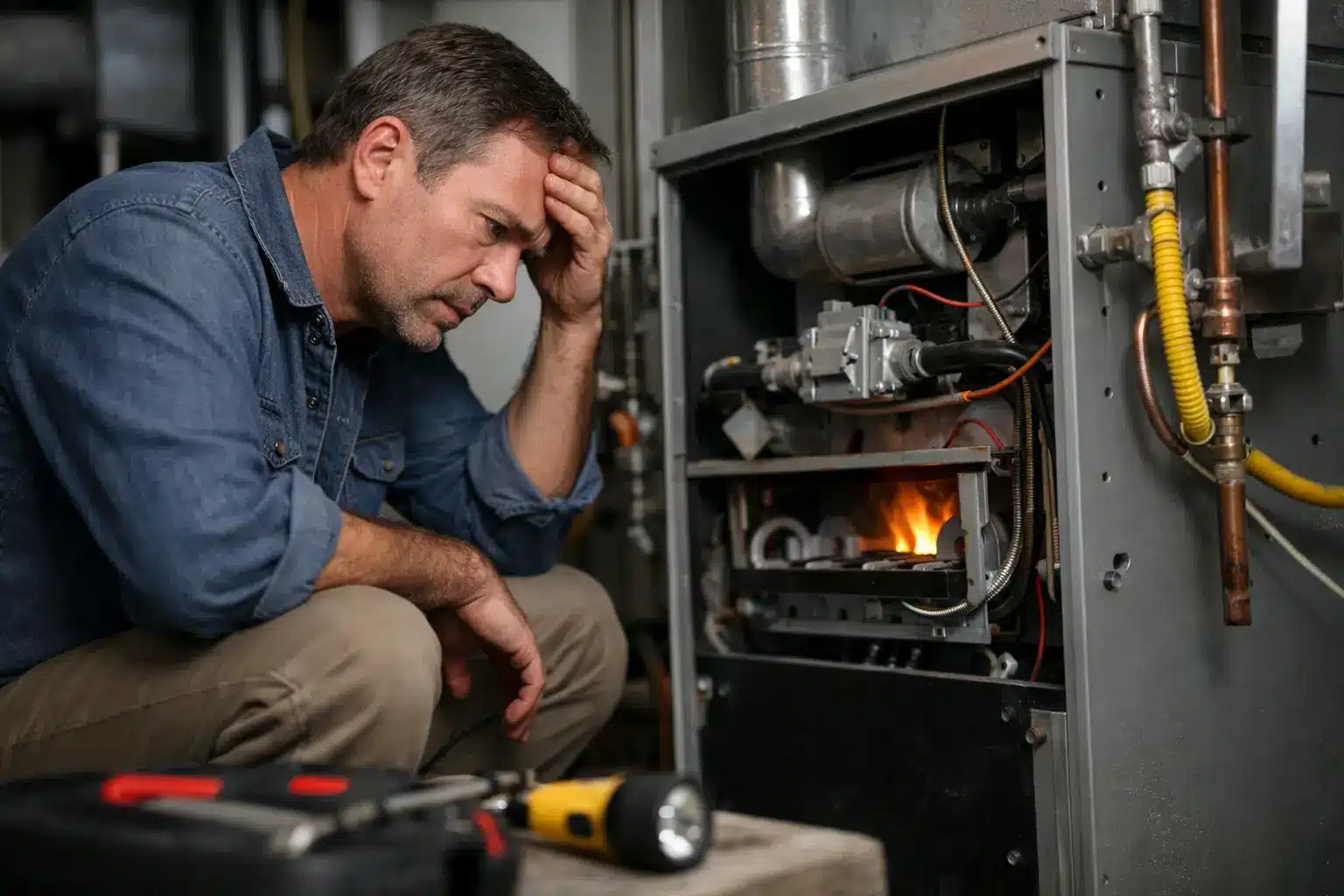
A healthy gas furnace burner flame is usually steady and blue. If the flame looks yellow, flickers heavily, or appears inconsistent, that can point to combustion issues. This is not a symptom to brush off, because combustion problems can affect both performance and safety.
If you ever suspect a gas odor, turn the system off if it is safe to do so, leave the area, and call for professional help right away. Safety concerns should always move to the front of the line.
Subtle signs your furnace is about to fail
Some furnace problems are less obvious at first. You may notice the air coming from the vents feels weaker than normal. Weak airflow can be caused by a blocked filter, duct issues, or a blower motor that is starting to fail. The furnace may still produce heat, but it cannot deliver that heat effectively through the property.
Another common clue is dust buildup or dry, stale indoor air that seems worse when the heat runs. While indoor air quality issues do not automatically mean the furnace is failing, they can signal that the system is not moving air properly or that maintenance has been neglected for too long.
The age of the system matters too. Many furnaces can last 15 to 20 years with proper maintenance, but age changes how repair decisions should be made. A ten-year-old furnace with a minor part failure may be a good repair candidate. A seventeen-year-old unit with repeated problems, poor efficiency, and rising costs may be better replaced than patched one more time.
Frequent repairs in the last two seasons
One repair does not mean your furnace is done. Several repairs in a short period often mean the opposite. When different components begin failing one after another, the system is telling you that wear is catching up with it.
This is where homeowners often face a practical decision. Repairing a furnace can still make sense if the problem is isolated and the equipment is otherwise in good shape. But if the unit is older and each service call solves only part of the issue, replacement can be the more cost-effective path.
Thermostat issues that are not really thermostat issues
Sometimes people assume the thermostat is the problem because the temperature reading seems off or the furnace is not responding normally. Thermostats do fail, but control problems inside the furnace can create the same symptoms. Faulty limit switches, ignition issues, sensor failures, and control board problems can all make the system seem unpredictable.
That is one reason a professional diagnosis matters. Replacing a thermostat may not solve anything if the furnace itself is the real cause.
When repair makes sense and when replacement makes more sense
Not every warning sign leads straight to replacement. If the furnace is relatively new, has been maintained, and the issue is limited to one repairable component, fixing it is often the right move. This is especially true when the heat exchanger is sound and the equipment still operates efficiently overall.
Replacement becomes more likely when the furnace is older, inefficient, increasingly unreliable, or showing signs of major internal wear. If repair costs are stacking up and comfort is still inconsistent, putting more money into the old unit can become hard to justify. For many families and business owners, predictability matters just as much as the repair total. A furnace that might fail again next month is not offering much peace of mind.
In colder climates, timing matters too. Waiting until the furnace fully breaks down can limit your options and create pressure to make a fast decision during a weather emergency. Planning ahead usually gives you better scheduling flexibility, more time to review replacement options, and a clearer picture of cost.
What to do if you notice furnace failure warning signs
Start with the basics. Check the thermostat settings, make sure the filter is clean, and look at your vents to confirm they are open and unobstructed. These quick steps can rule out simple airflow problems.
If the furnace is still acting up, the next step is service. A trained technician can inspect ignition components, blower performance, safety controls, burners, electrical connections, airflow, and overall system condition. That visit is not just about fixing the immediate problem. It is also about understanding whether the furnace is still dependable enough for the rest of the season.
For property owners managing rentals or commercial spaces, early service is even more valuable. Heating issues affect tenant comfort, business operations, and scheduling. A planned repair or replacement is usually far easier to manage than an emergency outage.
If you need a local team to assess whether your furnace is repairable or nearing the end, Strong Heating and Cooling can help with clear recommendations and straightforward pricing through https://strongheatingcooling.com.
A failing furnace does not always stop all at once. More often, it asks for help in small ways first. Paying attention to those changes can save you money, reduce stress, and help keep your home or building comfortable when the weather gets serious.