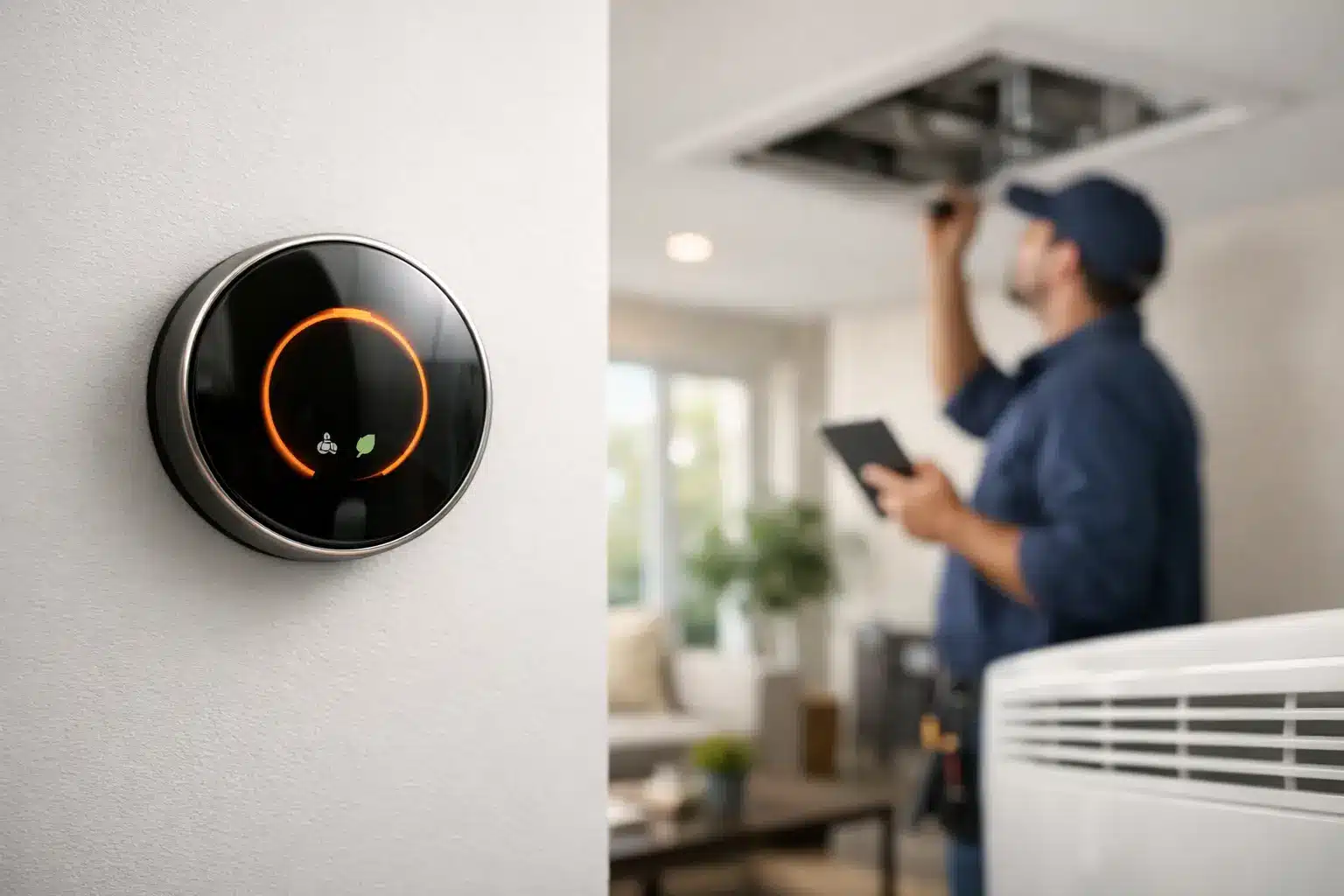
A thermostat used to be a simple wall control. Now it often acts more like the command center for the whole system. That shift is why smart thermostat HVAC trends matter for homeowners and business owners who want better comfort, lower waste, and fewer surprises from their heating and cooling equipment.
The biggest change is not the thermostat itself. It is the way thermostats now work with higher-efficiency equipment, variable-speed systems, heat pumps, zoning controls, and occupancy-based settings. For property owners, that means more control. It also means choosing the right setup matters more than ever, because not every thermostat works well with every HVAC system.
Why smart thermostat HVAC trends are changing system decisions
A few years ago, many people bought a smart thermostat for convenience alone. They wanted app control, a cleaner display, or the ability to adjust the temperature from work. That convenience still matters, but current buying decisions are more practical.
Customers now want three things at once: comfort, energy savings, and dependable operation. A thermostat that learns your schedule sounds good, but if it causes short cycling, poor staging, or temperature swings, it is not helping. The trend is moving away from novelty and toward system matching.
That is especially true with modern furnaces, air conditioners, mini split systems, and heat pumps. More equipment now uses advanced communication, multiple stages, or variable output. The thermostat has to support those features correctly or the system cannot perform the way it was designed to.
Smarter control is becoming more system-specific
One of the clearest trends is the move away from one-size-fits-all thermostat recommendations. The right thermostat for a basic single-stage furnace and AC may be the wrong choice for a high-efficiency heat pump or a multi-zone commercial setup.
Homeowners are starting to ask better questions. Will this thermostat support two-stage cooling? Can it manage auxiliary heat properly? Will it integrate with indoor air quality accessories? Those are the right questions, because smart control only works when the control strategy fits the equipment.
For contractors, this trend changes the conversation during replacement estimates. Instead of treating the thermostat as an add-on, it becomes part of the system design. That leads to better comfort and fewer call-backs later.
Heat pumps are driving thermostat upgrades
As more homes and light commercial properties consider heat pumps, thermostat compatibility is becoming a bigger issue. Heat pumps need thoughtful control logic, especially in colder weather when auxiliary heat may come into play.
A poorly configured thermostat can make a heat pump less efficient by calling on backup heat too often. A properly selected and programmed thermostat helps the system run more efficiently and keeps indoor temperatures steadier. In a climate with real seasonal swings, that setup matters.
This does not mean every property needs the most advanced model on the market. It means the thermostat should be chosen for the equipment, the building, and how the space is actually used.
Energy reports are getting more useful, but they are not perfect
Another major trend is the use of energy tracking and usage reports. Many smart thermostats now provide monthly summaries, runtime data, and basic recommendations. For some users, that information is enough to spot a problem early or make a smarter schedule adjustment.
The value here is real, but there is a limit. Thermostat data does not replace a professional inspection. If a system is oversized, low on refrigerant, restricted by poor airflow, or dealing with duct leakage, the thermostat can only tell part of the story.
That said, better visibility is still a win. Property owners who notice unusual runtime patterns may catch filter issues, comfort problems, or equipment strain before they turn into expensive repairs. Data is helpful when it leads to action, not when it becomes a substitute for maintenance.
Occupancy sensing and scheduling are getting more practical
Early smart thermostat marketing focused heavily on learning behavior automatically. That idea appealed to busy households, but real-life use has shown that automatic learning is not always ideal. People work from home, travel unexpectedly, have pets indoors, or keep different schedules throughout the week.
That is why newer smart thermostat HVAC trends lean toward practical flexibility. Occupancy sensing, geofencing, and custom scheduling are still popular, but users want more control over how those features behave. Many people prefer to set reliable comfort periods themselves rather than let the device guess.
For businesses, this is even more useful. Offices, retail spaces, and light commercial buildings often have predictable occupied and unoccupied hours, but holidays, staffing shifts, and after-hours use can change quickly. Smart controls help adjust for that without constant manual changes.
Zoning is becoming more appealing in comfort-focused homes
In homes with uneven temperatures, zoning is getting more attention. Smart thermostats and room sensors can help address hot upstairs bedrooms, colder basements, or spaces that get heavy afternoon sun.
There is a trade-off, though. Sensors and smart controls can improve comfort, but they do not fix every comfort issue on their own. If the duct design is poor, insulation is lacking, or the equipment is not sized correctly, a sensor may reduce the symptom without solving the cause.
Still, zoning paired with proper system design can make a major difference. For households tired of arguing over one thermostat setting, room-based control is one of the most practical upgrades available.
Remote access is now expected, not optional
Remote control used to be seen as a premium feature. Now it is close to standard. Homeowners expect to adjust settings from their phone. Property managers want visibility across multiple sites. Small business owners want to know if a space is overheating after hours or if someone left the cooling set too low over a holiday weekend.
This trend matters because it changes response time. When people can catch a temperature issue early, they are more likely to call for service before the system fails completely. It also gives owners more peace of mind when a building is vacant.
The trade-off is that smart thermostats depend on stable Wi-Fi, app support, and user setup. If the network is unreliable or the thermostat is installed without proper configuration, the convenience can turn into frustration. Good installation and a quick walkthrough make a big difference.
Indoor air quality integration is becoming more common
Thermostats are increasingly tied to more than heating and cooling. They may also help manage ventilation, humidity, filtration reminders, and whole-home indoor air quality accessories.
That trend makes sense. Comfort is not only about temperature. A home that feels clammy in summer or overly dry in winter is harder to live in, even when the thermostat reading looks fine. Better control integration helps the system respond more effectively.
This is one area where professional guidance matters. Not every thermostat can manage every accessory, and not every home needs the same add-ons. The goal should be better air and better comfort, not adding features that do not solve a real problem.
Simplicity is making a comeback
One of the more interesting shifts is that some customers want fewer flashy features, not more. They still want smart access and efficient operation, but they do not want a control that feels complicated or unpredictable.
That is a healthy trend. A thermostat should make life easier. If it takes too many steps to override a schedule, if the menus are confusing, or if family members avoid using it altogether, the technology is getting in the way.
The best smart thermostats today balance useful features with straightforward operation. For many homes and businesses, that means clear scheduling, reliable app control, simple alerts, and proper compatibility with the HVAC equipment. More features do not always mean better results.
What property owners should pay attention to next
The smartest move is not chasing every new feature. It is paying attention to compatibility, setup, and long-term value. If you are replacing HVAC equipment, ask whether your existing thermostat can support the new system correctly. If you are trying to cut utility costs, look beyond the thermostat and consider maintenance, airflow, insulation, and how the building is used.
For property owners in places like Colorado Springs, where heating and cooling demands can shift quickly, thermostat performance becomes even more important. A control that handles scheduling, staging, and temperature recovery properly can make everyday comfort more consistent and help the system work less aggressively.
Strong Heating and Cooling sees this firsthand with both residential and commercial customers. The best results usually come from matching the thermostat to the equipment and the building, then setting it up with the customer’s actual routine in mind.
Smart thermostat trends are moving in the right direction. They are becoming less about gadgets and more about real control, better comfort, and smarter equipment performance. If your current thermostat is fighting your system instead of helping it, that is usually a sign it is time to take a closer look.