If your summer electric bill jumps every time the temperature climbs, your AC is telling you something. In most cases, ac energy efficiency is not just about buying newer equipment. It comes down to how well your system is sized, maintained, and used day to day.
For homeowners and property managers, that matters because comfort and operating cost are tied together. A system that runs longer than it should, short cycles, or struggles to keep up is usually wasting energy somewhere. The good news is that many efficiency gains come from practical fixes, not guesswork.
What ac energy efficiency really means
AC energy efficiency is the amount of cooling your system delivers compared to the electricity it uses. A more efficient system produces the comfort you want with less energy, which usually means lower monthly costs and less strain on the equipment.
That sounds simple, but real-world efficiency is not determined by one number alone. Manufacturer ratings like SEER2 matter, but installation quality, duct condition, thermostat settings, insulation, and maintenance all affect what you actually get in the building. A high-efficiency unit can still perform poorly if airflow is restricted or refrigerant charge is off.
For commercial spaces, the same principle applies on a larger scale. Rooftop units, split systems, and heat pumps all depend on correct sizing, proper controls, and consistent service. A business may have efficient equipment on paper and still pay too much if the system runs outside occupied hours or fights poor ventilation balance.
Why ac energy efficiency drops over time
Most air conditioners do not suddenly become inefficient overnight. Performance usually slips in small ways that add up.
A dirty filter is one of the most common causes. When airflow is restricted, the system has to work harder to move air through the home or building. Dirty coils create a similar problem. The equipment cannot transfer heat as effectively, so run times increase.
Leaky ductwork is another frequent issue, especially in older properties. Conditioned air may be escaping into attics, crawl spaces, or utility areas before it ever reaches the rooms you want to cool. That means your system spends money cooling spaces nobody uses.
Age also plays a role. Even if an older unit still runs, it may be far less efficient than current equipment. Wear on motors, capacitors, fans, and other components can reduce performance long before complete failure happens.
Then there is system sizing. An oversized AC can cool quickly but shut off too soon, which leads to short cycling, uneven temperatures, and poor humidity control. An undersized system may run constantly and still not keep up. Either way, efficiency suffers.
The biggest factors that improve efficiency
If you want better results without overcomplicating the issue, focus on the basics first.
Thermostat settings have a direct effect on consumption. Lowering the temperature far below what is necessary does not cool the space faster. It only tells the unit to run longer. A steady, reasonable setting usually performs better than frequent manual adjustments.
Airflow is just as important. Clean filters, open supply vents, clear return grilles, and unobstructed indoor units all help the system move air the way it was designed to. Closing too many vents in unused rooms can actually create pressure problems and reduce efficiency.
The condition of the outdoor unit matters too. If the condenser is packed with debris or crowded by vegetation, heat removal becomes harder. That forces the system to run longer and can raise operating temperatures inside the equipment.
Insulation and air sealing also affect ac energy efficiency more than many people expect. If cool air is leaking out through gaps around doors, windows, or attic penetrations, the AC has to replace that lost conditioned air over and over again. Sometimes the best HVAC savings start with the building envelope.
SEER2 ratings matter, but they are not the whole story
When people shop for a new air conditioner, they often focus on efficiency ratings first. That makes sense, but it should not be the only factor.
SEER2 gives you a useful baseline for comparing systems. In general, a higher rating means greater potential efficiency. The trade-off is cost. Higher-efficiency equipment typically comes with a higher purchase price, so the best choice depends on how long you plan to keep the property, how often the system runs, and how much your current utility costs.
In Colorado, usage patterns can vary. Some properties need heavy cooling for long stretches, while others use AC more moderately because of cooler nights or shoulder-season weather. In a lighter-use situation, the jump to very high-end equipment may not deliver the same payback it would in a hotter, more humid climate.
That is why sizing and installation quality deserve just as much attention as the model number. A properly installed mid-range system often outperforms a premium unit that was installed with poor airflow, bad duct design, or an incorrect refrigerant charge.
Smart upgrades that often pay off
Not every efficiency improvement requires a full replacement. In many homes and commercial spaces, a few targeted upgrades can make a noticeable difference.
A programmable or smart thermostat is often worth considering if schedules are predictable. It helps reduce unnecessary runtime when the property is empty and brings temperatures back to a comfortable level before people return. That said, aggressive setback schedules are not always ideal for every building. Some systems recover better than others, so the savings depend on the equipment and the structure.
Duct sealing can be a strong value, especially in older homes or buildings with hard-to-cool rooms. If cooled air is being lost before it reaches the occupied space, sealing leaks can improve both comfort and operating cost.
Variable-speed equipment can also improve efficiency and comfort. These systems adjust output more precisely instead of running at full blast all the time. They often maintain steadier temperatures and quieter operation. The trade-off is a higher upfront investment and, in some cases, more complex repairs later on.
For certain additions, offices, garages, or areas with uneven cooling, a ductless mini split may be the most efficient answer. It avoids the energy losses that come with ductwork and gives you room-by-room control. It is not the right fit for every layout, but in the right application it can solve comfort issues without overworking the main system.
Maintenance is where efficiency is won or lost
Routine service is one of the simplest ways to protect ac energy efficiency. Small issues that seem minor at first can quietly drive up energy use month after month.
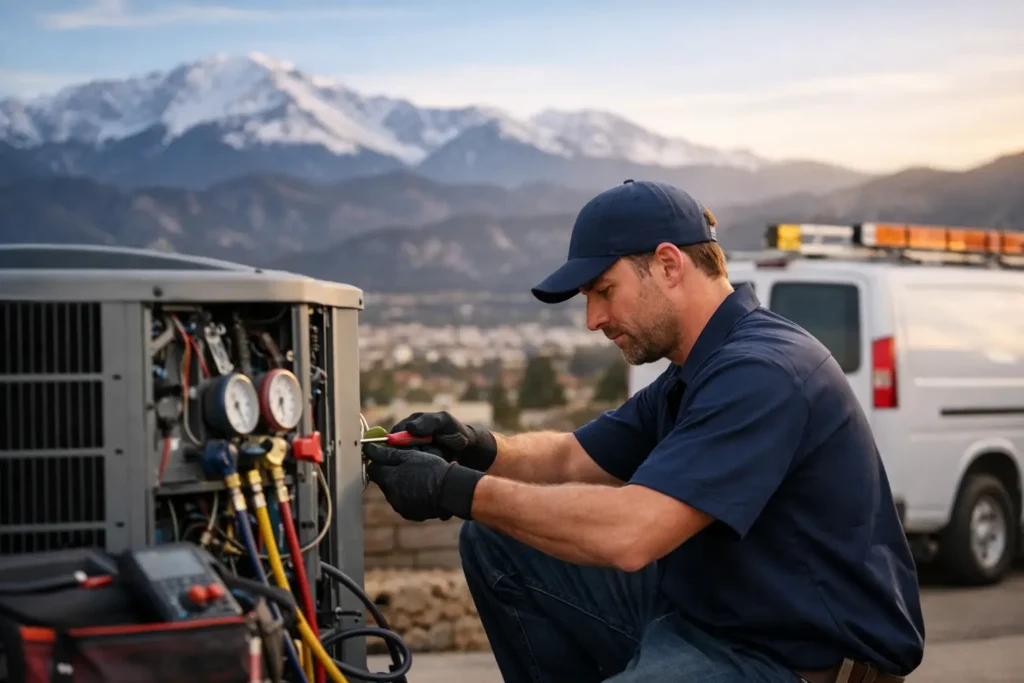
A professional tune-up typically checks refrigerant levels, coil condition, electrical components, drainage, airflow, and thermostat operation. The goal is not just to keep the unit running. It is to keep it running correctly.
For homeowners, seasonal maintenance helps catch the kinds of problems that lead to poor performance in the middle of summer. For commercial properties, planned service is even more important because downtime affects staff, customers, tenants, and operating budgets.
The key is consistency. Waiting until comfort drops usually means the system has already been wasting energy for a while.
When repair makes sense and when replacement is smarter
There is no one-size-fits-all answer here. If your AC is fairly new and the issue is isolated, a repair may restore efficient operation at a reasonable cost. A failed capacitor, clogged drain, dirty coil, or thermostat problem does not automatically justify replacement.
But if the equipment is older, needs frequent repairs, or struggles to maintain temperature, replacement may be the better financial decision. The calculation is not just about the repair bill today. It is about what you will continue paying in energy and service calls over the next several years.
This is especially true when an existing system was never properly sized to begin with. Replacing the same tonnage without reviewing the load can repeat the same comfort and efficiency problems. A good contractor will look at the whole picture, not just swap boxes.
What to watch for if your bills keep rising
If your utility costs are climbing and weather alone does not explain it, pay attention to the warning signs. Longer run times, uneven cooling, weak airflow, excess indoor humidity, unusual noises, and repeated cycling can all point to efficiency problems.
Commercial spaces may also show signs through hot and cold zones, comfort complaints at certain times of day, or equipment running beyond business hours. Those issues are often tied to controls, maintenance gaps, or aging rooftop equipment.
Strong Heating and Cooling works with homeowners and businesses that need practical answers, not vague recommendations. The right fix might be maintenance, a repair, duct improvements, or a system upgrade. It depends on the condition of the equipment and how the space is actually used.
Better efficiency is rarely about one magic setting. It comes from making the system, the ductwork, and the building work together so you get steady comfort without paying for wasted runtime.