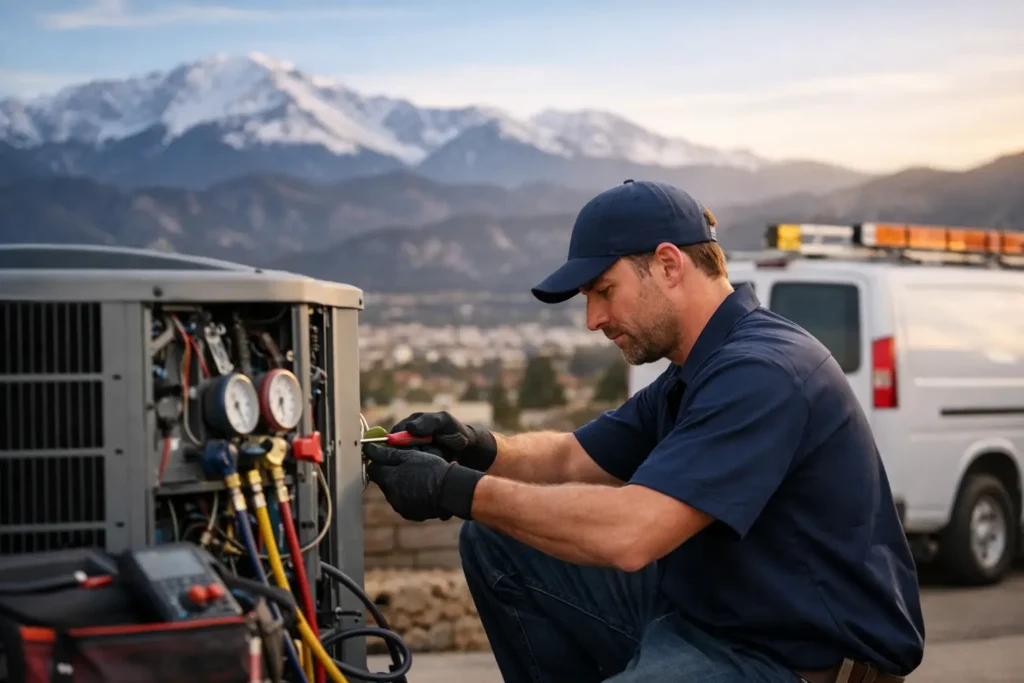
If your air conditioner is still running but getting louder, cooling unevenly, or driving up your electric bill, you’re probably asking the right question at the right time: when is the best time to replace ac unit equipment before it quits on the hottest day of the year?
For most homes and small commercial spaces, the sweet spot is usually before peak summer demand hits. That often means spring or fall. But timing is not just about the calendar. The real answer depends on your system’s age, repair history, energy use, and how much risk you’re willing to carry into the next heat wave.
Why the best time to replace ac unit equipment is usually spring or fall
Air conditioning systems tend to fail when they are working hardest. In Colorado Springs and across El Paso County, that means hot summer stretches when your system is running longer and under more strain. Waiting until midsummer can leave you dealing with limited scheduling, higher urgency, and a home or building that gets uncomfortable fast.
Replacing an AC unit in spring gives you time to plan instead of react. You can compare system options, ask questions about efficiency, and schedule installation before the rush. Fall can also be a smart time because cooling demand is lower, and you may have more flexibility to choose the right equipment without the pressure of an active breakdown.
That said, the best season is not always the best moment for every property owner. If your unit is already failing, the right time may simply be now.
Age matters, but it is not the whole story
A lot of people look for one magic number. In reality, most central AC units last around 10 to 15 years, depending on maintenance, usage, installation quality, and local conditions. If your system is over 12 years old and starting to need frequent repairs, replacement usually deserves serious consideration.
Older systems also tend to be less efficient than newer equipment. Even if your current unit still runs, it may be costing you more every month than you realize. Higher utility bills, weaker airflow, longer run times, and uneven temperatures all point to a system that is losing ground.
Age alone does not force a replacement. A well-maintained unit at 11 years may still have useful life left. On the other hand, a poorly installed or heavily stressed system at 8 years can already be a money pit. That is why a professional inspection matters.
Signs it is time to replace instead of repair
Sometimes the calendar says you can wait, but the equipment says otherwise. If your AC is sending clear signals, delaying replacement can cost more than acting early.
Frequent repairs are one of the biggest red flags. A single repair does not mean your system is done. But if you have had multiple service calls in the past year or two, replacement often becomes the more practical investment.
Watch for rising energy bills without a clear change in usage. If your home is not getting cooler but your system is running harder, efficiency may have dropped off sharply. Warm spots, humidity problems, strange noises, and short cycling also deserve attention.
Refrigerant type can matter too. Some older units use outdated refrigerants that are harder and more expensive to service. If a major repair involves a system with aging components and obsolete refrigerant, replacement may make more sense than putting more money into old equipment.
The repair-versus-replace decision
This is where many homeowners hesitate, and for good reason. Repairs usually cost less upfront. Replacement costs more today but can reduce repair bills, improve comfort, and lower energy use over time.
A common rule of thumb is to look closely at replacement if a repair is expensive and your system is already older. For example, if your compressor fails on a 13-year-old unit, putting serious money into it may only buy limited time. If a capacitor or contactor fails on a 6-year-old system, repair is often the sensible move.
There is also the comfort factor. If your system has been barely keeping up for two summers, repairing it may restore operation without solving the bigger problem. A properly sized, energy-efficient replacement can deliver steadier cooling and quieter performance.
For business owners and property managers, downtime carries a different cost. If a retail space, office, or tenant property depends on dependable cooling, proactive replacement can prevent disruptions that hurt operations and customer experience.
What time of year can save you money?
If you are trying to balance cost, convenience, and comfort, shoulder seasons usually offer the most breathing room. Spring and fall are often ideal because HVAC schedules are not as packed as they are during extreme weather, and you have time to make a measured decision.
That does not automatically mean prices drop across the board. Equipment costs are affected by manufacturing, availability, and system type. Still, replacing before an emergency can save money in less obvious ways. You avoid rush decisions, temporary fixes, and the premium that comes with being stuck without cooling during peak demand.
There can also be financing offers, manufacturer incentives, or seasonal promotions that make replacement more manageable. If budget is a concern, it is worth asking about options before your system fails completely.
How Colorado conditions affect AC replacement timing
Colorado homes deal with big temperature swings, dry air, and seasonal weather changes that put HVAC systems through a lot over the course of a year. Even if summers are not as long as they are in hotter states, your AC still needs to be ready when heat arrives.
That is one reason early replacement planning matters here. A unit that seems “good enough” during mild weather may struggle once summer temperatures climb. If your system was already borderline last season, waiting until the first major heat spell is a gamble.
Altitude, home insulation, duct condition, and sun exposure also affect AC performance. In some cases, the issue is not just an aging unit but a system that was never well matched to the space. Replacement is a chance to correct that and improve overall efficiency.
Don’t wait for a complete breakdown if you can help it
Many people replace air conditioners only after they stop working. Sometimes that is unavoidable. But if your system is showing signs of decline, replacing it on your schedule is almost always easier than replacing it in an emergency.
A planned replacement gives you more control over equipment selection, installation timing, and budget. You can ask about SEER ratings, indoor air quality add-ons, thermostat compatibility, and whether a heat pump or ductless option might fit your needs better.
You also reduce the chance of being stuck during a stretch of hot weather with no cooling and limited appointment options. For families, older adults, and businesses with occupied spaces, that matters more than most people realize.
How to know if now is the best time for your property
If your AC is more than 10 years old, needs repeat repairs, struggles to cool evenly, or causes utility bills to climb, this is the right time to start the conversation. You do not have to commit to replacement on the spot. But you should get a clear assessment of the unit’s condition, expected remaining life, and whether repair still makes financial sense.
For commercial properties, timing replacement around operating schedules can make the process much smoother. For homeowners, replacing before summer often means less stress and better planning. In both cases, a straightforward evaluation helps you avoid guessing.
At Strong Heating and Cooling, that means looking at the full picture – not just whether the unit can be patched one more time, but whether that patch is actually worth it.
The best time to replace your AC unit is before you are forced into it. If your system is giving you reasons to doubt it, listening now can save you from a harder, hotter, and more expensive decision later.