A commercial boiler that is too small will struggle on the coldest days. One that is too large can waste fuel, short cycle, and wear out sooner than it should. That is why commercial boiler installation is not just about swapping equipment – it is about matching the system to the building, the load, and the way the property actually operates.
For business owners and facility managers, the stakes are higher than comfort alone. Heating problems can affect tenants, staff productivity, process temperatures, domestic hot water, and operating costs. A well-planned installation helps avoid repeat service calls, uneven heat, and surprise utility bills. It also gives you a system that is easier to maintain and more dependable when winter weather puts real pressure on the equipment.
What commercial boiler installation really includes
A proper installation starts well before the new boiler is set in place. The first step is evaluating the building’s heating demand, existing piping, venting, controls, and fuel source. In some properties, the best option is a like-for-like replacement. In others, the old system may have design issues that should be corrected during the project.
This matters because commercial buildings rarely operate under one simple pattern. Office space, mixed-use properties, retail buildings, churches, schools, and light industrial facilities all place different demands on a heating system. Occupancy schedules, insulation levels, domestic hot water needs, and zoning all affect what the boiler must do every day.
Good installation work also includes code compliance, combustion setup, circulation strategy, control integration, startup testing, and verification that the system is performing as intended. If any of those steps are rushed, the building may still have heat, but the system may not run efficiently or reliably.
Sizing a commercial boiler the right way
Sizing is one of the most important parts of commercial boiler installation, and it is also one of the most misunderstood. Bigger is not safer. It can actually create efficiency and comfort problems.
An oversized boiler often cycles on and off too frequently. That repeated startup and shutdown wastes fuel and adds wear to burners, igniters, and controls. In hydronic systems, it can also cause uneven temperature control because the equipment satisfies demand too quickly without running long enough to stabilize the building.
An undersized boiler creates a different set of issues. It may run constantly in cold weather and still fail to hold indoor temperatures. That can lead to complaints from tenants or employees and put stress on the equipment throughout the season.
The right size comes from a real load calculation, not a guess based on the old unit’s nameplate. Older boilers were often oversized to begin with. If the building envelope has changed over time through better windows, insulation, or occupancy shifts, the heating demand may be very different today.
Why building use changes the answer
A medical office, warehouse, restaurant, and apartment property can have similar square footage and still need very different boiler solutions. Domestic hot water demand, ventilation rates, occupied hours, and critical temperature requirements all change the equation.
That is why experienced installers ask detailed questions before making a recommendation. The goal is not to sell the largest unit. The goal is to deliver steady performance with efficient operation and enough capacity for real-world conditions.
Choosing the right type of system
Not every commercial boiler project calls for the same equipment. The best fit depends on fuel availability, venting conditions, return water temperatures, redundancy needs, and budget.
Condensing boilers are often a strong choice when the system can take advantage of lower return water temperatures. They can deliver excellent efficiency, but only when the system design supports condensing operation. If return temperatures stay too high, the efficiency benefit drops.
Non-condensing boilers may still make sense in some applications, especially when tied to older distribution systems or specific venting conditions. In larger facilities, multiple smaller boilers staged together can offer better turndown and redundancy than one large unit. If one boiler is offline, the building may still maintain partial heating capacity instead of going cold.
Those trade-offs are where planning matters. The least expensive equipment on paper is not always the lowest-cost choice over the life of the system.
Existing infrastructure can make or break the project
Many commercial boiler replacements happen in buildings with aging mechanical rooms. That can complicate installation in ways owners do not expect.
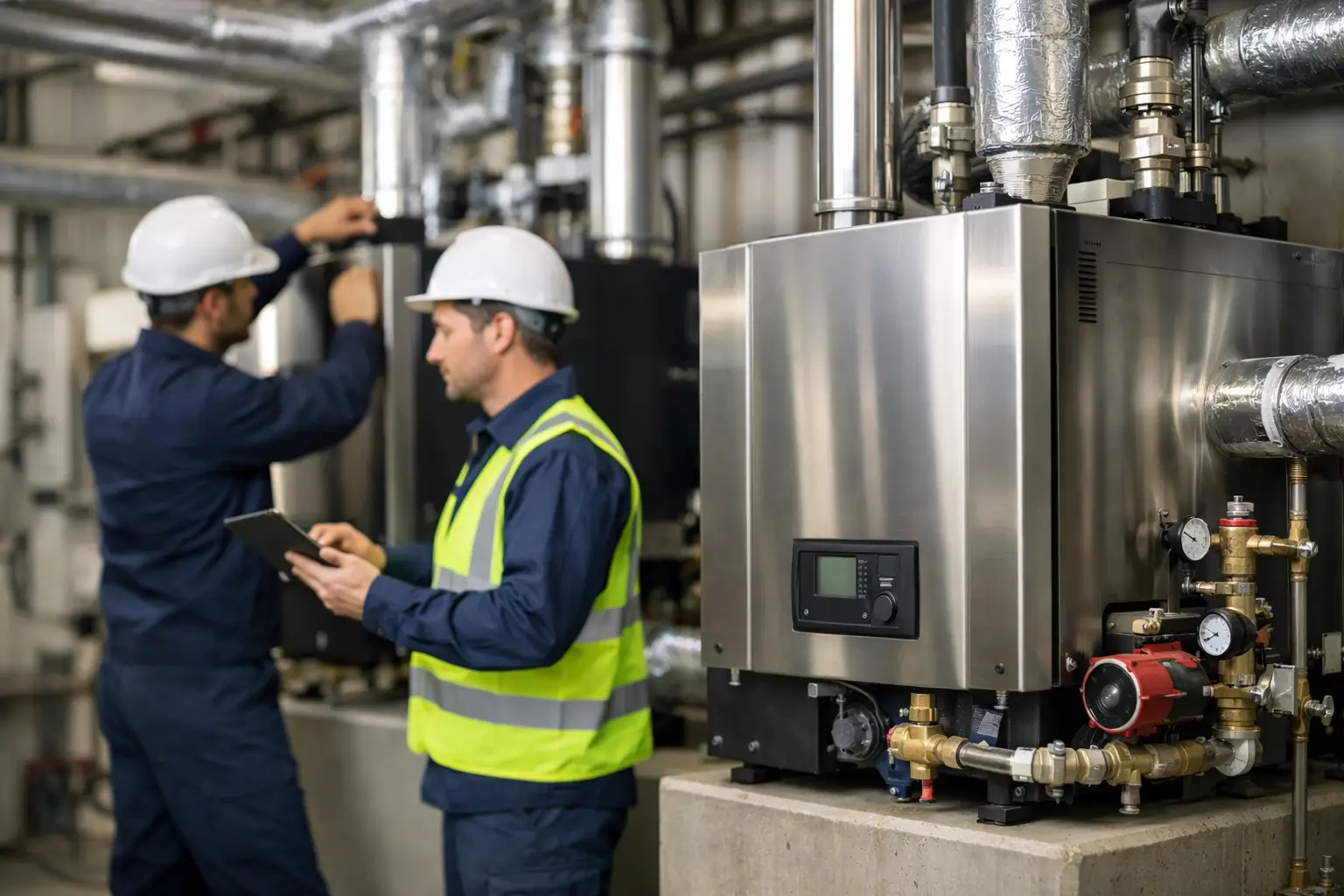
Gas piping may need to be upsized. Venting may no longer meet current code or manufacturer requirements. Pumps, expansion tanks, air separators, controls, and make-up water components may also need attention. In some cases, the old boiler was masking distribution problems such as poor balancing, clogged strainers, or failing zone valves.
Ignoring those issues can leave a new boiler connected to an old problem. The equipment may be brand new, but the building still may not heat evenly or efficiently. A good contractor looks at the whole system, not just the box being replaced.
Controls matter more than many owners realize
Controls affect comfort, efficiency, and serviceability. Outdoor reset, staging logic, setback scheduling, and building automation integration can make a major difference in operating cost. They can also reduce wear by helping the boiler run in a more controlled way.
If your building has varying occupancy or multiple heating zones, control strategy should be part of the installation discussion from the beginning. It is much easier to design around those needs upfront than to patch them in later.
Cost, downtime, and project timing
Commercial clients usually want one clear answer on price, but boiler installation cost depends on more than equipment size. Venting changes, pump replacement, control upgrades, piping modifications, permit requirements, and after-hours scheduling can all affect the final number.
That does not mean the process has to feel uncertain. A clear proposal should explain what is included, what assumptions are being made, and where hidden issues could change the scope. Transparent pricing is especially important in retrofit work, where existing conditions are not always obvious until the project begins.
Downtime is another key part of planning. Some facilities can shut down temporarily with minimal disruption. Others need heating or hot water continuity for tenants, staff, or operations. In those cases, installation sequencing matters. Temporary heat, phased replacement, or weekend scheduling may be worth considering.
In Colorado winters, timing can be just as important as system selection. Waiting until a failing boiler fully breaks down can limit options and force a rushed replacement. Planning ahead usually means a better installation and fewer compromises.
What to expect from a quality installation team
A dependable commercial boiler project should feel organized from the first visit through startup. That means a contractor who communicates clearly, verifies the load, explains equipment options, and identifies system concerns before work begins.
It also means trained technicians who know how to handle combustion setup, venting, safety devices, and hydronic components correctly. Commercial systems are not forgiving when details are skipped. Improper setup can affect efficiency, reliability, and occupant safety.
After installation, startup and testing should confirm more than basic operation. Water temperatures, pressure, control response, combustion readings, and system circulation all need to be checked. Owners and facility staff should also know what was installed, how it operates, and what maintenance will be needed going forward.
For local businesses that need practical guidance instead of vague promises, Strong Heating and Cooling focuses on clear recommendations, skilled workmanship, and service that supports long-term system performance.
Commercial boiler installation and long-term maintenance
Installation quality and maintenance planning go hand in hand. Even the best boiler will not stay efficient or reliable without regular service.
A maintenance plan should include inspection of burners, heat exchangers, safeties, venting, water quality conditions, pumps, and controls. Catching small issues early can prevent larger failures during peak heating season. It can also help protect warranty coverage and extend equipment life.
This is especially true for high-efficiency equipment. Condensing boilers can offer strong fuel savings, but they need proper cleaning and monitoring to keep performing the way they should. The same applies to cascaded systems and buildings with complex control sequences.
If you are planning a replacement, ask not only how the system will be installed, but how it will be supported after startup. Reliable heat is never just about the day the boiler goes in. It is about how the system performs through the years that follow.
The best time to think carefully about a boiler is before the old one forces your hand. A well-planned project gives you better control over cost, scheduling, and performance – and a much better chance of getting heat you do not have to think about once winter sets in.