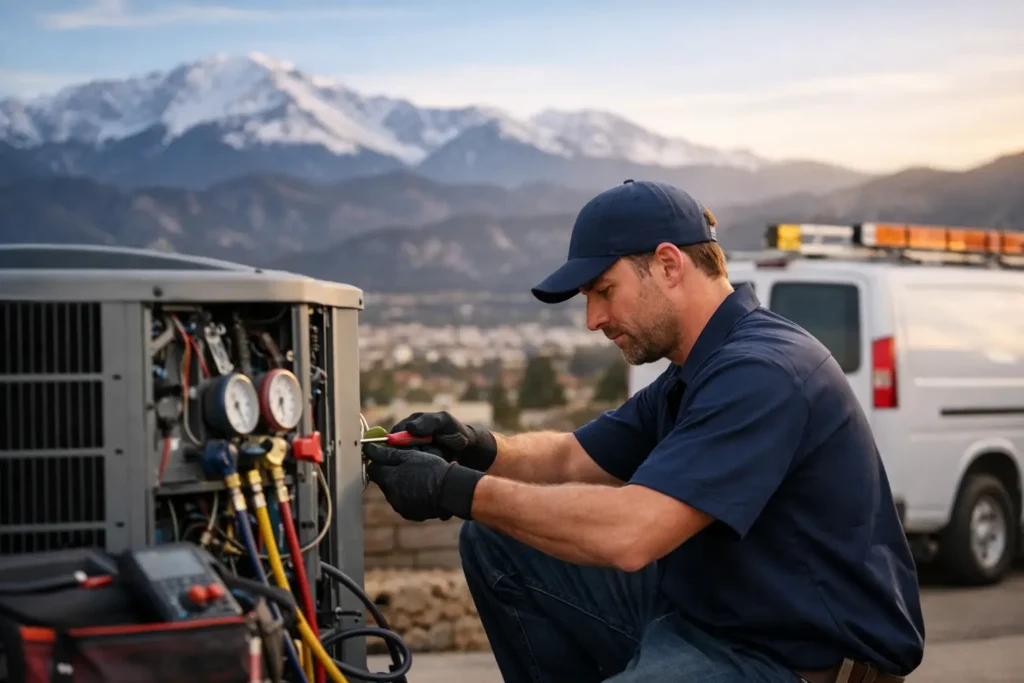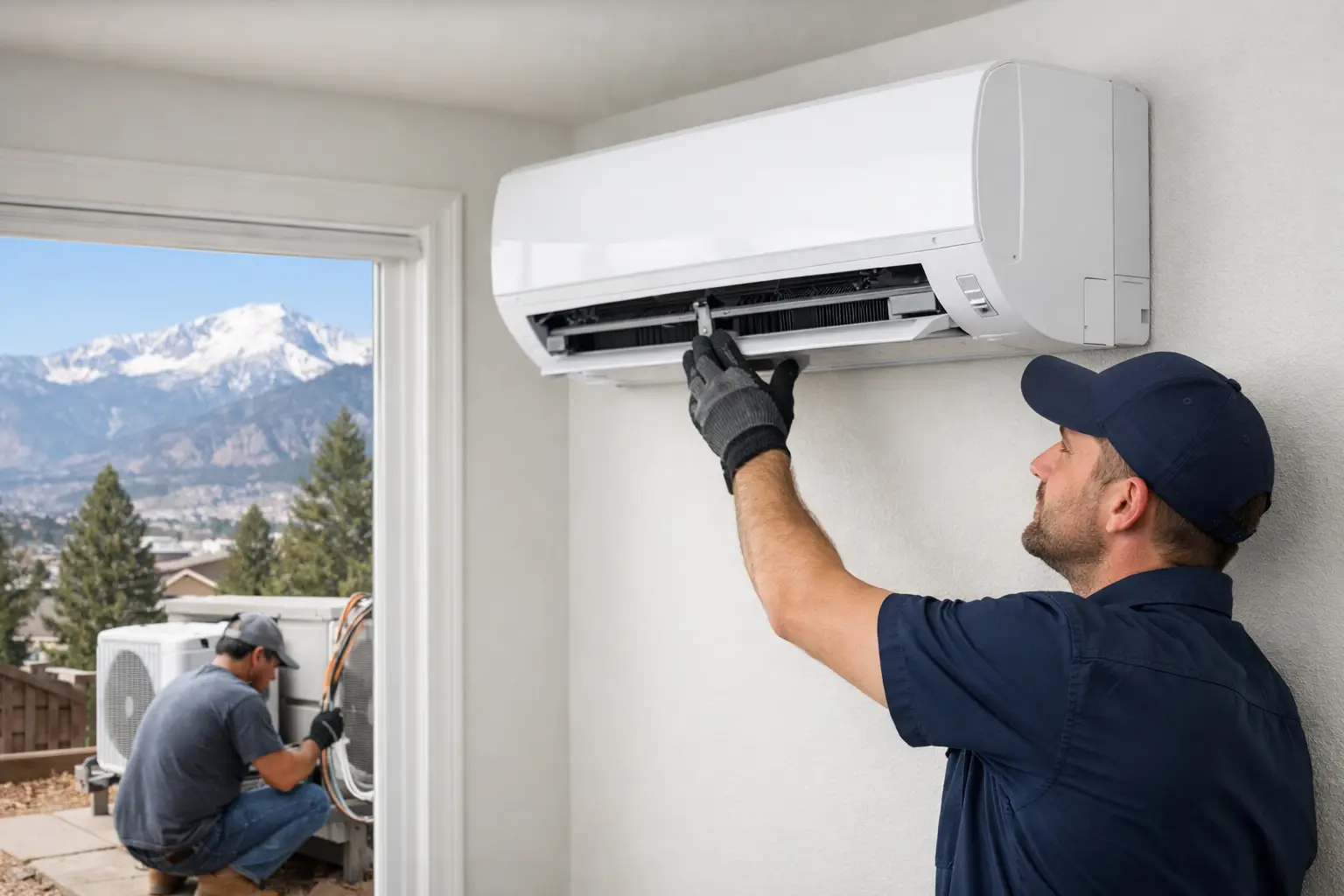
A sun-heavy afternoon upstairs, a basement office that never quite warms up, a garage conversion that was never added to the main ductwork – these are the jobs mini splits handle well. For property owners looking into mini split installation Colorado Springs, the real question usually is not whether the system works. It is whether the setup will fit the space, the weather, and the budget without creating new problems later.
Mini split systems have become a practical answer for homes and light commercial spaces that need targeted heating and cooling. They are efficient, flexible, and far less invasive than extending ductwork through finished walls and ceilings. But like any HVAC upgrade, the results depend heavily on design and installation quality.
Why mini split installation in Colorado Springs makes sense
Colorado weather asks a lot from mechanical systems. A space may need cooling relief in summer, then reliable heat during freezing winter stretches. That swing is one reason ductless mini splits appeal to many local property owners. A properly selected system can provide both heating and cooling in one package while giving room-by-room control.
That control matters more than many people expect. In a traditional central system, one thermostat often governs the whole building. With a mini split, you can condition the rooms that need it most and avoid wasting energy on empty spaces. That can be a strong fit for primary bedrooms, additions, workshops, small offices, retail suites, and older homes where adding ducts would be expensive or disruptive.
There is a trade-off, though. Mini splits are not one-size-fits-all. A single-zone system may be perfect for one problem area, while a whole-home setup with multiple indoor heads needs careful planning. If the equipment is oversized, it can short cycle and lose efficiency. If it is undersized, comfort suffers when temperatures get more extreme.
What a good mini split installation should include
A clean installation starts long before the first hole is drilled. The first step is evaluating the space itself. Square footage matters, but it is only part of the story. Ceiling height, insulation, window exposure, room usage, and how much air leakage the building has all affect system sizing.
Sizing is where many problems start
Some installers rely on rough rules of thumb. That can lead to systems that look good on paper but struggle in real use. Proper load calculations help determine how much heating and cooling the room or building actually needs. In Colorado, heating performance matters just as much as cooling capacity, especially if the mini split will carry a large share of the winter load.
A good recommendation should also account for how the space is used. A server room, a sunroom, and a bedroom of the same size may have very different needs. That is why the best installations are designed around the building, not just the equipment brochure.
Placement affects comfort and appearance
Indoor unit placement is more important than many owners realize. The unit has to distribute air effectively without blasting occupants directly or leaving dead zones. It also needs to fit the room visually. In some layouts, a wall-mounted head makes sense. In others, a ceiling cassette or a floor-mounted unit may be the better option.
Outdoor unit placement matters too. It should be accessible for service, protected from unnecessary strain, and mounted in a way that supports drainage and cold-weather operation. Noise is usually low with mini splits, but placement can still affect how noticeable the system feels near patios, bedrooms, or business entries.
The line set and electrical work should be done right
Refrigerant lines, condensate drainage, and electrical connections all need careful installation. This is not the part most customers see, but it is where long-term reliability is built. Poor line set routing, weak drainage planning, or rushed electrical work can lead to leaks, performance issues, or callbacks that should never have happened.
A professional installation should look neat, operate efficiently, and leave the property clean. It should also include startup testing to verify pressures, airflow, controls, and overall operation.
What affects mini split installation cost
Cost is one of the first questions people ask, and fairly so. The price of mini split installation depends on several factors, including system size, number of indoor units, electrical requirements, wall access, line set length, and installation complexity.
A single-zone system for one room is usually much simpler than a multi-zone setup serving several areas. If a panel upgrade is needed or the building layout creates routing challenges, the investment can rise. Brand and efficiency level also matter. Higher-performance cold-climate equipment may cost more up front but can deliver better seasonal comfort and energy savings.
The cheapest quote is not always the best value. Lower pricing can reflect shortcuts in sizing, materials, or labor time. On the other hand, the highest quote is not automatically the best either. What matters is whether the proposal clearly explains what is being installed, why it fits the space, and what support comes after the job is done.
Best uses for mini splits in homes and small commercial spaces
Mini splits solve a specific kind of comfort problem very well. They are especially useful when central ductwork is missing, impractical, or inefficient. In homes, that often means additions, converted attics, basements, detached garages, and rooms that stay uncomfortable no matter how often the thermostat is adjusted.
For commercial properties, mini splits can work well in offices, storefronts, server rooms, break rooms, and smaller tenant spaces where zoned control is useful. They can also supplement an existing system that does not evenly serve the whole building.
That said, they are not always the perfect answer. In some larger buildings, a packaged commercial system or a more integrated HVAC design may make more sense. In some homes, a heat pump tied to ductwork could be the better long-term fit. The right choice depends on layout, usage, and whether you need a spot solution or a building-wide strategy.
Questions to ask before scheduling mini split installation Colorado Springs
When comparing options, it helps to ask a few direct questions. Will the system be sized based on a real load assessment? How will the indoor and outdoor units be placed? What kind of winter heating performance should you expect? Who will handle permits and code requirements if they apply?
You should also ask about serviceability. Equipment needs maintenance, and access matters. Filters need cleaning, coils need inspection, and outdoor units should be installed with enough clearance to allow proper operation and future service.
If financing is part of the decision, ask about that early. A quality system often pays off over time, but monthly budget still matters. Clear pricing and realistic recommendations help you make a decision without feeling rushed.
Choosing the right installer matters as much as the equipment
The mini split market has grown quickly, and that means installation quality varies widely. Good equipment can still underperform if it is installed carelessly. A dependable contractor should be able to explain the recommendation in plain terms, answer questions directly, and provide a scope of work that makes sense for your property.
That includes showing up on time, respecting the space, and standing behind the workmanship. For homeowners and business owners alike, clear communication matters. So does having a local team that understands seasonal demands and can respond when service is needed.
For customers comparing local options, Strong Heating and Cooling serves residential and commercial clients with practical system recommendations, trained technicians, and transparent pricing through https://Strongheatingcooling.com.
What to expect on installation day
Most mini split installs are less disruptive than major ductwork projects, but the timeline still depends on complexity. A straightforward single-zone installation may move quickly. A multi-zone system with longer line runs, electrical work, or challenging access will take more coordination.
During the job, the crew should protect work areas, confirm final equipment placement, complete the mounting and line connections, and test the system thoroughly before wrapping up. You should also receive basic guidance on remote operation, filter cleaning, and when to schedule maintenance.
A mini split should feel like a comfort upgrade, not a construction headache. When the planning is solid and the workmanship is clean, that is usually exactly how it goes.
If you are considering ductless heating and cooling, the best next step is a straightforward evaluation of the space. The right system is not just the one that fits the wall. It is the one that fits how you live or work every day.