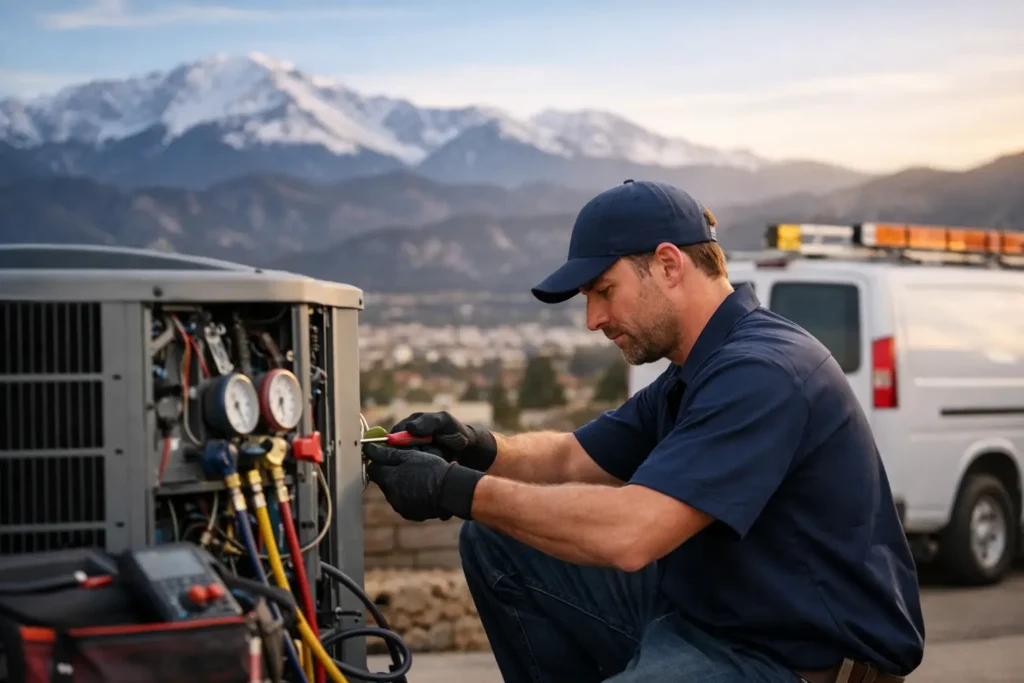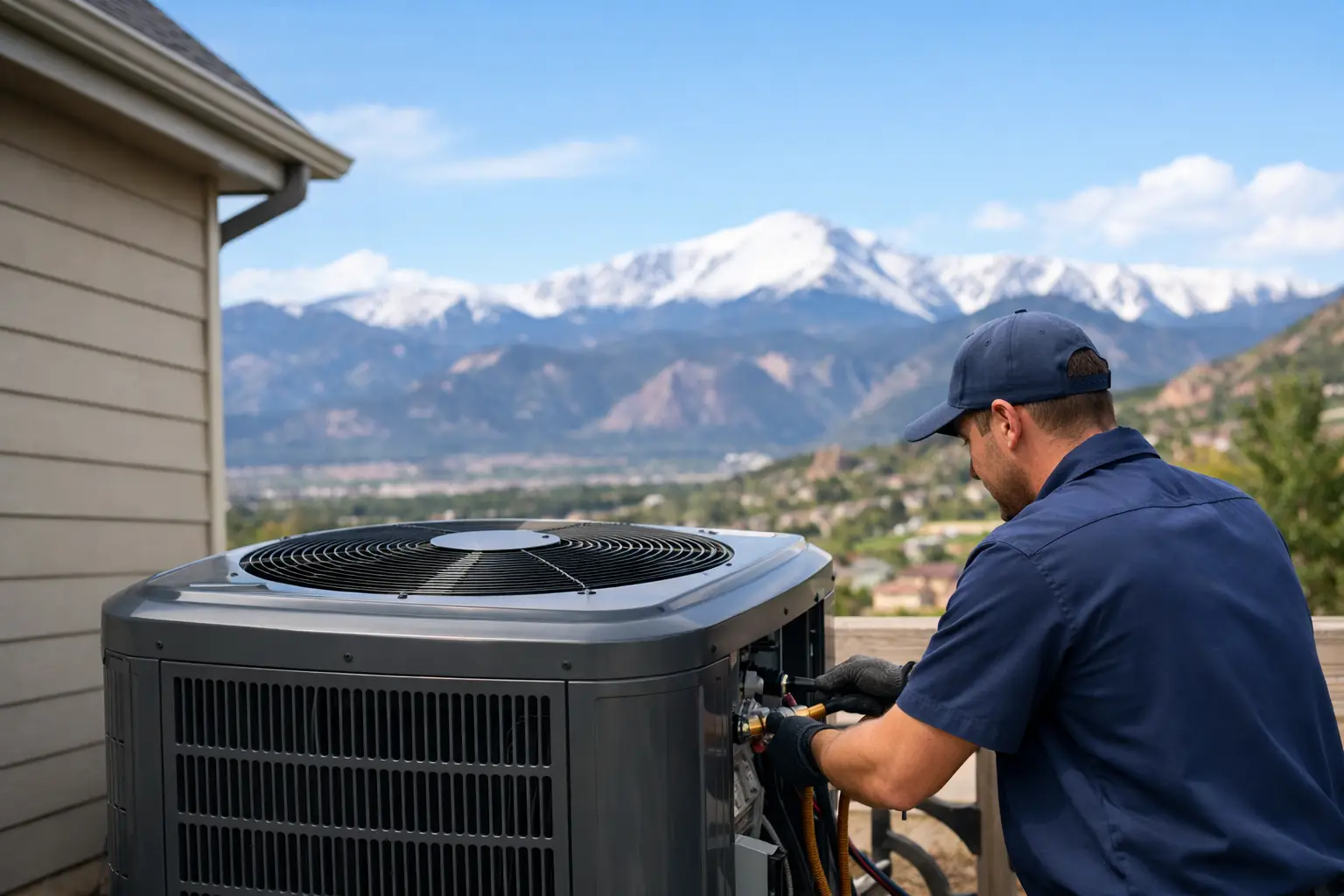
A lot of AC problems in Colorado Springs show up the first truly hot week of the year. The system runs all afternoon, rooms cool unevenly, and energy bills climb fast. If that sounds familiar, air conditioner installation Colorado Springs homeowners can count on starts with more than swapping out equipment. The right install has to match the home, the ductwork, and the way you actually use the space.
That matters here because comfort is not just about peak summer heat. It is about dry air, big day-to-night temperature swings, and systems that may already be working alongside a furnace, heat pump, or indoor air quality equipment. A new AC should solve a problem, not create a new one.
When a New AC Installation Makes Sense
Not every struggling air conditioner needs to be replaced. Sometimes a repair is the smart call, especially if the unit is newer and the issue is isolated. A capacitor, contactor, thermostat problem, or refrigerant leak can often be addressed without replacing the whole system.
Replacement becomes more likely when the system is older, repairs are stacking up, or comfort has become inconsistent from room to room. If your AC is running longer but cooling less, or if it cannot keep up even after service, installation may be the better long-term value. That is especially true when the existing equipment was oversized or undersized from the beginning.
For commercial properties, the decision usually comes down to reliability and operating cost. A failing rooftop unit can disrupt tenants, staff, customers, and inventory. In that setting, planned replacement is usually better than waiting for a complete breakdown during hot weather.
Air Conditioner Installation in Colorado Springs Is Not One-Size-Fits-All
A proper installation starts with sizing. Bigger is not automatically better. An oversized air conditioner may cool the house too quickly without running long enough to remove enough humidity or circulate air evenly. An undersized system can run constantly, wear out faster, and still leave parts of the home uncomfortable.
In this market, square footage alone is not enough to choose a system. Insulation levels, window placement, sun exposure, ceiling height, duct condition, and the home’s layout all affect performance. Two homes with the same floor plan can need different solutions if one has older windows or an unfinished basement.
That is why experienced technicians look at the full system, not just the outdoor unit. If the indoor coil, blower performance, thermostat, or ductwork is not right, even a high-efficiency condenser will not perform the way it should.
What Should Be Evaluated Before Installation
A solid quote should reflect the actual property conditions. That usually means reviewing the age and compatibility of the furnace or air handler, checking duct sizing and leakage, confirming electrical requirements, and discussing efficiency goals.
For some homes, a traditional central air system is the clear choice. For others, a heat pump or mini split may make more sense, especially if there are additions, upstairs hot spots, or areas with limited duct access. There is no single best answer for every building. The best option is the one that delivers reliable comfort without wasting energy or money.
What Affects Installation Cost
Cost is one of the first questions people ask, and the honest answer is that it depends on the system and the scope of the work. Equipment efficiency, tonnage, brand tier, and whether indoor components also need replacement all affect price.
Labor can vary too. A straightforward replacement where the existing setup is in good condition is different from a project that needs duct modifications, electrical updates, new refrigerant lines, or a pad replacement. Older homes can also bring surprises, especially if prior installations were done with shortcuts.
Commercial installation costs have even more variables. Roof access, crane needs, zoning, controls, and equipment lead times all play a role. What matters most is transparency. You should know what is included, what is optional, and why a recommendation is being made.
Efficiency and Long-Term Value
Higher efficiency equipment usually costs more upfront, but that does not mean it is always the right investment. The return depends on how long you plan to stay in the property, how heavily the system runs, and whether the home can support that efficiency level.
For example, upgrading to a very high-efficiency AC while leaving badly leaking ducts in place may not deliver the savings you expect. In that case, addressing airflow and distribution issues may produce a better result than paying for top-tier equipment alone. Good contractors will explain those trade-offs clearly instead of pushing the most expensive option.
The Installation Process Should Be Clean and Predictable
A professional air conditioner installation should not feel confusing. Once the system is selected, the next steps should be clear. That includes scheduling, equipment arrival, removal of the old unit, installation of new components, startup testing, and a walkthrough of system operation.
During installation, technicians should protect the work area, handle refrigerant and electrical connections properly, and test performance before wrapping up. That includes checking airflow, refrigerant charge, thermostat communication, drain function, and temperature split. If those basics are skipped, problems often show up later as weak cooling, short cycling, or avoidable service calls.
For homeowners, one of the biggest benefits of a quality install is peace of mind. You should not be left guessing how to program the thermostat, when to change the filter, or what kind of maintenance the system will need. Clear communication matters just as much as the equipment itself.
Timing Your AC Installation
If your current system is barely hanging on, waiting for peak summer can limit your options. Busy season often means tighter schedules and fewer replacement windows. Planning ahead gives you more time to compare solutions and avoid emergency decision-making.
That said, not every replacement is planned. When a unit fails during hot weather, fast response matters. A local contractor that handles both diagnostics and installation can help you move from breakdown to replacement without unnecessary delays.
For businesses, timing is even more important. Replacing equipment before a seasonal demand spike or before a tenant complaint cycle starts can protect operations and reduce disruption.
Why Local Experience Matters
Colorado homes and commercial buildings are not all built the same, and climate conditions here can expose weak installation practices quickly. Systems need to handle summer cooling demands without sacrificing efficiency or airflow. That requires local familiarity, not guesswork.
A contractor serving El Paso County should understand the common equipment setups in the area, how altitude can affect performance, and where installation issues tend to show up in older and newer buildings alike. That kind of experience helps shorten diagnosis time, improve recommendations, and reduce callbacks.
If you are comparing providers, look for clear estimates, licensed technicians, dependable scheduling, and a company that can support the system after the install. Strong Heating and Cooling is one option for property owners who want straightforward service, transparent pricing, and year-round HVAC support from a local team.
Questions to Ask Before You Approve the Job
Before signing off on a new system, ask what size is being recommended and why. Ask whether the quote includes the indoor coil, thermostat compatibility review, and any needed duct or electrical updates. Ask about warranty coverage on both parts and labor, and what kind of maintenance helps protect that investment.
You should also ask what comfort issues the new system is expected to solve. If your second floor has always been warmer, or your business has one area that never cools properly, that should be part of the discussion. Installation is the time to address root causes, not just replace a box with another box.
A Good Install Pays Off Every Day
The value of a new AC is not only measured on installation day. It shows up when the house cools evenly, when the system starts and stops the way it should, and when your monthly utility costs make sense for the weather. It shows up when your family sleeps comfortably and when your business can stay focused on operations instead of indoor temperature complaints.
If you are considering a replacement, take the extra time to choose an installation that is sized correctly, explained clearly, and built for the property you actually have. The right system should make comfort feel simple, and that is exactly how it ought to be.