A lot of first hot-day AC calls start the same way: a homeowner flips the thermostat to cool, waits for relief, and gets warm air, weak airflow, or nothing at all. After months of sitting idle, your air conditioner may need a little attention before it is ready for summer work. If you are looking for 5 things to do bedfore turning on your ac this summer, start with the basics that protect performance, energy efficiency, and your comfort.
The good news is that a few simple checks can help you catch small issues before they turn into expensive repairs. Some of these tasks are safe for homeowners to handle on their own. Others are better left to a licensed HVAC technician, especially if you notice electrical issues, ice buildup, unusual sounds, or a system that struggled last summer.
Why a spring AC check matters
Your cooling system does not go from winter shutdown to peak summer demand without some wear showing up. Dust collects, filters clog, outdoor units fill with debris, and small problems that were easy to ignore in mild weather become obvious when temperatures rise.
A quick pre-season check gives you a better shot at reliable cooling when you actually need it. It can also improve airflow, reduce strain on the equipment, and lower the odds of an emergency repair during the hottest week of the year. In a place like Colorado, where spring weather can swing around quickly, it makes sense to get ahead of the first heat wave instead of reacting to it.
1. Replace the air filter before you do anything else
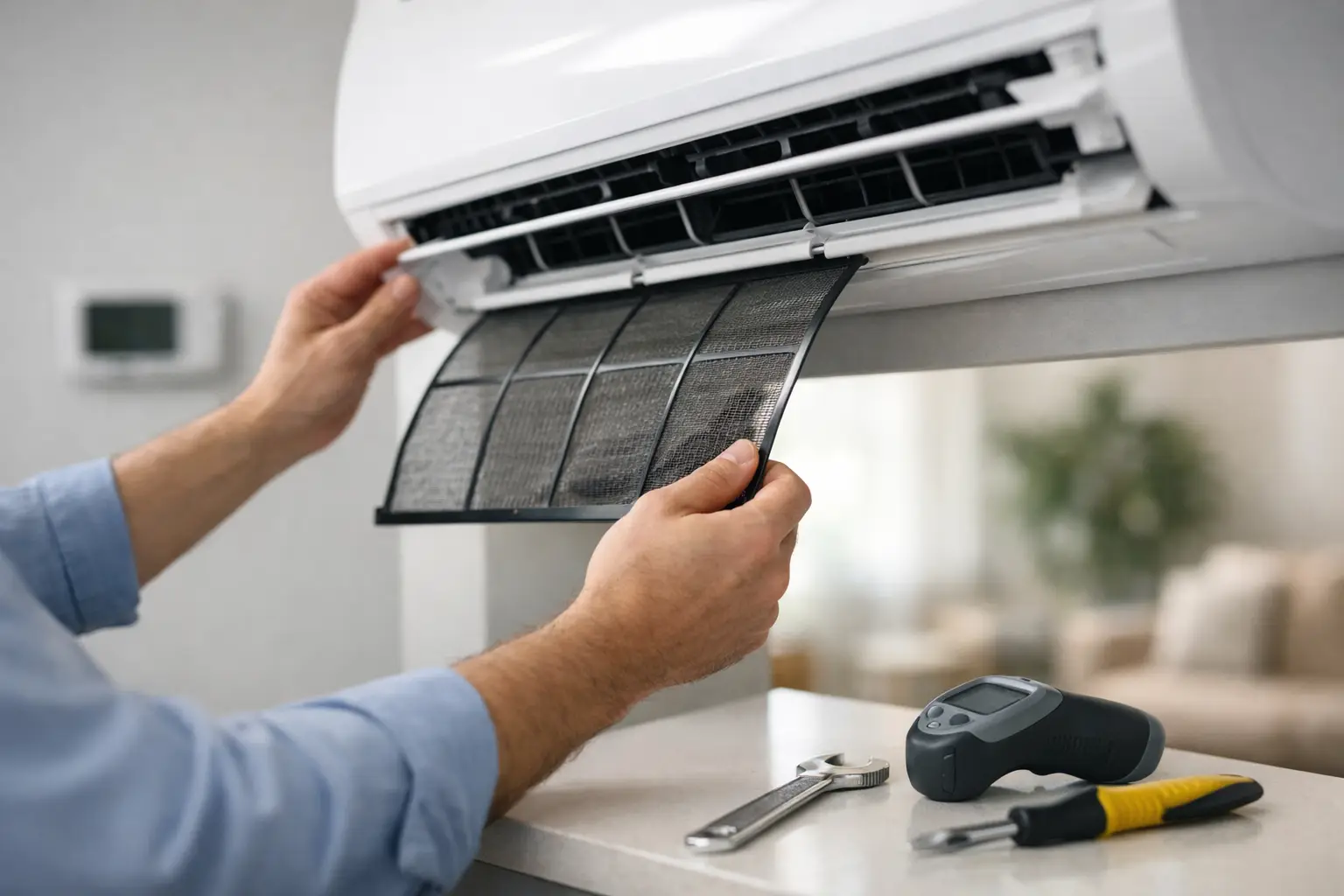
If there is one step that delivers the biggest payoff for the least effort, it is changing the air filter. A dirty filter restricts airflow across the system, which can make your AC work harder than it should. That added strain can lead to uneven cooling, longer run times, frozen evaporator coils, and higher utility bills.
Check the current filter even if you think it still has life left. Filters often collect more dust than expected during winter, especially if your home was closed up for long stretches or you ran the furnace regularly. If the filter looks gray, clogged, or packed with pet hair, replace it.
Make sure the size matches your system and that the filter is installed in the correct airflow direction. If you are not sure which filter rating is right for your setup, that is worth asking during maintenance. A filter that is too restrictive can create airflow problems in some systems, even if it sounds like the better option on paper.
2. Clear debris around the outdoor condenser
Your outdoor AC unit needs room to breathe. Leaves, dirt, cottonwood, grass clippings, and overgrown landscaping can block airflow around the condenser coil and reduce the system’s ability to release heat. When that happens, cooling performance drops and the unit has to work harder to do the same job.
Start with a visual inspection. Remove branches, weeds, and loose debris from around the base of the unit. As a general rule, it helps to keep at least a couple of feet of open space around the condenser. If bushes grew too close last season, trim them back now.
You can also gently rinse the exterior coil with a garden hose if it is visibly dirty, but avoid using a pressure washer. High pressure can bend the fins and make the problem worse. If the coil looks heavily impacted with grime or the fins are damaged, professional cleaning is the better call.
This is also a good time to check whether the unit looks level. Shifting soil or freeze-thaw cycles can affect the pad underneath. A condenser that sits unevenly can create operating problems over time, especially as components age.
3. Check the thermostat settings and test the system early
Before the first truly hot day arrives, test your system while you still have time to schedule service if something is off. Set the thermostat to cool and lower the temperature a few degrees below the current room temperature. Then listen and watch.
The system should start in a normal sequence. You should hear the indoor unit engage, then the outdoor unit kick on. After a few minutes, the air coming from the vents should feel cooler. If the thermostat is unresponsive, the display is blank, or the system does not start properly, the issue may be as simple as dead batteries or as involved as a wiring, capacitor, or control problem.
Programmable and smart thermostats are worth checking carefully at the change of season. Make sure the schedule still reflects your current routine and that the system is set to cooling mode, not just fan mode. A lot of homeowners think the AC is not working when the fan is simply circulating room-temperature air.
If certain rooms stay warm while others cool down, the thermostat may not be the only problem. You could be dealing with airflow restrictions, duct leakage, or a system that is no longer sized appropriately for the space.
4. Inspect vents, drains, and visible warning signs
One of the most useful things you can do before summer startup is walk through the home and look for anything obvious. Open supply vents should not be blocked by rugs, furniture, or curtains. Return vents should also stay clear so air can move back through the system properly.
Then take a look near the indoor equipment. If your AC shares space with the furnace or air handler, check the area around it for moisture, staining, rust, or musty odors. These can point to condensate drain problems or past leaks that deserve attention before heavy cooling season begins.
Listen for warning signs during startup. Buzzing, rattling, squealing, or hard starting are not normal. Neither is a burning smell, frequent cycling, or weak airflow from multiple vents. If your system tripped breakers last year, needed refrigerant added, or never seemed to cool consistently, do not assume it will somehow sort itself out this season.
For homeowners who want a more complete checklist, our guide on AC upkeep that prevents costly breakdowns covers several maintenance habits that help reduce surprise repairs.
5. Schedule professional AC maintenance before peak season
This is the step that catches what a visual check cannot. A professional tune-up goes beyond changing filters and clearing debris. It gives you a clear picture of how the system is operating under the hood.
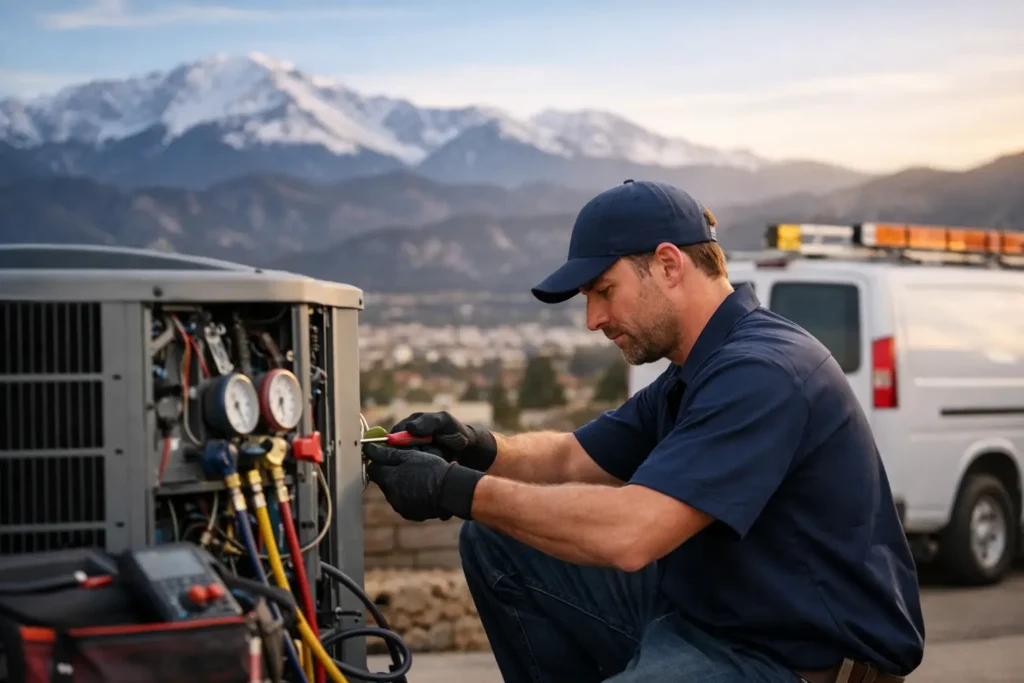
During maintenance, a trained technician can inspect electrical components, test capacitors, check refrigerant performance, clean coils, verify drainage, evaluate blower function, and confirm that the system is cycling and cooling as it should. Those are not small details. They are often the difference between a reliable summer and a midseason breakdown.
This matters even more if your AC is older, ran constantly last summer, or has not been serviced in a while. Preventive service usually costs less than emergency repair, and it gives you time to plan if the system is nearing replacement. If you have already been thinking about an upgrade, it may help to compare the different energy efficiency of AC systems before making a decision.
Routine maintenance is also a smart option for busy homeowners and property managers who do not want to keep track of seasonal service on their own. A scheduled HVAC maintenance plan Colorado Springs homeowners can rely on can make those seasonal transitions a lot easier.
What not to do before turning on your AC this summer
A few well-intended mistakes can cause more trouble than the original problem. Do not keep lowering the thermostat over and over if the system is not cooling. That will not force the unit to catch up. It only increases run time and frustration.
Do not open the electrical panels or try to test capacitors yourself. HVAC systems contain high-voltage components, and even a system that appears off can still be dangerous. The same goes for refrigerant. If you suspect a refrigerant issue, that is a licensed service call, not a DIY fix.
It is also wise not to ignore small symptoms just because the system still runs. Weak airflow, odd noises, short cycling, or rising energy bills are often early warnings. Waiting until the unit fully stops working usually leads to fewer options and more disruption.
When it is time to call for service
If your AC will not turn on, blows warm air, freezes up, leaks water, smells unusual, or makes loud noises, stop there and get it checked. The longer the system runs with a mechanical or electrical problem, the higher the chance of added damage.
The same is true if your business relies on steady indoor comfort for staff, customers, or equipment. Commercial cooling problems can escalate quickly, especially in larger spaces where rooftop systems and packaged equipment are involved.
For homeowners and businesses that want dependable help without pricing surprises, Strong Heating and Cooling provides practical service built around long-term comfort, not quick temporary fixes.
A little prep before the first hot afternoon can save a lot of trouble later. Change the filter, clear the outdoor unit, test the thermostat, look for warning signs, and schedule maintenance if anything seems off. Summer cooling works better when your system is ready before you ask it to work hard.