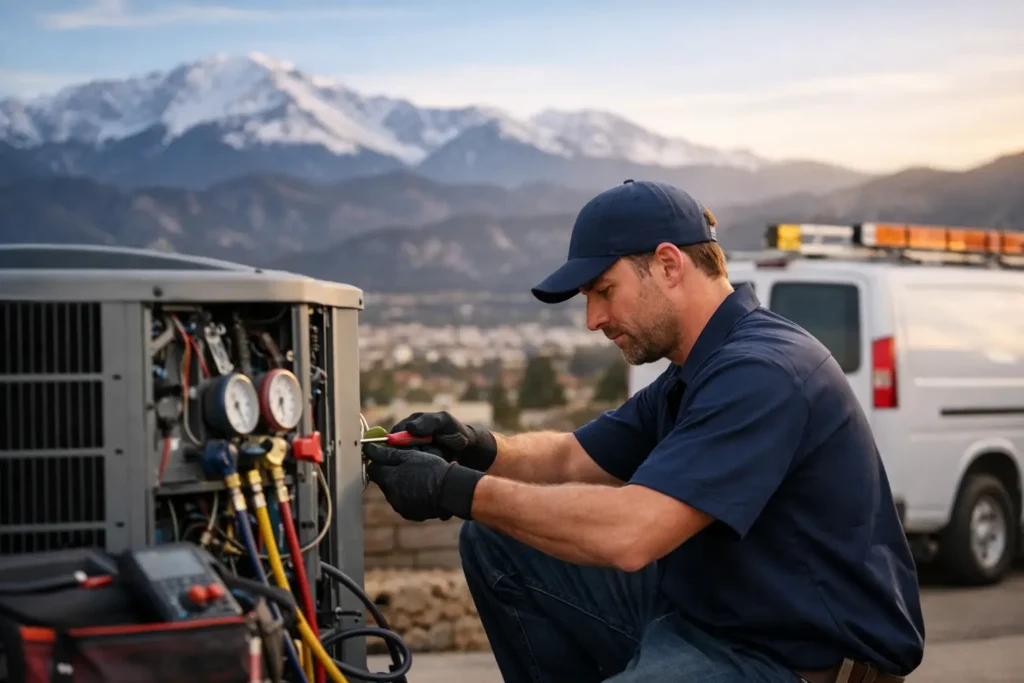
If your swamp cooler starts blowing warm, musty air in the middle of a hot afternoon, the problem is often not the unit itself. It is usually maintenance. Knowing how to maintain swamp cooler performance comes down to a few routine tasks that keep airflow strong, water moving properly, and mineral buildup from taking over.
In Colorado’s dry climate, evaporative coolers can be a practical and efficient way to stay comfortable. But they do need regular attention, especially before peak summer use. A neglected cooler can waste water, cool poorly, and wear out parts faster than it should. The good news is that most maintenance is straightforward when you know what to check.
Why swamp cooler maintenance matters
A swamp cooler works by pulling warm outdoor air through damp pads. As the water evaporates, the air cools and moves into the building. That process is simple, but the system depends on clean water distribution, good airflow, and parts that are still in working condition.
When maintenance gets skipped, a few common issues show up quickly. Pads can harden with mineral deposits. Pumps can clog. Belts can loosen. Water can stagnate in the pan and create odors. Even if the cooler still turns on, it may not cool effectively or evenly.
Regular care also helps you catch small problems before they turn into repairs. Replacing a worn belt or cleaning a line is much easier than dealing with a burned-out motor or water damage around the unit.
How to maintain swamp cooler equipment before summer
The most important maintenance window is early in the cooling season, before you rely on the system every day. Start with power off to the unit, then remove the panels so you can inspect the inside.
Look at the pads first. If they are packed with dust, brittle, sagging, or coated with heavy mineral scale, replace them. Pads are central to cooling performance, so this is not the place to stretch another season if they are clearly worn out.
Next, check the reservoir or pan. Drain any old water, wipe out dirt and sediment, and clean away mineral buildup. If water has been sitting since last season, do not just top it off and hope for the best. Fresh water and a clean pan make a real difference in both cooling quality and odor control.
Inspect the pump and water lines after that. The pump should be free of visible debris, and the tubing should not be cracked or clogged. Turn the system on briefly and confirm water is reaching the pads evenly. If one side stays dry, the distribution line may need cleaning or adjustment.
On belt-driven units, inspect belt tension and condition. A loose belt can reduce blower performance, while an overly tight one can strain bearings and the motor. If the belt looks glazed, frayed, or cracked, replace it. Direct-drive units remove that step, but you still want to listen for unusual motor noise.
Cleaning and water management during the season
Once the cooler is running regularly, maintenance becomes more about consistency than major work. The pan should stay reasonably clean, the water should circulate properly, and the pads should remain wet without becoming overloaded or slimy.
In areas with hard water, mineral buildup is often the biggest challenge. As water evaporates, minerals stay behind on the pads and inside the pan. Over time, that reduces efficiency and shortens pad life. Bleed-off systems can help control this, but even with one installed, the unit still needs periodic inspection.
A good rule is to check the cooler every month during heavy use. Look for sediment in the pan, uneven wetting on the pads, and signs that water is overflowing or not draining correctly. If the water smells stale, drain and clean the reservoir rather than trying to mask the problem.
This is also a good time to wipe down accessible interior surfaces and clear debris from around the unit. Leaves, dust, and nesting material can restrict airflow and create extra wear on moving parts.
Common parts that need attention
Swamp coolers are relatively simple, but a few components do most of the work. Keeping an eye on them helps prevent mid-season breakdowns.
The float valve controls the water level in the pan. If it sticks open, the unit may waste water or overflow. If it sticks closed, the pump may run dry or the pads will not stay wet enough to cool properly. Water level should be steady and appropriate for the model.
The pump is another key part. It should move water continuously and quietly. A pump that hums but does not circulate water may be clogged or failing. If the pads are dry while the blower is running, the pump is one of the first things to check.
The blower motor and fan assembly affect airflow. If you notice weak air at the vents, the issue may not be the pads alone. Worn belts, dirty components, motor wear, or duct leaks can all reduce delivery.
Dampers also deserve a quick check, especially on systems connected to shared ductwork. If they are not opening or closing properly, you may lose cooling performance or create airflow problems in other parts of the building.
How to maintain swamp cooler efficiency without overdoing it
There is a balance between smart maintenance and unnecessary tinkering. Some property owners clean too aggressively, use the wrong chemicals, or replace parts before there is a real need. Others wait until the unit is barely functioning.
Efficiency usually improves most from a few practical habits. Replace worn pads on time. Keep the pan clean. Make sure water distribution is even. Check belt tension if your unit uses one. Open windows slightly when the cooler runs so air can circulate through the space rather than getting trapped.
That last point matters more than many people expect. Unlike refrigerated air conditioning, a swamp cooler needs some exhaust path for indoor air. If the house or building is sealed too tightly, comfort drops even when the cooler itself is working.
It also helps to be realistic about weather conditions. Swamp coolers perform best in dry heat. On more humid days, they may not cool as aggressively, even when fully maintained. That does not always mean something is wrong with the unit.
End-of-season shutdown matters too
Maintenance is not just a spring task. Proper shutdown at the end of the season protects the cooler during the colder months and makes startup easier next year.
Drain the pan fully and remove any remaining sediment. Clean the unit interior, including the pump area and water lines if accessible. Depending on pad condition and local practice, you may remove the pads or leave them in place if they are still serviceable and the unit will be covered properly.
Shut off the water supply to the unit and disconnect power if appropriate for the setup. A fitted cover can help protect the cooler from winter debris and weather exposure. The goal is simple: do not leave standing water, dirt, and exposure to create problems while the system sits idle.
Signs it is time to call a professional
Some maintenance is well within reach for a homeowner or property manager. But there are times when service is the smarter move.
If the motor is making grinding noises, the pump repeatedly fails, wiring looks damaged, or the unit leaks despite float adjustment, it is time for a trained technician. The same goes for poor airflow that does not improve after replacing pads and checking basic settings.
Commercial properties may also need professional service sooner because downtime affects occupants, operations, and equipment life in a bigger way. A seasonal inspection can be worth it when you want fewer surprises during the hottest part of the year.
For homes and businesses in El Paso County, local water quality, dust, and long dry spells can all affect how often maintenance is needed. If you are not sure what your unit needs, Strong Heating and Cooling can inspect it and give you a clear recommendation without overcomplicating the issue.
A simple maintenance rhythm that works
The best approach is not complicated. Give the unit a thorough cleaning and inspection before the season starts, check it monthly during regular use, and shut it down properly when cooling season ends. That rhythm catches most problems before they get expensive.
A swamp cooler does not ask for much, but it does ask for consistency. Stay ahead of the buildup, listen when the unit sounds different, and treat weak airflow or uneven cooling as an early warning instead of a minor annoyance. A little attention at the right time usually keeps the whole system working the way it should.