Air conditioners rarely quit without warning. In most cases, the signs your AC is about to fail show up days, weeks, or even months before the system stops cooling your home or business. The problem is that those warning signs are easy to brush off until you are dealing with a hot afternoon, an uncomfortable building, and an urgent repair.
Catching trouble early can save money, reduce downtime, and give you more options. A small repair is usually easier to handle than an emergency replacement. If your system has been acting differently lately, here is what to pay attention to.
1. Your AC is running, but cooling feels weaker
One of the earliest signs of a struggling system is a drop in cooling performance. The thermostat is set where it always is, the unit turns on, but the house does not feel as comfortable. You may notice certain rooms staying warm, longer run times, or air coming from the vents that feels less cold than usual.
Sometimes the issue is simple, like a clogged filter or dirty coil. Other times, weak cooling points to refrigerant problems, a failing compressor, or airflow restrictions inside the system. The key detail is consistency. If your AC used to keep up and now it cannot, something has changed.
In Colorado Springs, this tends to show up first on hotter afternoons when the system is under more strain. A unit that is close to failure often struggles most when you need it most.
2. Airflow from the vents is weak or uneven
If some vents barely push air while others seem normal, do not ignore it. Weak airflow can mean a blower motor is wearing out, ductwork has leaks, the evaporator coil is freezing, or the system is dealing with a blockage.
This is one of the more overlooked signs your AC is about to fail because the unit may still produce cool air. But if that air is not moving through the building properly, comfort drops fast and system strain goes up. The longer the issue continues, the harder your AC has to work to do a job it is no longer doing efficiently.
For commercial spaces, uneven airflow can also affect employees, customers, and temperature-sensitive equipment. What starts as a comfort issue can quickly become an operational one.
3. The system turns on and off too often
Short cycling is when your AC starts, runs briefly, shuts off, and then starts again sooner than it should. This is not normal wear. It usually means the system is having trouble completing a full cooling cycle.
There are several possible causes, including thermostat issues, electrical problems, low refrigerant, dirty components, or an oversized unit. The exact fix depends on the cause, which is why this symptom should be checked rather than guessed at.
Short cycling matters because it increases wear on critical parts. Starting up repeatedly puts stress on motors and electrical components. Even if the system still cools a little, this pattern can push an already weak AC much closer to a complete failure.
4. You hear new noises that were not there before
Most air conditioners make some level of operating sound. What you do not want is a sudden change. Grinding, buzzing, rattling, squealing, banging, or clicking can all point to developing mechanical or electrical trouble.
A rattling sound might be something loose. A squeal can mean a worn belt or motor issue. Buzzing may point to electrical trouble, and grinding can signal motor bearings that are near the end of their life. Not every sound means the system is about to quit that day, but unusual noise is rarely a good sign.
This is one of those cases where timing matters. A repair made early may be straightforward. Wait too long, and one failed part can damage others.
5. Your energy bills are climbing without a clear reason
If your usage habits have not changed much but your cooling costs keep going up, your AC may be losing efficiency. Aging components, airflow problems, dirty coils, refrigerant issues, and failing motors can all force the system to use more electricity to produce less comfort.
A gradual rise is especially easy to miss because it does not feel dramatic. But over a full cooling season, the cost adds up. If the unit is older, rising utility bills can be one of the clearest financial signs that repair and replacement options should both be considered.
There is some nuance here. A hot stretch of weather can raise your bill even if the system is healthy. What matters is whether the increase feels out of step with outdoor conditions and your normal usage.
6. Moisture, leaks, or ice are showing up around the unit
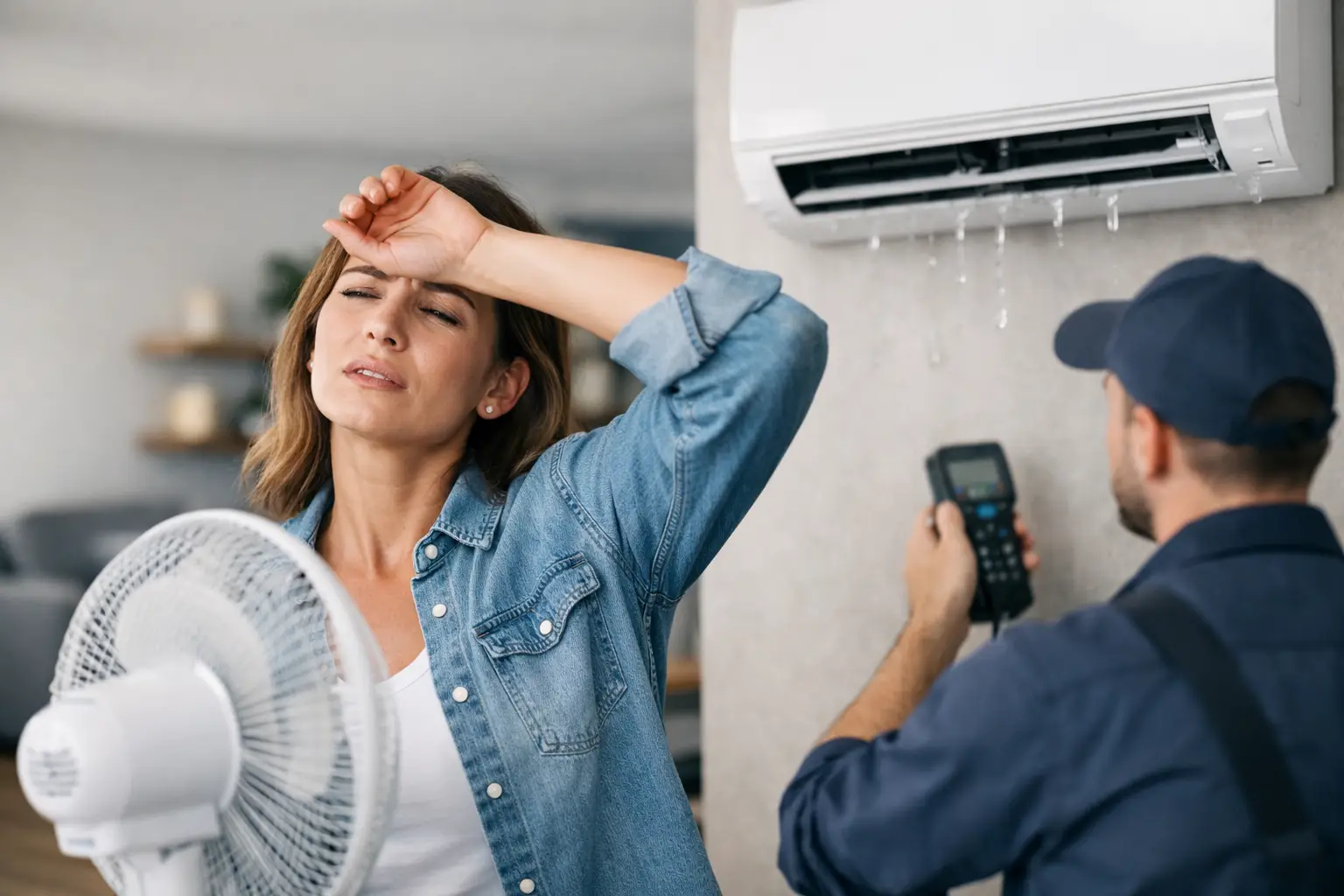
Water around your indoor unit is never something to ignore. It may be a clogged condensate drain, but it can also point to a frozen evaporator coil or another issue affecting operation. If you see ice on the refrigerant lines or indoor coil, that is a stronger warning that the system is not running the way it should.
People sometimes assume ice means the AC is working extra hard to cool. In reality, it usually means there is a problem with airflow, refrigerant levels, or component performance. Running the system in that condition can make things worse.
For property owners, leaks bring another concern: water damage. What starts as an AC issue can also affect walls, ceilings, or flooring if left alone.
7. The thermostat setting keeps getting lower
If you find yourself lowering the thermostat more and more just to feel comfortable, the issue may not be the thermostat at all. It can be a sign your air conditioner is no longer delivering the cooling output it used to.
This is a common pattern with aging systems. Occupants adjust around the problem instead of addressing it. The AC then runs longer, works harder, and wears down faster. That can buy a little short-term comfort, but it often speeds up the bigger failure.
When comfort depends on constantly changing settings, it is time to look deeper.
8. The unit is older and needs repairs more often
Age by itself does not mean immediate failure, but it does change the conversation. Many air conditioners start to become less dependable as they move deeper into the 10 to 15 year range, especially if maintenance has been inconsistent or the system has seen heavy use.
If repairs are becoming more frequent, that is one of the strongest signs your AC is about to fail in a practical sense. Even if no single part has completely given out yet, the system may be entering a cycle where one issue follows another.
At that point, the question is not just whether it can be repaired. The better question is whether repairing it again is the best use of your money. Sometimes a targeted repair makes sense. Sometimes replacement gives you better reliability, efficiency, and long-term value. It depends on the unit’s age, condition, repair history, and the cost of the current problem.
9. The system smells musty, burnt, or just off
Odors can tell you a lot. A musty smell may mean moisture buildup, mold in the system, or drainage issues. A burning smell can point to electrical trouble or overheating components. A chemical-like odor may suggest refrigerant concerns.
Any smell that appears suddenly or returns repeatedly deserves attention. Odors often show up alongside other symptoms, like weak airflow or poor cooling, which helps confirm that the problem is not minor.
For homes and businesses alike, air quality matters. Even when the AC is still technically running, unpleasant smells are a sign the system is not operating in a clean, healthy, or dependable way.
What to do when you notice signs your AC is about to fail
The biggest mistake is waiting for a total breakdown. Once that happens, your options narrow fast. You may be dealing with limited scheduling availability during a heat wave, more expensive emergency service, or a rushed replacement decision.
Start with the basics you can safely check. Replace a dirty filter if needed. Make sure the thermostat is set correctly. Look at the outdoor unit to confirm it is not blocked by debris. If those simple steps do not solve the problem, it is time for a professional inspection.
A trained technician can tell the difference between a repairable issue and a system that is nearing the end of its service life. That matters because not every warning sign leads to replacement. Some problems are straightforward. Others are signs that the system is costing you more than it is worth.
If you are dealing with weak cooling, odd noises, short cycling, leaks, or rising bills, getting answers early is the smart move. Strong Heating and Cooling helps homeowners and commercial clients identify the real problem, understand their options, and make repairs or replacement decisions with clear pricing and no guesswork.
The best time to act is when your AC is still running well enough to give you a choice.