When the house feels colder by the minute and your furnace not turning on becomes the problem you are trying to solve, the first few checks can save time, stress, and sometimes an unnecessary service call. Some no-heat issues come down to a thermostat setting or tripped breaker. Others point to a part that needs professional repair.
The key is to start with the simple items you can safely inspect yourself. If the furnace still will not start after these checks, or if you notice burning smells, gas odor, loud banging, or repeated shutdowns, it is time to stop troubleshooting and schedule service.
Furnace not turning on – what to check before calling
Start at the thermostat. It sounds basic, but it is one of the most common reasons a furnace does not respond. Make sure the system is set to Heat, not Cool or Off, and raise the temperature several degrees above the current room temperature. If the thermostat screen is blank, the batteries may be dead or the unit may have lost power.
If you have a programmable or smart thermostat, check the schedule as well. A recent power outage, battery failure, or accidental setting change can keep the furnace from receiving a call for heat. In commercial spaces and larger homes, zoning controls can create similar confusion if one zone is calling and another is not.
Next, check the furnace power switch. Many homeowners mistake it for a regular light switch because it is often mounted on or near the furnace. If it has been turned off by accident, the unit will not run at all. After that, inspect your electrical panel for a tripped breaker. Reset it once if needed, but if it trips again, leave it off and call a technician. Repeated breaker trips usually mean there is an electrical problem that needs proper diagnosis.
Check the furnace filter and airflow
A clogged air filter can do more than reduce efficiency. In many systems, restricted airflow causes the furnace to overheat and shut itself down as a safety measure. If the filter looks dirty, replace it with the correct size and type for your system.
This is especially common during cold stretches when the furnace runs longer than usual. In Colorado winters, that extra runtime can expose airflow issues fast. A filter that seemed acceptable a few weeks ago may already be too dirty to support normal operation.
Also take a quick look at supply and return vents throughout the home or building. If too many are closed or blocked by furniture, boxes, or rugs, airflow can suffer. One blocked vent will not usually stop the system, but several can contribute to poor performance and cycling problems.
Make sure the furnace has fuel or ignition
If you have a gas furnace, confirm that the gas supply is on. The shutoff valve near the unit should be in the proper position. If you are unsure, do not force anything or start adjusting gas components beyond a simple visual check. If you smell gas, leave the area and arrange for professional help right away.
Some systems also stop heating because the pilot light is out or the electronic ignition is failing. Older furnaces may use a standing pilot. Newer units usually rely on an igniter or flame sensor. If the furnace tries to start but never fully lights, or it starts and shuts off quickly, an ignition-related problem is a strong possibility.
This is where the trade-off changes. A homeowner can usually check whether the system is trying to ignite, but cleaning sensors, testing igniters, or working on gas components is better left to a trained HVAC technician.
Look at the furnace door and safety switches
A loose or misaligned furnace access panel can prevent startup. Many units have a safety switch that cuts power when the panel is not seated correctly. If you recently changed the filter or looked inside the furnace, double-check that every door and panel is fully back in place.
This is an easy thing to miss because the furnace may appear normal from the outside. One panel slightly out of position can keep the blower or burners from starting.
Check the condensate line on high-efficiency furnaces
If you have a high-efficiency furnace, a clogged condensate drain line may shut the system down. These furnaces produce water during operation, and that moisture has to drain properly. When the line backs up, a safety switch may stop the furnace to prevent leakage or damage.
Signs can include water around the unit, frequent shutdowns, or a furnace that begins a cycle and then quits. This issue is common enough that it is worth checking for visible moisture, but clearing the blockage is not always a simple DIY task. It depends on the design of the drain, how accessible it is, and whether the clog is minor or deeper in the line.
Watch for error codes or blinking lights
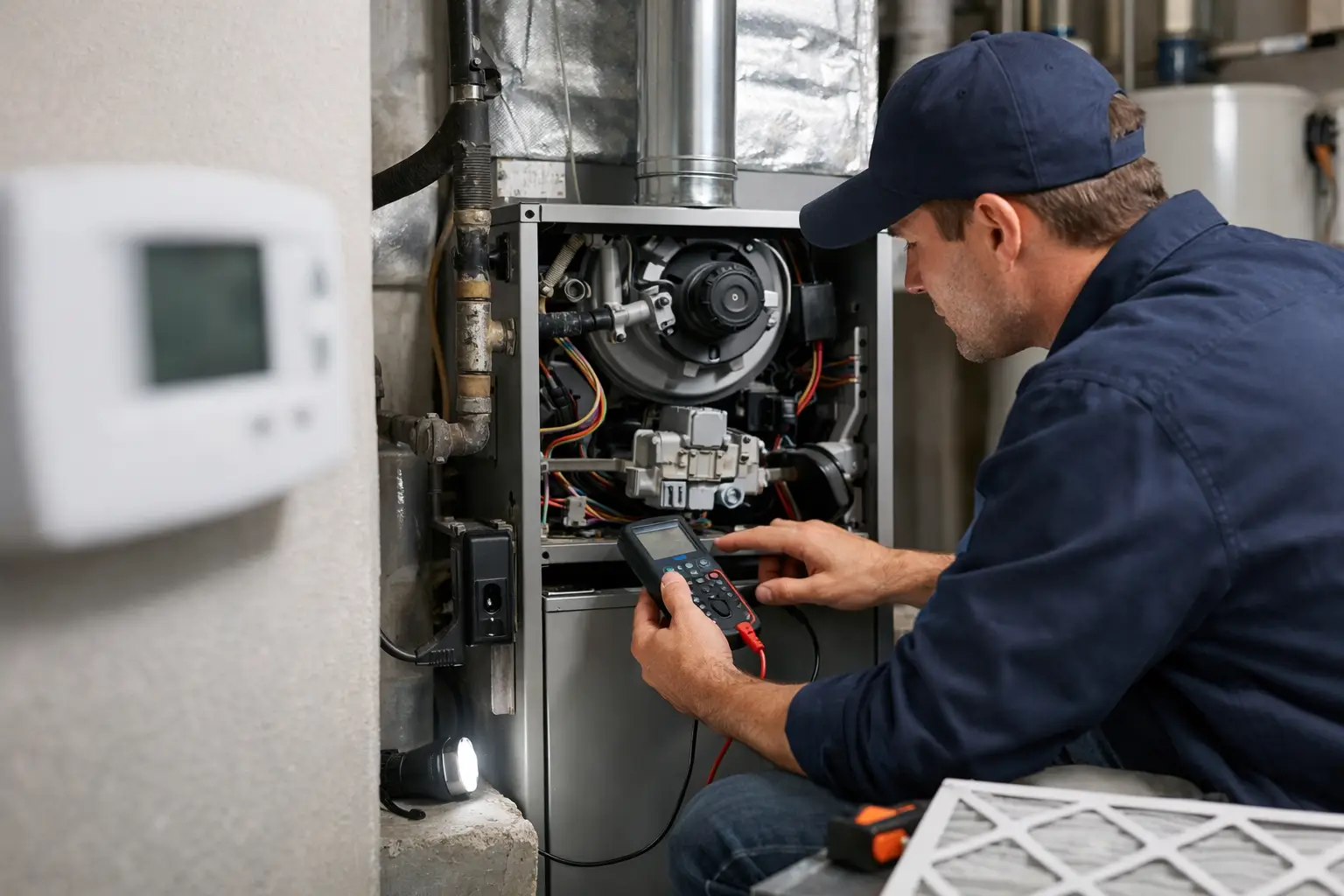
Most modern furnaces include a control board with a status light. If the furnace is not turning on, what to check here is simple: look through the viewing window or remove the panel if safe to do so, then note whether the light is steady or blinking in a pattern. Many furnaces have a chart on the inside panel that explains what those codes mean.
An error code will not fix the problem, but it can narrow things down quickly. It may point to pressure switch trouble, ignition failure, limit switch faults, or airflow restrictions. That is useful information to share when you call for service.
If the unit has no light at all, that often points back to a power issue, failed board, or door switch problem. Again, this is helpful for diagnosis, but not a reason to start replacing parts on your own.
When the furnace turns on briefly, then stops
Sometimes the furnace is not completely dead. It may start, run for a minute, and shut back off. That usually means the system is detecting a problem and protecting itself.
A dirty flame sensor is one common cause. The burners ignite, but the system does not confirm a stable flame, so it shuts down the gas as a safety response. Overheating from poor airflow is another possibility. In other cases, pressure switch issues, venting problems, or a failing inducer motor may be involved.
The pattern matters. If the blower runs but there is no heat, that points in one direction. If the burners light and drop out, that points in another. If nothing happens at all, the issue is often with thermostat communication, power, or a safety interlock.
What not to do when your furnace will not start
It is tempting to keep flipping the thermostat, resetting breakers, or cycling the power repeatedly. That rarely helps and can sometimes make diagnosis harder. Reset a breaker once if needed. Beyond that, repeated resets are a sign to stop.
Do not open gas lines, bypass safety switches, or try to force ignition. Furnaces are built with safeties for a reason. If one of those safeties is stopping operation, the goal is to identify the cause, not work around it.
It is also wise not to ignore a furnace that eventually comes back on by itself. Intermittent no-heat problems often get worse with time. A system that fails only on the coldest nights is already telling you something is wrong.
When it is time to call a professional
If you have checked the thermostat, filter, power, vents, and visible furnace settings, and there is still no heat, the next step should be professional service. The same goes for unusual noises, burning smells, water leaks, gas odor, or a furnace that keeps shutting itself off.
For property owners and commercial spaces, fast service matters even more. A heating issue can affect tenants, staff, inventory, and day-to-day operations. Prompt diagnosis helps limit downtime and prevents a minor problem from turning into a larger repair.
A trained technician can test voltage, inspect ignition components, verify gas pressure, read fault history, check safeties, and confirm whether the repair makes sense or whether replacement is the better long-term choice. If your system is older, has frequent issues, or struggles to keep up in colder weather, that bigger conversation may be worth having.
If you need dependable help, Strong Heating and Cooling provides furnace service for homeowners and businesses that want clear answers, quality workmanship, and responsive support when comfort is on the line.
A furnace that will not turn on can be caused by something small or something more serious, and the smartest move is knowing the difference. Start with the safe basics, trust what the system is telling you, and get it checked before a cold house becomes a bigger problem.