Step inside a Colorado home in January and you can usually feel the dry air right away. Static shocks start happening, your skin feels tight, wood floors may creak more than usual, and that scratchy throat in the morning suddenly makes sense. Colorado humidity and humidifiers matter more than many people realize because comfort is not just about temperature. Moisture levels inside your home or building play a big role in how the air feels, how your HVAC system performs, and even how well certain materials hold up over time.
In Colorado, the dry climate is not a seasonal quirk. It is part of daily life. Even when temperatures swing, indoor air can stay far below a healthy comfort range, especially once the heating system starts running regularly. That creates a common question for homeowners and property managers: do you really need a humidifier, or is this just one more indoor air quality add-on? In many cases, the answer is practical rather than optional.
Why Colorado humidity feels so different
Colorado’s elevation and semi-arid climate naturally lead to lower moisture levels in the air. That outdoor dryness often follows you indoors, where furnaces and other heating systems can reduce relative humidity even further. Warm air is not the problem by itself. The issue is that heated indoor air can hold more moisture, so if no humidity is being added, the relative humidity drops.
That is why a home can feel warm but still uncomfortable. You may set the thermostat to a reasonable temperature and still notice dry sinuses, itchy skin, nosebleeds, chapped lips, or irritated eyes. In commercial buildings, employees may complain that the air feels stale or harsh even when the system is heating properly.
Low humidity can also affect the space itself. Wood furniture, hardwood flooring, trim, musical instruments, and cabinetry may shrink or develop small cracks when indoor air stays too dry for long periods. Paint and caulk can show stress too. For many property owners, the signs start small and become expensive if ignored.
What indoor humidity level is best?
Most homes and businesses feel best when indoor relative humidity stays around 30 to 50 percent. In Colorado, many buildings fall well below that during cold weather. Once indoor humidity drops into the teens or low twenties, the difference becomes noticeable fast.
There is some balance involved. Too little humidity creates dryness and static. Too much can lead to condensation on windows, musty odors, or conditions that support mold growth. The right setting depends on outdoor temperature, insulation quality, window performance, and how airtight the building is.
This is where a lot of people get mixed results with portable units. They may add some relief in one room, but the rest of the house stays dry. Or they turn the setting too high and create window condensation. A good humidity strategy should match the size of the space and the way the HVAC system actually operates.
Colorado humidity and humidifiers in real homes
For many households, the first sign of a humidity problem is personal comfort. Kids wake up congested. Adults feel dry at night. Static cling becomes part of doing laundry. Houseplants struggle. None of these problems sound major on their own, but together they point to indoor air that needs attention.
A humidifier helps by adding controlled moisture back into the air. That can make a room feel more comfortable at the same thermostat setting, which may reduce the urge to keep turning the heat up. Some homeowners also notice fewer issues with dry skin, irritated nasal passages, and frequent static shocks.
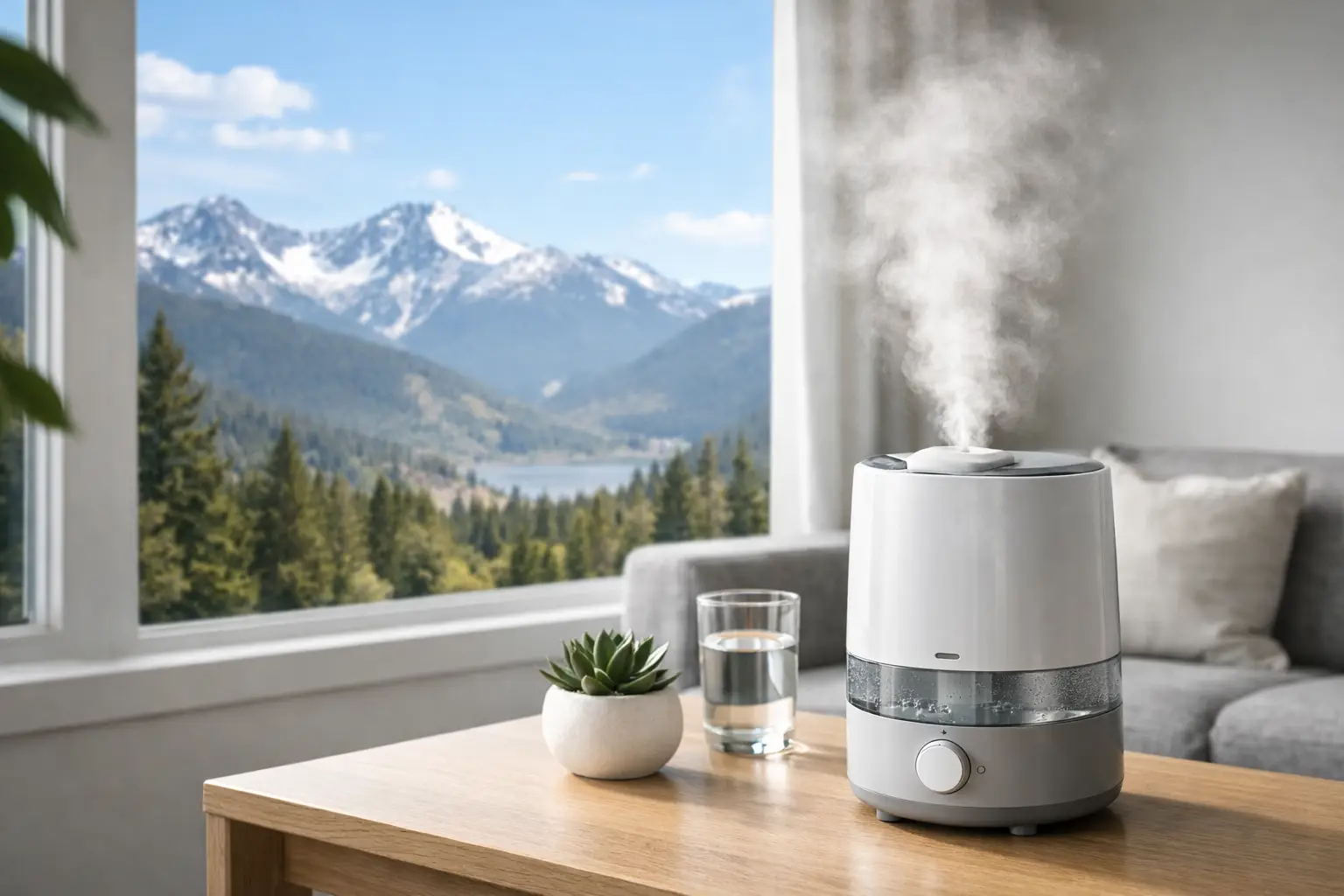
Still, not every humidifier setup works the same way. A small tabletop unit in one bedroom is very different from a whole-home system tied into your HVAC equipment. Portable humidifiers can help in a limited area, but they require frequent refilling and cleaning. Whole-home humidifiers are designed to deliver consistent humidity throughout the house with much less daily effort.
Whole-home vs. portable humidifiers
If you are deciding between a portable unit and a built-in system, the best choice usually comes down to scale, convenience, and how long you plan to manage the issue.
Portable humidifiers can be useful for apartments, single rooms, nurseries, or temporary relief. They cost less up front and do not require HVAC modifications. The trade-off is maintenance. Water tanks need refilling, filters may need replacement, and poor cleaning habits can create mineral buildup or bacteria issues.
Whole-home humidifiers are installed directly with your forced-air system, allowing humidity to be distributed through the ductwork. That gives you broader coverage and more stable indoor moisture levels. They are often the better fit for homeowners who want a set-it-and-monitor-it solution rather than a device to manage every day.
For commercial spaces, portable units are usually not a realistic long-term answer unless the need is very limited. Offices, retail spaces, and larger facilities often benefit more from integrated humidity control, especially when comfort complaints affect staff or customers.
Signs your building may need a humidifier
Sometimes the need is obvious, but not always. If you are dealing with recurring winter discomfort, your building may be telling you the air is too dry.
Common signs include static electricity, frequent dry skin, nosebleeds, sinus irritation, dry or cracked wood surfaces, and air that feels uncomfortably harsh even when the temperature is fine. In a business setting, repeated occupant complaints about dry eyes, throat irritation, or general discomfort can point in the same direction.
It also helps to look at the bigger HVAC picture. If your heating system is running often and indoor air still feels unpleasant, humidity may be the missing part of the comfort equation. Temperature control and moisture control work together. One without the other can leave a building feeling off.
Installation and sizing matter
A humidifier is not just an accessory you attach and forget about. Proper sizing and setup make a real difference in how well it works and whether it creates new issues.
If a unit is too small, it may run constantly without making enough impact. If it is oversized or poorly adjusted, you may end up with excess moisture on windows or in certain rooms. The type of heating system matters too, along with airflow, duct design, and how tightly the building is sealed.
That is why many property owners get better results when humidifier installation is approached as part of the HVAC system rather than a standalone purchase. The goal is not just to add moisture. It is to add the right amount, in the right way, for the space you actually have.
Maintenance is part of the job
Humidifiers need maintenance to stay effective and clean. This is true for both portable and whole-home systems, though the tasks differ.
Portable units need regular emptying, rinsing, and cleaning to prevent buildup and water quality issues. Whole-home systems may need seasonal pad changes, water panel replacement, inspection of valves and drains, and setting adjustments as outdoor temperatures change.
Skipping maintenance can reduce performance and lead to avoidable service calls. In some cases, a neglected humidifier can do more harm than good. That does not mean humidifiers are high-maintenance equipment, but they do need routine attention, especially during heating season.
Is a humidifier worth it in Colorado?
For many homes and commercial buildings, yes. But the value depends on what problem you are trying to solve.
If the goal is better comfort, fewer dry-air symptoms, and more balanced indoor conditions during winter, a humidifier often delivers clear benefits. If the goal is to protect hardwood, trim, furniture, or other moisture-sensitive materials, it can also be a smart preventive investment. For businesses, better humidity control can improve occupant comfort and reduce complaints in dry months.
That said, a humidifier is not a cure-all. If your building has insulation problems, major air leaks, dirty ductwork, or HVAC performance issues, humidity control should be part of the solution, not the only fix. Dry air is common in Colorado, but every property responds differently.
For homeowners and businesses in places like Colorado Springs and across El Paso County, this is often worth addressing before winter discomfort becomes the norm. A trusted HVAC professional can help determine whether a portable unit is enough, whether a whole-home system makes more sense, and how to keep indoor humidity in a healthy range without creating moisture problems.
Dry air has a way of sneaking into everyday life until it starts affecting sleep, comfort, and the condition of your space. When humidity is handled properly, the change is usually simple to notice and easy to appreciate.