Hot water problems rarely start with a full breakdown. More often, they show up as small frustrations first – a shower that turns cold too fast, strange noises from the tank, or water that never seems quite as hot as it used to be. If you are noticing any of these signs you need a new water heater, it may be time to stop patching the problem and start planning for replacement.
A failing water heater can waste energy, damage your home, and leave you without reliable hot water when you need it most. In some cases, a repair makes sense. In others, replacing the unit sooner saves money and prevents a bigger mess later. The key is knowing which warning signs matter and what they usually mean.
How long should a water heater last?
A standard tank water heater usually lasts about 8 to 12 years, depending on water quality, maintenance, usage, and installation quality. Tankless systems often last longer, but they can still develop performance issues that make replacement the better option.
Age is not the only factor, but it matters. If your system is already near the end of its expected life and repairs are starting to add up, it is usually smarter to consider replacement than keep investing in an aging unit.
Signs you need a new water heater soon
Some problems are minor. Others point to a tank that is wearing out from the inside or a unit that is no longer operating efficiently. Here are the signs that deserve attention.
1. Your water heater is more than 10 years old
If your tank water heater is over 10 years old, replacement should at least be on your radar. Even if it is still working, internal wear may be building. Sediment collects over time, metal parts corrode, and efficiency drops.
That does not mean every 10-year-old unit must be replaced immediately. A well-maintained system can sometimes keep going. But once a heater reaches that age, any new repair should be weighed against the cost and value of a replacement.
2. You run out of hot water faster than you used to
One of the most common signs you need a new water heater is reduced hot water capacity. If your family has not changed its routine but showers are getting shorter and hot water disappears too quickly, the tank may be losing effectiveness.
In many tank systems, this happens because sediment has built up at the bottom of the tank. That buildup takes up space and makes it harder for the burner or heating elements to warm the water efficiently. In some cases, flushing the system helps. In older units, the loss of performance often keeps coming back.
3. The water temperature is inconsistent
If the water swings from hot to cold without warning, the problem could be a failing heating element, thermostat issue, or internal tank wear. Sometimes that means a straightforward repair. Sometimes it is a sign that the entire system is becoming unreliable.
Consistency matters, especially in a busy household or commercial setting. When hot water becomes unpredictable, it is often a sign that the unit is no longer keeping up with normal demand.
4. You hear popping, rumbling, or banging noises
Water heaters should not be loud. If your unit has started making popping or rumbling sounds, sediment is often the reason. As water gets trapped under hardened buildup and heats up, it creates those noises.
The longer that sediment sits in the tank, the harder your water heater has to work. That added strain can shorten the life of the unit and raise utility costs. A noisy older water heater is often a good candidate for replacement, especially if the sounds are getting worse.
5. You notice rusty or discolored hot water
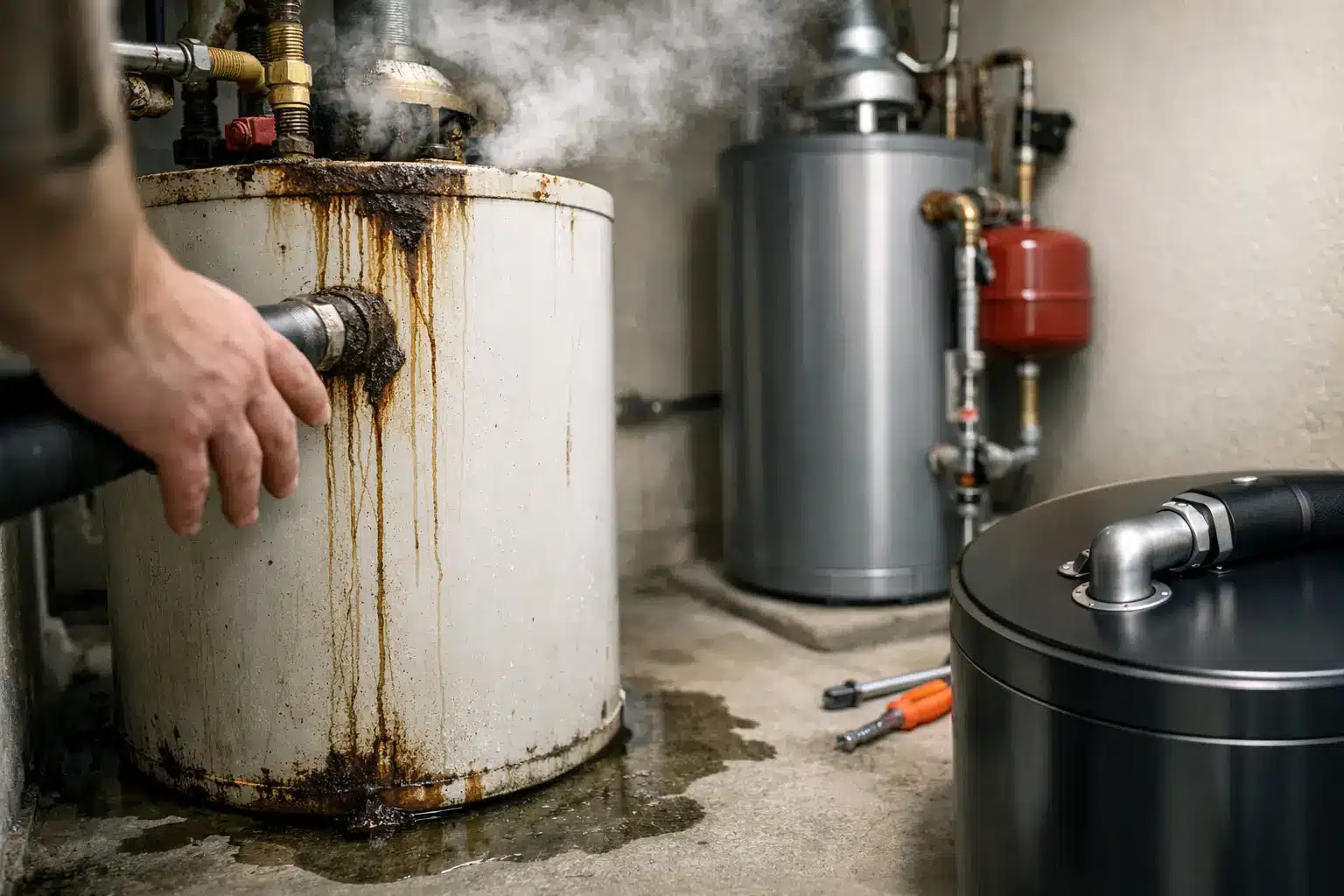
Rust-colored hot water is a warning sign you should not ignore. If the discoloration only appears when you run hot water, the issue may be inside the water heater rather than your plumbing lines.
Sometimes the fix is replacing the anode rod, which helps protect the tank from corrosion. But if rust is already forming inside the tank itself, replacement is usually the safer move. Once the tank begins corroding from the inside, leaks are often next.
6. There is water around the base of the tank
Moisture or pooling water near the water heater can point to loose connections, a failing valve, or a crack in the tank. Some causes are repairable. A leaking tank is not.
This is one of the clearest signs that action should happen quickly. Small leaks tend to become larger ones, and a tank failure can cause serious water damage. If you see water near the unit, have it inspected right away rather than waiting to see if it gets worse.
7. Your energy bills keep climbing
An older water heater often uses more energy to do the same job. Sediment buildup, aging components, and reduced efficiency all increase operating costs over time.
If your usage has stayed about the same but your utility bills are creeping up, the water heater may be part of the problem. Replacing an inefficient unit with a modern, properly sized model can improve performance and lower monthly costs. That is especially true if your current system is older and struggling.
8. You have needed multiple repairs
A single repair does not always mean replacement. But repeated service calls usually tell a different story. If you are fixing thermostats, valves, heating elements, or other components one after another, the unit may be reaching the point where repairs are just delaying the inevitable.
A good rule of thumb is to look at the age of the system and the total cost of recent repairs. If the heater is older and repair bills are stacking up, replacement is often the more cost-effective decision.
9. The tank size no longer fits your needs
Sometimes the issue is not failure. It is capacity. If your household has grown, your business has changed, or your hot water needs are simply higher than they used to be, your current water heater may be undersized.
In that situation, replacing the system can solve more than one problem. You are not just avoiding breakdowns. You are choosing a setup that better fits the way the property is used now.
Repair or replace? It depends on the full picture
There is no one-size-fits-all answer here. A newer unit with one faulty part may be well worth repairing. An older unit with leaks, corrosion, noise, and weak performance usually is not.
The best decision comes down to age, condition, repair history, efficiency, and how reliable you need the system to be. For homeowners, that often means balancing short-term repair costs against the risk of losing hot water or dealing with a tank leak. For commercial properties, downtime can affect staff, tenants, customers, and daily operations, so reliability carries even more weight.
What to expect from a replacement
A new water heater should do more than restore hot water. It should match the building’s demand, operate efficiently, and give you dependable performance without constant repairs. That may mean replacing an old tank with a newer tank model, or it may mean considering a tankless system if the application makes sense.
Tank systems usually cost less upfront and work well for many homes and businesses. Tankless systems offer longer service life and energy savings in some cases, but installation costs are higher and sizing matters. The right choice depends on the property, usage patterns, available fuel source, and budget.
If you are in El Paso County, it helps to work with a local contractor who understands how seasonal demand, building type, and household size affect system recommendations. A proper assessment can prevent you from ending up with a unit that is too small, too large, or more expensive than you need.
When to call for professional help
If your water heater is leaking, producing rusty water, making loud noises, or failing to keep up with normal demand, do not wait for a complete shutdown. These issues usually get more expensive, not less, with time.
Professional inspection gives you a clearer answer than guesswork. A trained technician can tell you whether the issue is repairable, whether the unit is nearing the end of its life, and what replacement options make the most sense for your space. If you need help evaluating your system, Strong Heating and Cooling can inspect the unit and provide straightforward recommendations based on condition, performance, and cost.
A water heater does not have to fail dramatically to tell you it is on the way out. Paying attention to the early warning signs gives you more control, more time to plan, and a better chance of avoiding a cold shower or a flooded utility room.