A furnace rarely fails at a convenient time. More often, it starts with uneven heat, rising utility bills, or a system that sounds rougher every week until replacement becomes the smarter choice. If you are planning a furnace install Colorado Springs property owners can count on, the biggest difference is not just the equipment you buy. It is how well the system is matched, installed, and tested for your home or building.
In Colorado, heating is not optional for long stretches of the year. A new furnace has to do more than turn on and blow warm air. It needs to heat consistently, run efficiently, and hold up through cold snaps without driving up operating costs. That is why installation details matter as much as the brand on the cabinet.
When a new furnace makes more sense than another repair
Some systems are still worth fixing. If your furnace is newer, the repair is minor, and the heat exchanger and blower are in good shape, repair may be the right move. But there is a point where repair dollars start stacking up without solving the real problem.
A replacement usually makes more sense when the furnace is 15 to 20 years old, repair costs are becoming frequent, or the unit struggles to maintain indoor comfort. You may also notice longer run times, rooms that never seem to warm up, or utility bills that keep climbing even when your thermostat habits have not changed.
For homeowners who are not sure whether they need a replacement yet, comparing repair history against system age is a practical place to start. If your current unit is already costing you time, money, and comfort, a new install can be the more predictable investment. If you are still weighing that decision, our page on Affordable Furnace Repair in Colorado Springs can help clarify when repair is still a reasonable option.
What matters most in a furnace install in Colorado Springs
A furnace installation is not just a swap of old equipment for new. Every property has different heating demands, duct conditions, airflow needs, and fuel setup. A quality install should begin with evaluating the home or commercial space itself, not just reading the old model number and replacing it with something similar.
Correct sizing is one of the biggest factors. An oversized furnace can short cycle, which means it heats too quickly, turns off too soon, and creates uneven temperatures while wasting energy. An undersized system may run constantly and still struggle to keep up when temperatures drop. Neither is good for comfort or long-term performance.
Airflow also matters. Even a high-efficiency furnace can disappoint if the ductwork is leaking, restrictive, or poorly balanced. During installation, the technician should assess whether your existing duct system can support the new equipment. In some cases, small duct improvements make a major difference in how the finished system performs.
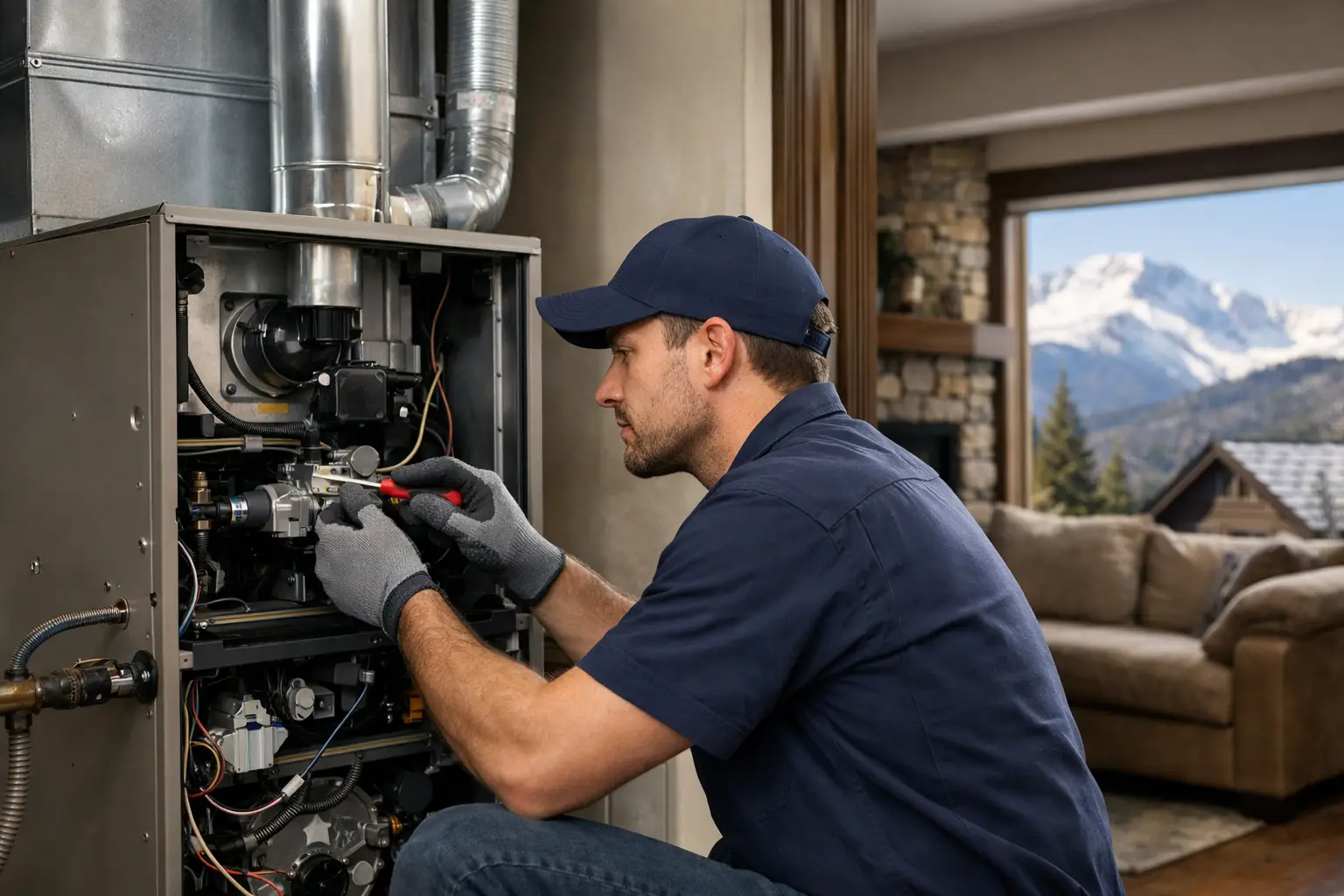
Venting, gas connections, electrical components, drain setup for condensing units, thermostat compatibility, and safety testing are just as important. A proper installation includes startup checks, combustion analysis when needed, and confirmation that the system is operating safely and efficiently before the job is complete.
Choosing the right furnace for your home or building
Most property owners start with one question: how much furnace do I need? The answer depends on square footage, insulation levels, window quality, layout, ceiling height, and how the building actually holds heat. A newer home with good insulation may need a very different setup than an older property of the same size.
Efficiency ratings are another key factor. Higher-efficiency furnaces can reduce operating costs, but they are not automatically the right fit for every situation. Budget, expected length of ownership, existing venting, and installation complexity all affect the value of moving to a premium-efficiency model.
For commercial spaces, the decision may involve occupancy patterns, zoning needs, and compatibility with existing rooftop or split-system components. In those settings, reliability and serviceability are often just as important as rated efficiency.
Variable-speed blowers and multi-stage heating are worth considering if comfort is a top priority. These features can help maintain more even temperatures and quieter operation. They also tend to improve overall system control, especially in homes where some rooms have historically felt colder than others.
What furnace installation costs usually depend on
There is no honest flat number that fits every project. Furnace installation cost depends on equipment efficiency, system size, fuel type, labor complexity, duct modifications, venting requirements, thermostat upgrades, and whether other components need attention at the same time.
If the old furnace can be removed easily and the new system fits the existing setup with minimal changes, the install is usually more straightforward. If there are code updates, airflow corrections, or venting changes required, the cost can increase. That does not mean the work is being padded. It often means the installation is being done correctly rather than quickly.
A good estimate should explain what is included, what is optional, and where the value is. Transparent pricing matters because it helps you compare proposals based on scope, not just the lowest number. Financing can also make a replacement more manageable, especially when the install is urgent and delaying it would risk a full heating outage.
How long the installation process takes
In many cases, a standard residential furnace replacement can be completed in a day. That said, not every project is standard. If the install includes ductwork changes, venting adjustments, thermostat upgrades, or correction of older code issues, it can take longer.
The best installation timeline is the one that leaves the system properly set up and fully tested. Rushing through the job to save a few hours often creates problems later, from airflow noise to efficiency loss to safety concerns.
Before work starts, you should know the expected timeline, whether there will be a short heating interruption, and what the crew will need for access. Clear communication makes the process easier for homeowners and far less disruptive for commercial properties.
Signs the installer knows what they are doing
Not all installation quotes are built the same. A dependable HVAC contractor should ask about comfort issues, inspect the current system, review venting and airflow, and explain equipment options in plain terms. If the recommendation is based only on replacing the old furnace with the same size without further evaluation, that is a warning sign.
You should also expect licensing, trained technicians, and a clear explanation of warranty coverage. Good workmanship is visible in the details: clean connections, proper supports, tested safety controls, organized wiring, and documented startup performance.
A professional installer should be willing to explain trade-offs too. For example, a high-efficiency furnace may offer lower utility costs, but if your current venting setup requires major rework, you should understand that added cost before moving forward. Straight answers build trust.
Furnace install Colorado Springs property owners should plan before winter
The busiest time to replace a furnace is often the worst time to wait. Once temperatures drop hard, emergency replacements increase, appointment windows tighten, and no one wants to make a fast decision while the house is cold. Planning ahead gives you more equipment choices, better scheduling flexibility, and more time to compare estimates.
If your furnace is already showing age-related issues in early fall, it is worth addressing them before peak winter demand arrives. The same is true for commercial properties where heating downtime can affect staff, customers, tenants, or operations.
When immediate service is needed, response time matters. That is where local support becomes especially valuable. If your system has failed outright and you need fast help first, our page on Emergency HVAC Repair in Colorado Springs covers what to expect when heating problems cannot wait.
Should you replace other HVAC equipment at the same time?
Sometimes yes, sometimes no. If your air conditioner is newer and working well, there may be no reason to replace it during a furnace install. But if both systems are aging, or if the indoor components and controls are no longer a good match, replacing them together can make sense.
This is especially relevant when homeowners want better year-round efficiency, updated thermostats, or a broader comfort upgrade rather than a single-equipment fix. In some homes, a heat pump may also be part of the conversation, depending on energy goals and the existing setup. If you are looking at broader system options, our page on Heat Pump Replacement Colorado Springs may be useful.
What to expect after installation
Once the new furnace is installed, the job should not end with the system simply running. You should receive a walkthrough of the thermostat, filter access, recommended maintenance, and any warranty registration details. If the installer changed airflow settings or made duct improvements, that should be explained too.
A new furnace should deliver steadier heat, better efficiency, and quieter operation than the system it replaced. If something feels off right away, such as unusual noise, uneven temperatures, or short cycling, it should be checked promptly rather than brushed aside as normal.
Ongoing maintenance is still part of protecting your investment. Even a brand-new furnace needs regular inspection, filter changes, and system checks to keep it operating safely and efficiently over time.
For homeowners and commercial property owners alike, the best furnace replacement is the one that solves the real comfort problem, fits the building correctly, and is installed with care. If you are comparing options, ask better questions, look beyond the sticker price, and choose the team that treats your heat like it matters every cold morning after the install is done.