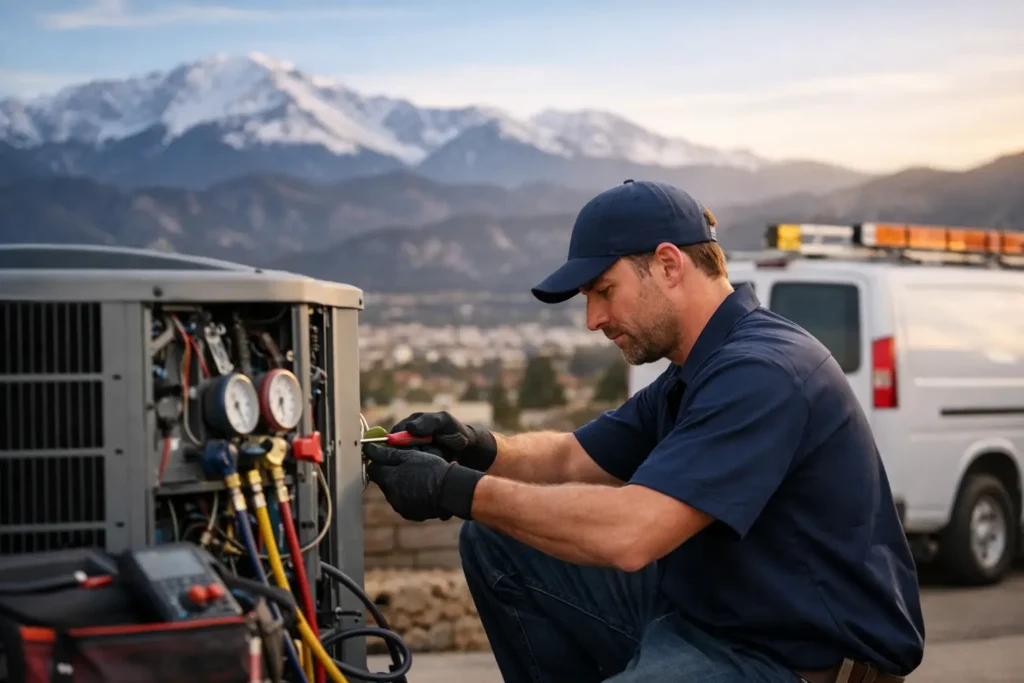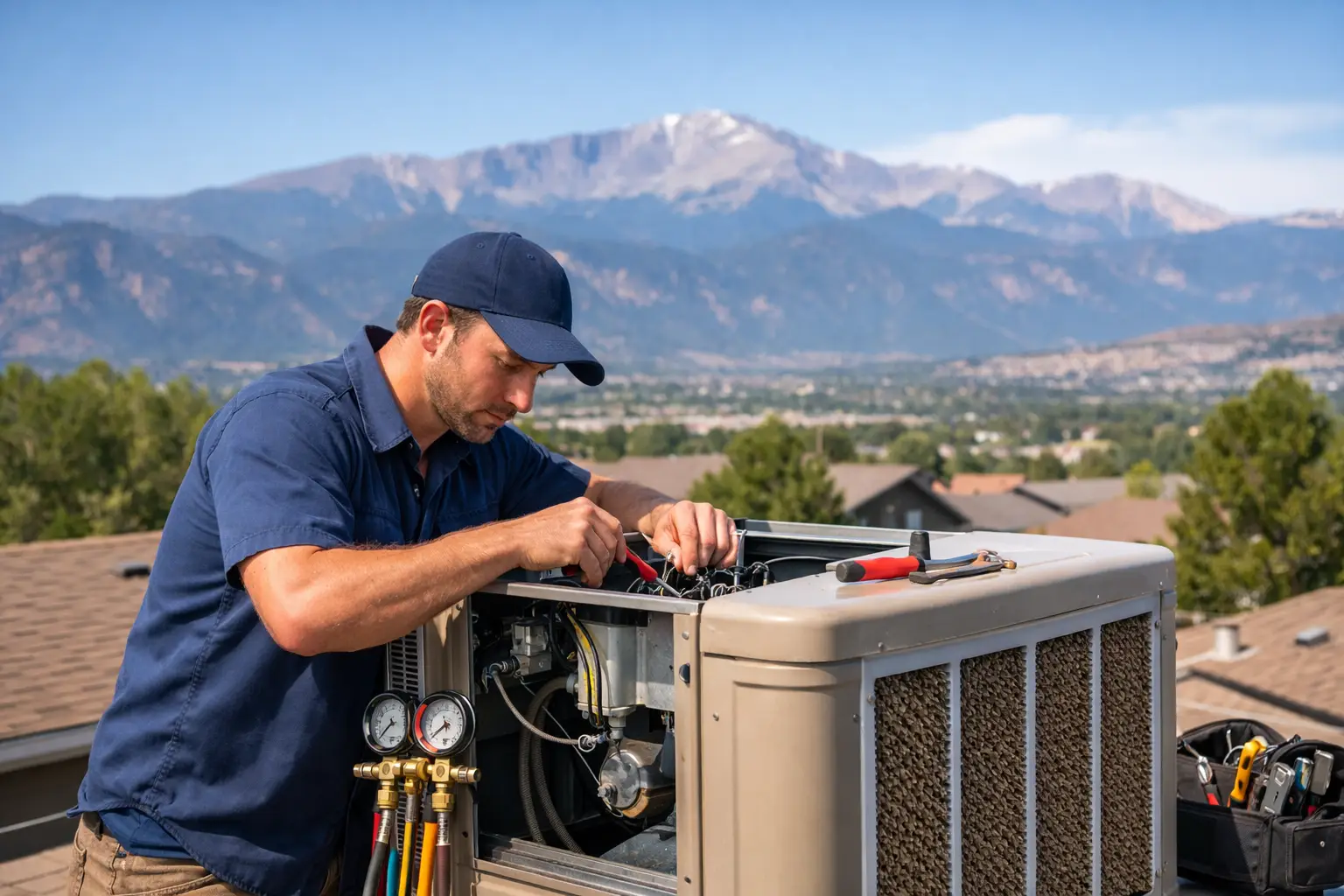
A swamp cooler that starts blowing warm air in July is not a small inconvenience in Colorado Springs. It usually means your home gets uncomfortable fast, your energy use starts climbing, and a minor issue can turn into a bigger repair if it is ignored. If you are searching for swamp cooler repair Colorado Springs, you are probably dealing with weak airflow, strange odors, leaks, or a unit that simply will not start.
Evaporative coolers are a practical fit for Colorado’s dry climate, but they are not maintenance-free. They depend on the right balance of water flow, airflow, clean components, and working electrical parts. When one part falls out of line, performance drops quickly. The good news is that many cooler problems follow familiar patterns, which means an experienced technician can usually diagnose them without much guesswork.
When swamp cooler repair makes sense
Not every cooler problem means replacement is around the corner. In many cases, repair is the right move, especially if the cabinet is still in good shape and the core components have not suffered long-term damage. A worn belt, failed pump, stuck float, dirty pads, or a faulty motor can all reduce performance without meaning the whole system is done.
Repair is often the better value when the issue is isolated and the unit has been reasonably maintained. That is especially true if the cooler has given you reliable service and the repair restores normal cooling for far less than the cost of a new installation. On the other hand, if the unit has repeated breakdowns, severe corrosion, chronic leaks, or poor airflow even after service, replacement may be the smarter long-term call.
This is where honest evaluation matters. A dependable HVAC contractor should be clear about what is worth fixing, what is starting to fail, and what can wait. Homeowners and property managers usually do not need a sales pitch. They need a straight answer.
Common swamp cooler problems in Colorado Springs
Most evaporative cooler repairs come down to a handful of issues. Some are mechanical, some are electrical, and some are simply the result of seasonal wear.
If the cooler runs but the air is not cool, clogged or deteriorated pads are often part of the problem. Pads need enough water and enough airflow to do their job. If they are packed with mineral buildup or dried out from poor water distribution, the air coming through will not feel very cool.
If there is little or no airflow, the problem may involve the blower motor, the belt, or the fan assembly. A slipping belt can weaken airflow before it fully fails. A failing motor may hum, overheat, or stop altogether. Sometimes the motor still runs, but the airflow is blocked by debris or damaged components inside the unit.
Leaks are another common service call. A cracked water line, a bad pump connection, an overflow issue, or a float that is not shutting off properly can all leave water where it should not be. Small leaks may not seem urgent, but over time they can damage the unit, the roof area, or nearby building materials.
Unusual smells usually point to stagnant water, dirty pads, mold growth, or a unit that was not cleaned out properly at startup or shutdown. Evaporative coolers move a lot of air, so any buildup inside the cabinet tends to announce itself quickly.
Electrical problems can also shut the system down. Faulty switches, bad wiring connections, worn capacitors, or thermostat and control issues may keep the unit from starting or cycling correctly. These are not good DIY jobs for most property owners, especially on rooftop units.
Signs you should schedule swamp cooler repair in Colorado Springs
Some problems are obvious, but others start small. If you catch them early, repairs are usually simpler and less expensive.
A cooler that takes longer than usual to bring down indoor temperature is worth checking. So is a unit that suddenly sounds louder, starts rattling, or gives off a burning smell. If airflow drops in certain rooms, if the pads look crusted over, or if you notice water pooling near the unit, it is time to have it inspected.
Commercial property owners should pay attention to uneven cooling, tenant complaints, and moisture issues around rooftop equipment. What feels like a comfort issue can turn into a maintenance issue if leaks or airflow problems continue too long.
A good rule is simple: if the cooler is running but not performing like it did last season, do not wait for a full failure during the hottest week of summer.
What a professional repair visit should include
A proper swamp cooler service call should go beyond replacing the first failed part. The technician should inspect the system as a whole, because one issue often creates another.
That usually means checking the motor, belt, blower, pump, float, water distribution lines, pads, electrical connections, and controls. The technician should also look for scale buildup, corrosion, clogged lines, and signs of water damage. If the unit is roof-mounted, safe access and a close inspection of the base and connections matter just as much as the mechanical repair itself.
Once the problem is identified, the next step should be clear communication. You should know what failed, what it affects, what the repair will cost, and whether any related issues need attention soon. Transparent pricing matters here. Nobody wants to approve a repair only to get surprised later.
Repair cost depends on the actual problem
There is no single price for swamp cooler repair because the problem drives the cost. Replacing a belt or adjusting a float is different from replacing a motor, repairing wiring, or correcting ongoing water issues.
Age and condition matter too. If the unit has heavy mineral buildup, rusted parts, or several worn components, the labor may be more involved. Accessibility also affects pricing. A ground-level system is easier to service than a rooftop unit on a commercial building.
The best approach is to focus on value instead of chasing the lowest number. A cheap repair that misses the root cause usually leads to another service call. A thorough repair that restores performance and helps prevent repeat issues is almost always the better investment.
Why local experience matters for swamp cooler repair Colorado Springs
Evaporative cooling works well in this region because the air is typically dry enough to make the system effective. But local conditions also create specific wear patterns. Hard water can leave mineral deposits on pads and internal parts. Wind, dust, and seasonal debris can clog components. Big temperature swings between seasons can also expose neglected maintenance quickly.
That is why local experience has real value. A contractor familiar with swamp cooler repair in Colorado Springs understands how these systems perform here, what tends to fail first, and when a repair is enough versus when replacement starts making more financial sense.
For homeowners, that means faster diagnosis and fewer return visits. For commercial properties, it means less disruption and better planning around repair, maintenance, and equipment life cycle decisions.
Repair or replace? It depends on age, condition, and reliability
There are times when repair is the clear answer, and times when it only delays a larger problem. If your cooler is newer, the cabinet is solid, and the issue is limited to a pump, motor, pads, or controls, repair is usually reasonable.
If the unit is older and has chronic leaks, corrosion, poor airflow, and frequent part failures, replacement may be more cost-effective. The same goes for systems that have become inefficient or no longer keep the building comfortable even when they are technically running.
A trustworthy technician should walk you through that trade-off. Repair can save money now, but replacement may save more over the next few seasons if your current unit is becoming unreliable.
How to reduce future repairs
Most swamp cooler breakdowns are easier to prevent than to fix in peak summer. Seasonal service helps catch worn belts, clogged lines, pump issues, and pad deterioration before they shut the system down.
Routine startup and shutdown service also matter. In spring, the unit needs inspection, cleaning, and testing before regular use. At the end of the season, draining, cleaning, and winterizing help reduce corrosion and buildup. Skipping those steps usually shortens equipment life.
For homes and commercial buildings that rely on evaporative cooling every year, maintenance is not extra. It is part of keeping repair costs under control.
If your cooler is underperforming, leaking, or making your space less comfortable than it should, getting it checked early is the practical move. Strong Heating and Cooling serves property owners who want clear answers, reliable workmanship, and repairs that solve the problem the first time. A working cooler should feel simple. When it does not, a timely repair can get your comfort back before the heat settles in.